
Laser Toning vs Picosecond Laser Treatment
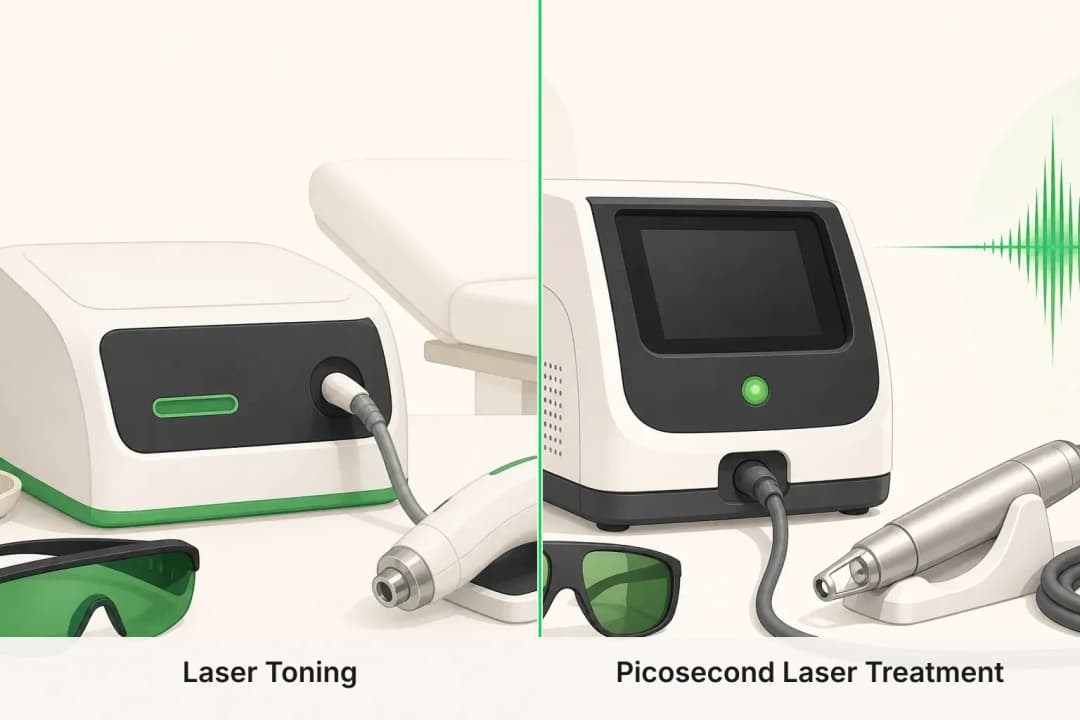
At a glance
- Main distinction
- Laser toning uses gentle repeated passes; picosecond devices use very brief pulses.
- Assessment priority
- Identify the pigment pattern before selecting settings or treatment.
- Aftercare
- Protect treated skin from sunlight and follow the clinic's instructions.
Find care
Dermatology & Skin Care in Dubai
Licensed dermatology & skin care listed in Dubai. Appearing here means a provider holds a UAE licence in this category — not that it offers laser toning vs picosecond laser treatment, which is worth confirming with the clinic before you book.
Wafi Mall - 1st Floor - Code “B”/ Entrance - Gate 3 Oud Metha Rd - inside the mall - Umm Hurair Second - Dubai Healthcare City - Dubai - United Arab Emirates
Accepts: Insurance Accepted
Al Ferdous 4, Al Wasl Road 603, AL SAFFA FIRST, Dubai
Accepts: Daman, Thiqa, AXA, Cigna +24 more
The mall, Jumeira Street 856a, UM SUQAIM SECOND, Dubai
Accepts: Thiqa, AXA, Bupa Global, Dubai Insurance Company +10 more
The Arcade, 4 Street 8, Al Garhoud, Dubai
Accepts: Daman, Thiqa, AXA, Cigna +26 more
Office # 102, SMJ-1, 1st Floor - شارع الشيخ زايد - الصفا 1 - الصفا - دبي - United Arab Emirates
Accepts: AXA, Cigna, MetLife, Allianz Care +19 more
Commercial Entrance, The Onyx Tower - 2 Sheikh Zayed Rd - Al Thanyah Third - The Greens - Dubai - United Arab Emirates
Accepts: Daman, Thiqa, AXA, Cigna +23 more
Ordered by verification status and how complete each clinic's public record is, then alphabetically. This is a directory listing, not a ranking — Zavis does not rate or recommend providers.
A factual listing drawn from the DHA, DOH and MOHAP licence registers. It is not a referral, an endorsement, or advice that any of these providers is right for you.
How the treatments differ
Laser toning and picosecond laser treatment use different energy delivery patterns, so the suitable choice depends on the pigment concern, skin assessment, and recovery preferences.
Laser toning commonly uses gentle, repeated passes intended to address diffuse-looking uneven tone. Picosecond treatment delivers very brief pulses, which may be selected when a clinician wants to target discrete pigment, tattoo particles, or texture concerns with a different energy profile. Neither name alone identifies the right device setting or treatment plan.
Pigment can sit at different depths and may behave differently after heat or irritation. A consultation should distinguish freckles, sun-related spots, melasma-like patchiness, post-inflammatory marks, and lesions that need medical evaluation before cosmetic treatment.
When laser toning may suit the discussion
Laser toning may be worth discussing when the main goal is a gradual approach to widespread dullness or uneven-looking tone, rather than treating one sharply defined spot. It can also fit someone who prefers a treatment plan built around lower-intensity sessions and close observation of how the skin responds.
This option still needs careful planning for skin that darkens after irritation. Sun protection, a stable skincare routine, and avoiding unadvised exfoliants around treatment can matter as much as the procedure itself.
When picosecond treatment may suit the discussion
Picosecond laser treatment may be considered when a clinician is assessing defined pigment, tattoo ink, or a texture-focused concern. Its pulse pattern is different from conventional longer-pulse approaches, but the treatment should be tailored to the skin tone, target area, and the diagnosis behind the mark.
People seeking a fast change should clarify what the device can reasonably address and what may require a series, additional skincare, or a different procedure. Treating active inflammation first can reduce avoidable irritation.
Possible effects and precautions
Both approaches can cause temporary redness, warmth, swelling, tenderness, or a darker-looking treated spot before it settles. Blistering, crusting, infection, scarring, and changes in pigmentation are possible, particularly when settings are unsuitable or aftercare is not followed. Darker skin tones and a history of pigment change need particular attention in planning.
Tell the clinician about recent tanning, cold sores, active acne, eczema, prescription creams, oral medicines, pregnancy, and past reactions to laser procedures. Do not pick or scrub treated skin; contact the clinic promptly if pain is escalating, blistering develops, or there are signs of infection.
When to pause the choice
Neither treatment should be the starting point for a new, changing, bleeding, painful, or irregular pigmented lesion. These features need medical assessment rather than cosmetic lightening. It is also sensible to postpone laser treatment during an active skin infection, an eczema flare in the target area, or when the cause of pigmentation remains unclear.
For melasma-like patchiness, daily light protection and a clinician-guided skin plan may be central to controlling recurrence. A laser can be only one part of management and is not automatically the first choice.
How a clinician can guide the decision
A useful assessment starts with the exact concern: diffuse tone, individual spots, acne-related marks, tattoo ink, or texture. The clinician can then examine skin tone, pigment depth, recent sun exposure, sensitivity, previous procedures, and the ability to follow aftercare. Photographs taken in consistent lighting can help track change without relying on day-to-day impressions.
The final plan should explain the intended target, expected short-term skin response, home care, and signs that should prompt a review. This makes the choice about a safe match between treatment method and skin behaviour, rather than a device label.
Questions people ask
Can either laser treat melasma?
Melasma-like pigmentation can be reactive. A clinician should confirm the pattern and discuss light protection and skincare before deciding whether laser treatment has a role.
Is picosecond laser treatment only for tattoos?
No. Depending on the device and clinical assessment, it may also be considered for selected pigment or texture concerns.
Should I stop skincare before treatment?
Bring all skincare and medicines to the consultation. The clinician can advise which products to pause and when to restart them.
Related
Related reading
Keep reading
Medical disclaimer. This page is general health information, not medical advice, and it cannot diagnose you. Always consult a licensed healthcare provider about your own symptoms and treatment. In an emergency in the UAE, call 998 for an ambulance.