
Feeling anxious vs low mood: how they differ
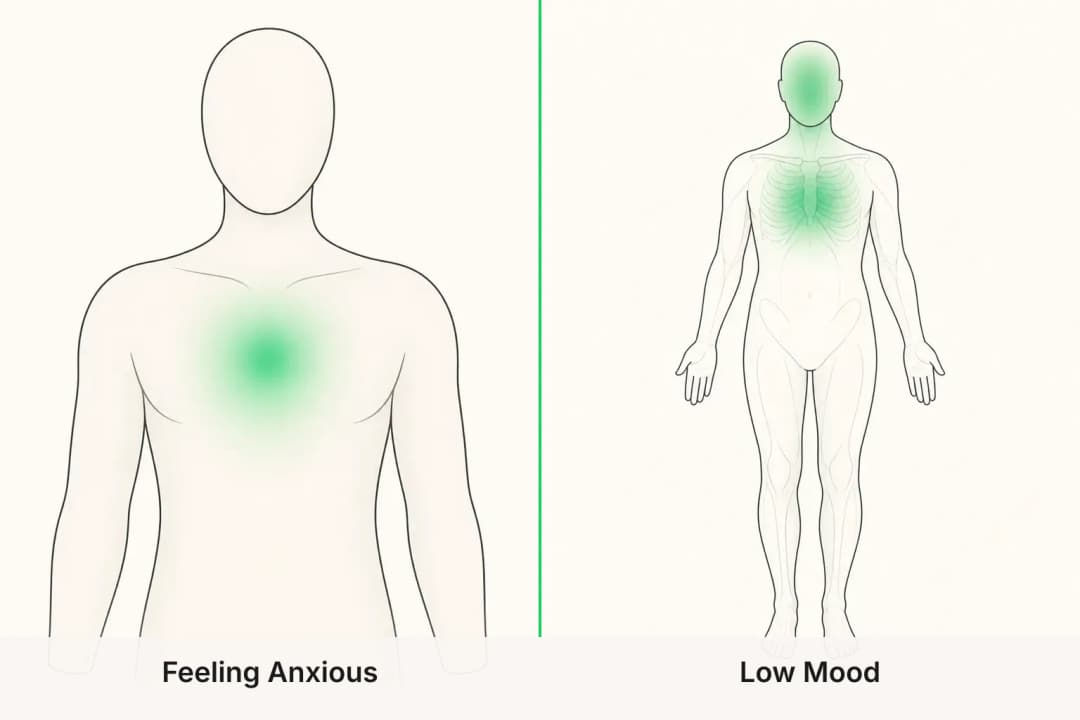
At a glance
- Core difference
- Worry and alertness are prominent in anxiety; sadness and loss of interest are prominent in low mood.
- Overlap
- Both can affect sleep, concentration, energy, and daily routines.
- Urgent sign
- Thoughts of self-harm or inability to stay safe need urgent help.
Find care
General Clinics & Polyclinics in Abu Dhabi
Licensed general clinics & polyclinics listed in Abu Dhabi. Appearing here means a provider holds a UAE licence in this category — not that it offers feeling anxious vs low mood: how they differ, which is worth confirming with the clinic before you book.
27 Ar Ruwwad St - Shakhbout City - MSH4 - Abu Dhabi - United Arab Emirates
Accepts: Daman, Thiqa, Cigna, MetLife +20 more
Al Ruwais, Al Dhafrah
Accepts: Daman, Thiqa, AXA, Cigna +16 more
Al Bahyah - Al Bahyah Old - Abu Dhabi - United Arab Emirates
Accepts: Daman, Thiqa, Cigna, Allianz Care +18 more
Abu Dhabi
Accepts: Daman, Thiqa, AXA, Cigna +27 more
The New EMI State Tower - 3rd Floor 303 Kan’ad Street - Hamdan Bin Mohammed St - Al Danah - Zone 1 - Abu Dhabi - United Arab Emirates
Accepts: Daman, Thiqa, Cigna, MetLife +22 more
Taj Resorts RV-1, Al Nasser Properties - Mafraq-2 - Mafraq Industrial Area - Abu Dhabi - United Arab Emirates
Accepts: Daman, Thiqa, AXA, Cigna +14 more
Ordered by verification status and how complete each clinic's public record is, then alphabetically. This is a directory listing, not a ranking — Zavis does not rate or recommend providers.
A factual listing drawn from the DHA, DOH and MOHAP licence registers. It is not a referral, an endorsement, or advice that any of these providers is right for you.
Spotting the main pattern
Feeling anxious is often driven by worry and physical alertness, while low mood more often brings sadness, reduced interest, and less energy.
The two experiences can occur together. A person may worry about work, health, or relationships while also finding little pleasure in everyday activities. Looking at the thoughts, body sensations, and changes in routine can help describe what is happening more clearly.
When anxious feelings fit better
Anxiety may be the more useful description when worry is the central problem and it is hard to switch off. You might feel keyed up, become irritable, scan for danger, or avoid a journey, conversation, or task because it feels threatening. Some people notice stomach discomfort, shaking, sweating, breathlessness, or disrupted sleep alongside the worry.
Try noting what was happening before the feeling started, what your mind predicted, and what you did next. This can reveal whether avoidance, caffeine, poor sleep, conflict, or a particular situation is keeping the cycle going.
When low mood fits better
Low mood may fit better when sadness, emptiness, irritability, or emotional numbness stays in the foreground. Interest in food, hobbies, exercise, social contact, or self-care can fall away. Concentration may feel effortful, and ordinary decisions can seem unusually heavy.
A low mood can follow loss, pressure, illness, pain, isolation, or a difficult change, but it does not always have one clear cause. Changes in sleep, appetite, energy, and functioning are useful details to share with a clinician.
When to seek urgent help
Seek urgent support now if you are thinking about harming yourself, feel unable to keep yourself safe, have made plans to end your life, or feel disconnected from reality. Contact local emergency services, go to an emergency department, or ask someone you trust to stay with you while help is arranged.
Urgent assessment is also sensible for severe agitation, several nights with very little sleep and unusually high energy, or sudden confusion. These changes need prompt professional attention regardless of whether anxiety or low mood seems more prominent.
When another explanation may be relevant
Not every change in mood is primarily anxiety or depression. Grief can come in waves; panic attacks are intense, brief surges of fear; and stress reactions may be closely tied to a specific event. Alcohol, recreational drugs, prescribed medicines, thyroid problems, pain, and disrupted sleep can also affect mood and alertness.
A physical check may be appropriate when symptoms are new, abrupt, or accompanied by weight change, palpitations, tremor, fainting, or other bodily symptoms. Bringing a list of medicines and supplements can make that review more useful.
How a clinician may guide next steps
A clinician will usually ask about the pattern over time, sleep, appetite, concentration, relationships, work or study, substances, medicines, and safety. They may also ask whether there have been periods of unusually elevated mood or impulsive behaviour, because this affects the kind of support that is suitable.
Support can include practical changes, talking therapy, treatment for a contributing physical problem, or medicine when appropriate. The plan should match the symptoms that are most disruptive and include a clear review point if things are not improving.
Questions people ask
Can I have anxiety and low mood at the same time?
Yes. Worry, tension, sadness, low energy, and loss of interest can overlap. A clinician can help identify which symptoms are causing the greatest difficulty.
When should I book a routine appointment?
Book an appointment when the symptoms persist, interfere with daily life, keep returning, or you are relying on alcohol, drugs, or avoidance to cope.
Related
Related reading
Keep reading
Medical disclaimer. This page is general health information, not medical advice, and it cannot diagnose you. Always consult a licensed healthcare provider about your own symptoms and treatment. In an emergency in the UAE, call 998 for an ambulance.