
Facial Pain and Pressure vs Headache
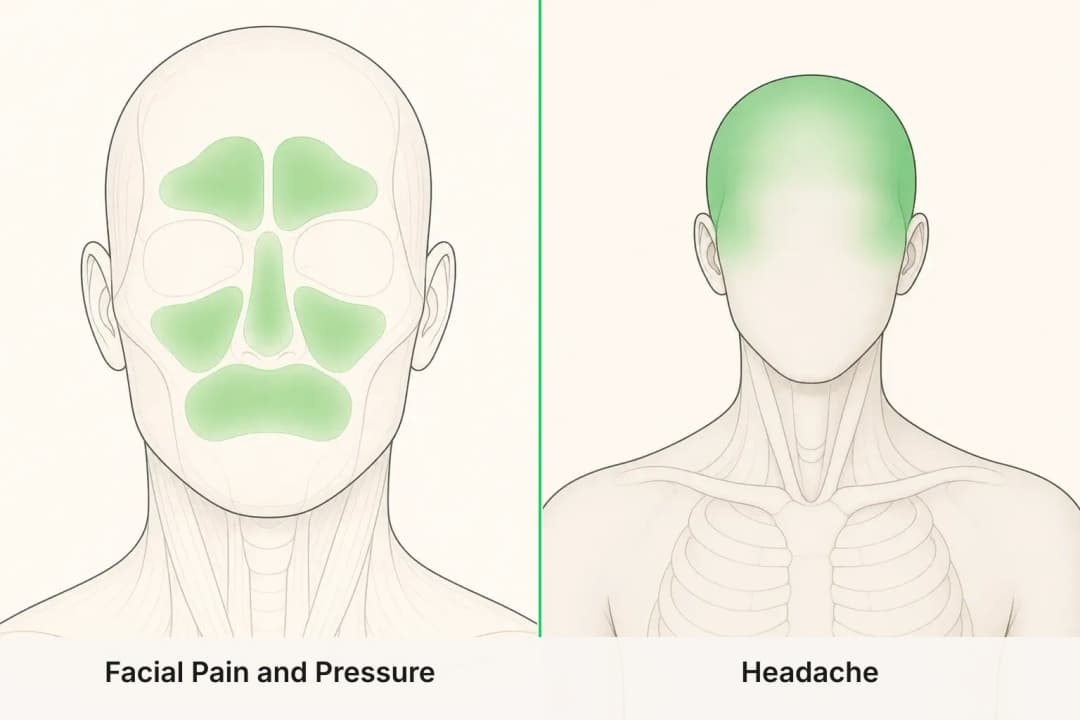
At a glance
- Main distinction
- Facial symptoms are centred in the face; headache is centred in the head.
- Useful record
- Note location, onset, triggers, associated symptoms and medicines taken.
- Emergency signs
- Abrupt severe pain or neurological changes need emergency care.
Find care
General Clinics & Polyclinics in Abu Dhabi
Licensed general clinics & polyclinics listed in Abu Dhabi. Appearing here means a provider holds a UAE licence in this category — not that it offers facial pain and pressure vs headache, which is worth confirming with the clinic before you book.
27 Ar Ruwwad St - Shakhbout City - MSH4 - Abu Dhabi - United Arab Emirates
Accepts: Daman, Thiqa, Cigna, MetLife +20 more
Al Ruwais, Al Dhafrah
Accepts: Daman, Thiqa, AXA, Cigna +16 more
Al Bahyah - Al Bahyah Old - Abu Dhabi - United Arab Emirates
Accepts: Daman, Thiqa, Cigna, Allianz Care +18 more
Abu Dhabi
Accepts: Daman, Thiqa, AXA, Cigna +27 more
The New EMI State Tower - 3rd Floor 303 Kan’ad Street - Hamdan Bin Mohammed St - Al Danah - Zone 1 - Abu Dhabi - United Arab Emirates
Accepts: Daman, Thiqa, Cigna, MetLife +22 more
Taj Resorts RV-1, Al Nasser Properties - Mafraq-2 - Mafraq Industrial Area - Abu Dhabi - United Arab Emirates
Accepts: Daman, Thiqa, AXA, Cigna +14 more
Ordered by verification status and how complete each clinic's public record is, then alphabetically. This is a directory listing, not a ranking — Zavis does not rate or recommend providers.
A factual listing drawn from the DHA, DOH and MOHAP licence registers. It is not a referral, an endorsement, or advice that any of these providers is right for you.
How the sensations differ
Facial pain and pressure is centred in the face, while headache is felt mainly in the head but the sensations can overlap.
Facial pain and pressure is centred in the cheeks, forehead, bridge of the nose, around the eyes, teeth, or upper jaw. It may feel full, heavy, tender, or worse when bending forward. A headache is a broader term for pain in the head and may feel tight, throbbing, sharp, or dull. The location alone does not identify the cause: head pain can be felt near the eyes and facial symptoms can occur alongside a headache.
When facial pain and pressure is the closer description
Use facial pain and pressure when the main problem seems to arise from a specific part of the face rather than the head generally. Mention whether one side is involved, whether your nose feels blocked, whether there is a recent cold or allergy flare, and whether chewing or tooth sensitivity changes the pain. These details help a clinician consider nasal, dental, jaw, eye-area, nerve, or muscle-related contributors.
When headache is the closer description
Headache may be the better label when pain is mainly in the head, changes with sleep, stress, hydration, meals, screen use, exertion, or menstrual timing, or comes with nausea or sensitivity to light or sound. Describe how quickly it began and whether it has happened before. Keeping track of the first symptom, the sequence of changes, and what eased or worsened it gives a clearer picture than simply rating pain intensity.
Symptoms that need prompt assessment
Seek emergency help for a sudden severe headache, new confusion, fainting, seizure, weakness, trouble speaking, loss of vision, a stiff neck with fever, or head pain after a significant injury. Prompt medical assessment is also appropriate for swelling or redness around an eye, pain with eye movement, a new drooping face, severe tooth or facial swelling, or symptoms that are rapidly worsening. These features need assessment because they can involve the nervous system, eye, infection, circulation, or injury.
When both descriptions fit
It is common to have facial symptoms and a headache together. Congestion can create facial discomfort while disrupted sleep, dehydration, muscle tension, or a migraine-type headache adds head pain. Jaw clenching may cause pain at the temples and cheeks. A clinician will look for the dominant symptom, associated features, medicines and supplements, recent illness, dental problems, injury, and changes in daily function rather than forcing the experience into one label.
What a clinician may check
Assessment may include questions about timing, triggers, sleep, stress, nasal symptoms, vision, teeth, jaw movement, and previous episodes. The examination may include blood pressure, temperature, neurological signs, the eyes, nose, throat, face, neck, and jaw. Further tests are chosen when the history or examination points to a particular concern. Bring a list of medicines, including pain relievers and nasal products, because frequent use of some treatments can affect recurring head pain.
Questions people ask
Can sinus symptoms cause a headache?
Nasal congestion and facial discomfort can occur with head pain, but similar symptoms can also occur with other headache patterns. The associated symptoms and examination help clarify the cause.
Should I use pain relief before seeing a clinician?
Use medicines only as directed on the label or by a clinician, and report what you have taken. Seek urgent care instead of self-treating if warning signs are present.
Related
Related reading
Keep reading
Medical disclaimer. This page is general health information, not medical advice, and it cannot diagnose you. Always consult a licensed healthcare provider about your own symptoms and treatment. In an emergency in the UAE, call 998 for an ambulance.