
Cortisone Injection vs Custom Orthotics
At a glance
- Main distinction
- An injection targets a local site; orthotics influence support during movement.
- Best starting point
- A diagnosis and examination that connect symptoms with their mechanical or inflammatory pattern.
Find care
General Clinics & Polyclinics in Abu Dhabi
Licensed general clinics & polyclinics listed in Abu Dhabi. Appearing here means a provider holds a UAE licence in this category — not that it offers cortisone injection vs custom orthotics, which is worth confirming with the clinic before you book.
27 Ar Ruwwad St - Shakhbout City - MSH4 - Abu Dhabi - United Arab Emirates
Accepts: Daman, Thiqa, Cigna, MetLife +20 more
Al Ruwais, Al Dhafrah
Accepts: Daman, Thiqa, AXA, Cigna +16 more
Al Bahyah - Al Bahyah Old - Abu Dhabi - United Arab Emirates
Accepts: Daman, Thiqa, Cigna, Allianz Care +18 more
Abu Dhabi
Accepts: Daman, Thiqa, AXA, Cigna +27 more
The New EMI State Tower - 3rd Floor 303 Kan’ad Street - Hamdan Bin Mohammed St - Al Danah - Zone 1 - Abu Dhabi - United Arab Emirates
Accepts: Daman, Thiqa, Cigna, MetLife +22 more
Taj Resorts RV-1, Al Nasser Properties - Mafraq-2 - Mafraq Industrial Area - Abu Dhabi - United Arab Emirates
Accepts: Daman, Thiqa, AXA, Cigna +14 more
Ordered by verification status and how complete each clinic's public record is, then alphabetically. This is a directory listing, not a ranking — Zavis does not rate or recommend providers.
A factual listing drawn from the DHA, DOH and MOHAP licence registers. It is not a referral, an endorsement, or advice that any of these providers is right for you.
How the options differ
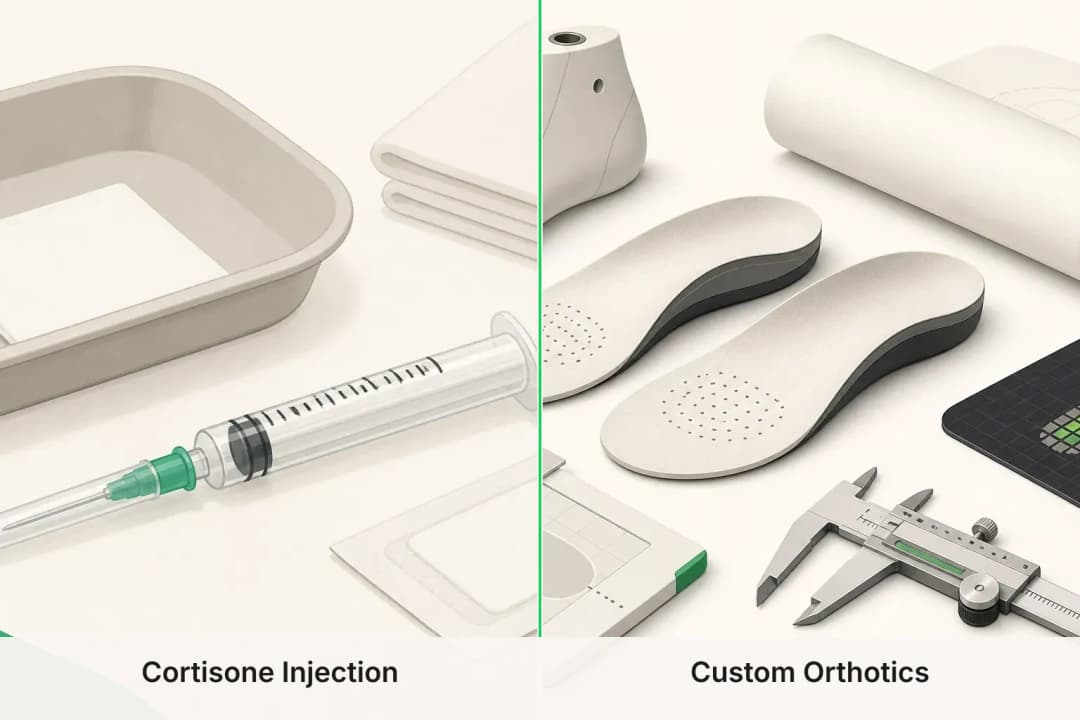
Cortisone injections target inflammation at a specific site, while custom orthotics change support and loading during movement.
When a cortisone injection may fit
This option may be discussed when pain is concentrated in a clearly identified joint, tendon sheath, or bursa and inflammation is limiting movement. It can be useful when a focused treatment is needed or when pain is making rehabilitation difficult. The injection does not correct footwear, muscle weakness, joint instability, or a structural cause elsewhere in the movement chain. A clinician first checks the diagnosis and the safest injection site; an injection is not automatically appropriate for every painful area.
When custom orthotics may fit
Custom orthotics may suit someone whose symptoms change with standing, walking, running, or particular shoes, especially when examination shows a repeatable loading or alignment issue. They are intended to work over daily activity rather than only at an appointment. They are not a substitute for strengthening, mobility work, appropriate footwear, or treatment of an injury that needs a different approach. Fit and gradual use matter: discomfort, pressure points, or worsening symptoms should prompt reassessment.
Risks and practical trade-offs
An injection can cause temporary soreness, bruising, or a short-lived increase in pain. There are also site-specific considerations, including effects on nearby tissues or skin, so the clinician reviews medical history, medicines, and the target area beforehand. Orthotics can initially feel unfamiliar and may create rubbing, pressure, or altered discomfort if the fit or adjustment is poor. Both options work best when the underlying diagnosis is clear and expectations are realistic. Seek prompt medical advice for marked swelling, spreading redness, fever, new weakness, or severe pain after treatment.
When neither is the right first step
Neither option may be suitable when the cause of pain is uncertain, there is a major injury, a suspected infection, significant nerve involvement, or symptoms that require urgent assessment. A clinician may instead recommend examination, imaging, activity modification, footwear changes, physiotherapy, medication review, or another procedure. Persistent night pain, progressive loss of function, or numbness and weakness should be assessed rather than managed only with an insert or injection.
How the choice is made
A clinician compares the location and pattern of pain with examination findings, walking mechanics, footwear, activity demands, previous treatments, and health factors that affect procedural safety. They may ask whether symptoms are load-related, whether inflammation is evident, and what goal matters most: short-term pain control, easier rehabilitation, or support during repeated activity. Discuss the expected time course, alternatives, fitting or aftercare, and what would trigger review. Read more about [Cortisone Injection](/treatments/non-surgical-orthopedics/cortisone-injection/) and [Custom Orthotics](/treatments/non-surgical-orthopedics/custom-orthotics/).
Questions people ask
Can orthotics and a cortisone injection be used together?
Sometimes. A clinician may combine approaches when local inflammation and movement-related loading both contribute, with each treatment serving a different purpose.
Which option works faster?
An injection may change local pain sooner, while orthotics require fitting and an adjustment period. The timing varies with the diagnosis and response.
Related
Related reading
Keep reading
Medical disclaimer. This page is general health information, not medical advice, and it cannot diagnose you. Always consult a licensed healthcare provider about your own symptoms and treatment. In an emergency in the UAE, call 998 for an ambulance.