
Brachytherapy vs Prostatectomy
At a glance
- Treatment type
- Internal radiation or surgery
- Main decision inputs
- Cancer features, urinary function, health, and personal priorities
- Shared consideration
- Both can affect urinary and sexual function
Two ways to treat the prostate
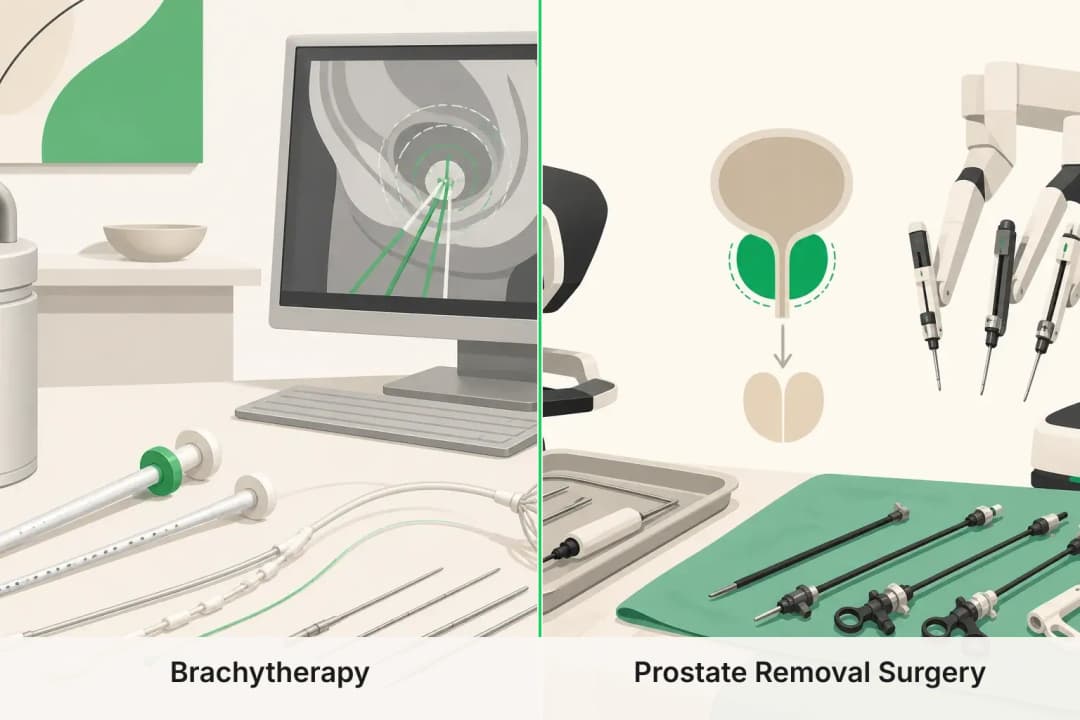
Brachytherapy treats the prostate with radiation placed inside or near it, whereas prostatectomy removes the prostate through an operation.
Brachytherapy is a form of internal radiation. Depending on the plan, radioactive sources may be placed temporarily or left in the prostate to deliver treatment over time. Prostatectomy is surgery to remove the prostate and reconnect the urinary tract. Each approach has a different preparation, recovery pattern, and set of possible effects on urinary, bowel, and sexual function.
When brachytherapy may fit
Brachytherapy may be discussed when the cancer appears confined to the prostate and its features suit a radiation-based plan. It can be used alone in some situations or combined with other treatment when the team considers that appropriate. Prostate size, urinary symptoms before treatment, previous procedures on the prostate, bowel health, imaging findings, and the cancer’s grade all help determine whether placement can be performed safely and accurately.
When prostatectomy may fit
Prostatectomy may be considered when surgery offers a suitable way to remove cancer that is thought to be within the prostate. It may also appeal to people who want surgical pathology information after removal. The surgeon considers general fitness for anaesthesia, prior abdominal or pelvic surgery, urinary function, cancer location, and whether there are signs that cancer has extended beyond the prostate.
Effects to weigh before treatment
Both treatments can affect urinary and sexual function, but the timing and pattern can differ. Brachytherapy can cause urinary irritation, a weaker stream, urgency, bowel irritation, and fatigue. Prostatectomy can lead to urinary leakage during recovery, erectile difficulties, pain, bleeding, blood clots, infection, or narrowing where the urinary tract is rejoined. Your team can explain which effects are most relevant to your starting symptoms and planned technique.
When another plan may be better
Sometimes neither brachytherapy nor surgery is the preferred next treatment. Active surveillance may be appropriate when close monitoring is safer than immediate treatment. External-beam radiation, hormone-based treatment, other systemic medicines, or treatment directed at cancer beyond the prostate may be considered when cancer features or overall health point in a different direction. Existing urinary obstruction or bowel disease can also change which local treatment is practical.
How the treatment team helps you decide
A urologist, radiation oncologist, and other clinicians use biopsy findings, PSA trends, examination, imaging, and your health history to frame the options. They should also ask what matters most to you, such as avoiding an operation, protecting continence, preserving sexual function, travel for appointments, or having pathology from removed tissue. Bring a list of medicines and prior procedures, and ask how each choice could affect your daily activities and future treatment options.
Questions people ask
Can I choose based only on recovery time?
Recovery is important, but it should be considered alongside cancer features, baseline urinary and bowel symptoms, treatment goals, and the likely side effects for you.
Do I still need follow-up after local treatment?
Yes. Follow-up appointments review recovery, new urinary or bowel symptoms, sexual health concerns, and signs that may guide further care.
Related
Related reading
Keep reading
Cancer care in the UAE
Hospitals & Medical Centers in Abu Dhabi
Most UAE cancer care is delivered inside hospital services rather than by standalone oncology clinics, so these are licensed hospitals & medical centers listed in Abu Dhabi. Confirm the specific cancer service exists before you travel, and know that asking for a second opinion is routine.
Ahalia Hospital Musaffah Building - Musaffah - Musaffah Industrial - Abu Dhabi - United Arab Emirates
Accepts: Daman, Thiqa, AXA, Cigna +26 more
Al Ruwais Industrial City - Abu Dhabi - United Arab Emirates
Accepts: Daman, Thiqa, AXA, Cigna +30 more
Abu Dhabi, Abu Dhabi
Accepts: Daman, Thiqa, AXA, Cigna +30 more
Second opinions are routine in cancer care and asking for one does not affect your treatment. How to arrange a second opinion in the UAE.
Ordered by verification status and how complete each clinic's public record is, then alphabetically. This is a directory listing, not a ranking — Zavis does not rate or recommend providers.
A factual listing drawn from the DHA, DOH and MOHAP licence registers. It is not a referral, an endorsement, or advice that any of these providers is right for you.
Medical disclaimer. This page is general health information, not medical advice, and it cannot diagnose you. Always consult a licensed healthcare provider about your own symptoms and treatment. In an emergency in the UAE, call 998 for an ambulance.