
Blood Test vs Premarital Screening
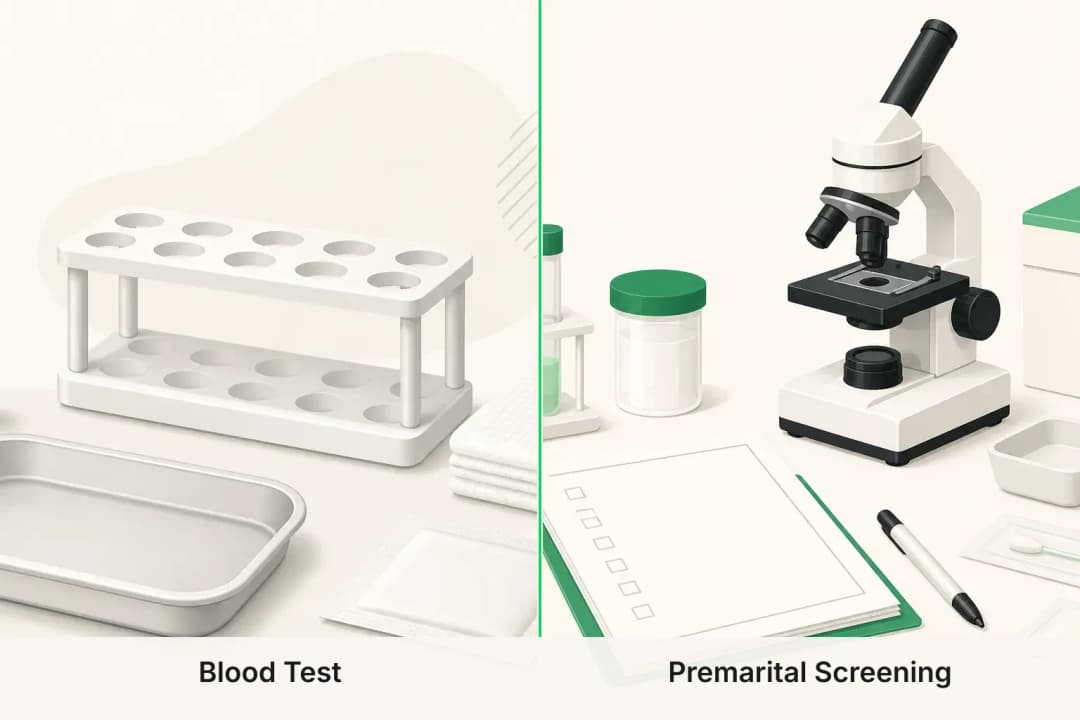
At a glance
- Blood test
- A laboratory sample used for a defined clinical question.
- Premarital screening
- A programme-based assessment that may include laboratory testing and counselling.
- Urgent symptoms
- Need medical assessment rather than routine testing alone.
Find care
General Clinics & Polyclinics in Abu Dhabi
Licensed general clinics & polyclinics listed in Abu Dhabi. Appearing here means a provider holds a UAE licence in this category — not that it offers blood test vs premarital screening, which is worth confirming with the clinic before you book.
27 Ar Ruwwad St - Shakhbout City - MSH4 - Abu Dhabi - United Arab Emirates
Accepts: Daman, Thiqa, Cigna, MetLife +20 more
Al Ruwais, Al Dhafrah
Accepts: Daman, Thiqa, AXA, Cigna +16 more
Al Bahyah - Al Bahyah Old - Abu Dhabi - United Arab Emirates
Accepts: Daman, Thiqa, Cigna, Allianz Care +18 more
Abu Dhabi
Accepts: Daman, Thiqa, AXA, Cigna +27 more
The New EMI State Tower - 3rd Floor 303 Kan’ad Street - Hamdan Bin Mohammed St - Al Danah - Zone 1 - Abu Dhabi - United Arab Emirates
Accepts: Daman, Thiqa, Cigna, MetLife +22 more
Taj Resorts RV-1, Al Nasser Properties - Mafraq-2 - Mafraq Industrial Area - Abu Dhabi - United Arab Emirates
Accepts: Daman, Thiqa, AXA, Cigna +14 more
Ordered by verification status and how complete each clinic's public record is, then alphabetically. This is a directory listing, not a ranking — Zavis does not rate or recommend providers.
A factual listing drawn from the DHA, DOH and MOHAP licence registers. It is not a referral, an endorsement, or advice that any of these providers is right for you.
How the two options differ
A blood test is a laboratory sample, while premarital screening is a planned health assessment that may include blood testing.
A clinician may order a blood test to answer one focused question, such as checking a blood count or reviewing a result alongside symptoms. Premarital screening has a broader administrative and preventive purpose: it reviews tests required by the relevant programme and explains what the findings mean before marriage.
Choose a blood test if
Choose a blood test when a healthcare professional has requested a particular measurement, when you are monitoring an established health issue, or when a recent consultation identified a reason to investigate further. Bring the request form if one was provided and check whether fasting or a particular collection time matters.
The result is only one part of the clinical picture. A value outside the expected range may need repeat testing, a medication review, or a conversation about symptoms and medical history.
Choose premarital screening if
Choose premarital screening when you need the assessment associated with marriage procedures or want structured counselling before marriage. The service follows the applicable programme pathway, so its test panel and documents are not interchangeable with a self-requested laboratory test.
Take identification and any requested paperwork. If you already have relevant health records, ask the service whether they are useful; do not assume an earlier result can replace a programme requirement.
Limits and practical risks
Blood collection can cause brief discomfort, bruising, light-headedness, or rarely fainting. Tell the collector if you have fainted during procedures before, take medicines that affect bleeding, or have a history of difficult blood draws.
The larger risk is misusing a result. A normal result from one test does not answer every health question, and screening findings need interpretation in the context of the programme. Keep your result private and discuss any unexpected finding with the clinician or screening team.
When neither is the right first step
Neither option replaces an urgent assessment for severe symptoms. Seek urgent medical help for chest pressure, major breathing difficulty, fainting, heavy bleeding, or a sudden severe allergic reaction. A clinician may need to examine you or arrange a different test before deciding whether blood work is useful.
If your concern is medication side effects, a persistent symptom, fertility, or a family health pattern, start with a clinical consultation. That conversation can identify the most relevant tests instead of ordering a broad panel without a clear purpose.
How a clinician helps decide
A clinician begins with the reason for testing: a symptom, a known condition, routine monitoring, or a programme requirement. They then consider timing, medicines, recent illness, previous results, and whether the result would change the next decision.
For premarital screening, the team also confirms that the correct pathway and documentation are being used. Asking what the test can answer, what it cannot answer, and how results will be communicated can make the appointment easier to navigate.
Questions people ask
Can a blood test replace premarital screening?
Usually not. A stand-alone test may not use the required pathway, panel, documentation, or counselling process for premarital screening.
Do I need to fast before either appointment?
It depends on the specific test and service instructions. Check with the provider before attending, especially if you have diabetes or take regular medicines.
Related
Related reading
Keep reading
Medical disclaimer. This page is general health information, not medical advice, and it cannot diagnose you. Always consult a licensed healthcare provider about your own symptoms and treatment. In an emergency in the UAE, call 998 for an ambulance.