
Allogeneic stem cell transplant vs CAR T-cell therapy
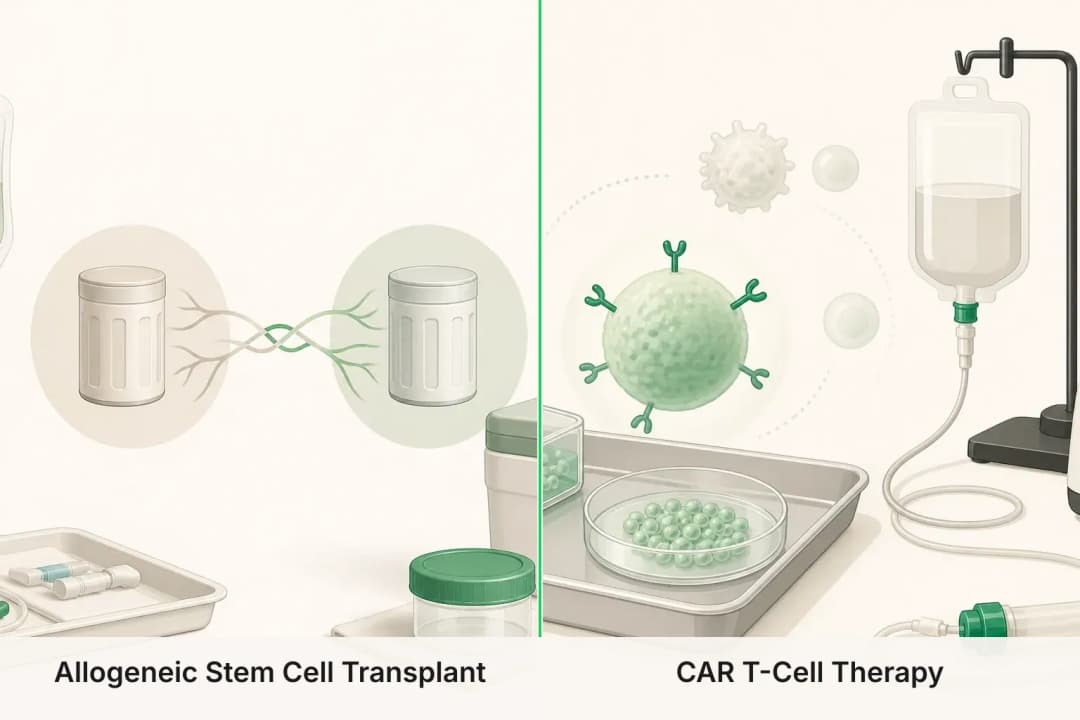
At a glance
- Cell source
- Allogeneic uses donor stem cells; CAR T usually starts with your T cells.
- Immune complication
- Graft-versus-host disease is specific to donor-cell transplant.
How these cell therapies work
Allogeneic transplant gives donor stem cells to rebuild marrow, whereas CAR T-cell therapy uses modified immune cells to target cancer.
Allogeneic transplant follows conditioning treatment and establishes a donor blood and immune system. CAR T-cell therapy collects a person's T cells, modifies them to recognize a target, then returns them after preparation treatment. Both are specialised treatments, but their mechanisms and follow-up needs differ.
When allogeneic transplant may be considered
A transplant team may consider allogeneic transplant when the diagnosis and treatment history indicate a benefit from replacing marrow and establishing donor immunity. Donor availability, disease control before transplant, organ function, infection status, and personal capacity for intensive follow-up all inform the choice.
For some conditions, the donor immune effect is a meaningful part of the intended treatment. The team also plans prevention and management of immune complications.
When CAR T-cell therapy may be considered
CAR T-cell therapy may be considered for particular blood cancers when the cancer cells carry a target addressed by an available CAR T-cell product and the clinical situation fits its use. Timing matters because cells must be collected and prepared before infusion.
The care team considers prior therapies, disease pace, the ability to collect T cells, organ function, and whether treatment can be safely delivered with close observation.
Risks and observation
Allogeneic transplant can cause prolonged low blood counts, infection, bleeding, organ effects from conditioning, and graft-versus-host disease. Medicines that adjust immune activity are often part of care.
CAR T-cell therapy can trigger cytokine release syndrome, which may involve fever, low blood pressure, breathing changes, or other inflammatory effects. Neurologic symptoms can also occur. Teams monitor closely after infusion and provide prompt treatment if these reactions appear.
When a different treatment route may fit
Neither therapy may be suitable at that point if the cancer needs control with another medicine first, the required cells cannot be obtained in time, health factors make intensive cell therapy unsuitable, or the expected benefit is limited. Other systemic treatments, targeted medicines, radiation, supportive care, or a trial of another sequence may be considered.
A change in plan is not a withdrawal of care. It can reflect a deliberate effort to use the treatment whose risks and potential benefits best fit the current situation.
What informs the recommendation
Clinicians review the precise diagnosis, target expression where relevant, genetic and disease features, response to earlier therapy, disease pace, donor options, cell collection feasibility, and treatment centre capability. They also discuss family support, travel, recovery time, and your treatment goals.
Ask whether the aim is remission, disease control, or preparation for another step; ask what monitoring is needed and which symptoms require urgent contact. A clear plan should explain why the chosen cell therapy fits now.
Questions people ask
Is CAR T-cell therapy the same as a stem cell transplant?
No. CAR T-cell therapy uses engineered T cells to recognize cancer, while allogeneic transplant replaces marrow with donor stem cells.
Can CAR T-cell therapy and transplant both be part of care?
They can both be discussed in some treatment pathways, but the order and suitability depend on the diagnosis, response, and individual health factors.
Related
Related reading
Keep reading
Cancer care in the UAE
Hospitals & Medical Centers in Abu Dhabi
Most UAE cancer care is delivered inside hospital services rather than by standalone oncology clinics, so these are licensed hospitals & medical centers listed in Abu Dhabi. Confirm the specific cancer service exists before you travel, and know that asking for a second opinion is routine.
Ahalia Hospital Musaffah Building - Musaffah - Musaffah Industrial - Abu Dhabi - United Arab Emirates
Accepts: Daman, Thiqa, AXA, Cigna +26 more
Al Ruwais Industrial City - Abu Dhabi - United Arab Emirates
Accepts: Daman, Thiqa, AXA, Cigna +30 more
Abu Dhabi, Abu Dhabi
Accepts: Daman, Thiqa, AXA, Cigna +30 more
Second opinions are routine in cancer care and asking for one does not affect your treatment. How to arrange a second opinion in the UAE.
Ordered by verification status and how complete each clinic's public record is, then alphabetically. This is a directory listing, not a ranking — Zavis does not rate or recommend providers.
A factual listing drawn from the DHA, DOH and MOHAP licence registers. It is not a referral, an endorsement, or advice that any of these providers is right for you.
Medical disclaimer. This page is general health information, not medical advice, and it cannot diagnose you. Always consult a licensed healthcare provider about your own symptoms and treatment. In an emergency in the UAE, call 998 for an ambulance.