
Abdominal pain vs blood in stool
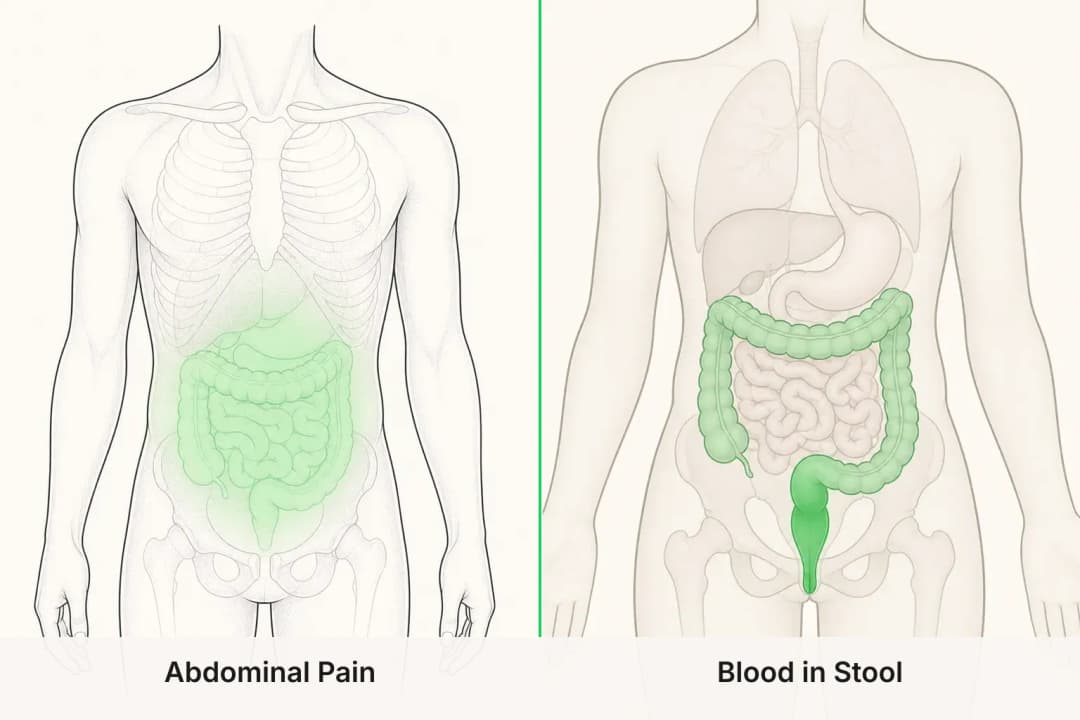
At a glance
- Abdominal pain
- Discomfort in any part of the belly
- Blood in stool
- Bleeding that should be described and assessed
- Emergency signs
- Heavy bleeding, black stool, collapse, or severe pain
Find care
General Clinics & Polyclinics in Abu Dhabi
Licensed general clinics & polyclinics listed in Abu Dhabi. Appearing here means a provider holds a UAE licence in this category — not that it offers abdominal pain vs blood in stool, which is worth confirming with the clinic before you book.
27 Ar Ruwwad St - Shakhbout City - MSH4 - Abu Dhabi - United Arab Emirates
Accepts: Daman, Thiqa, Cigna, MetLife +20 more
Al Ruwais, Al Dhafrah
Accepts: Daman, Thiqa, AXA, Cigna +16 more
Al Bahyah - Al Bahyah Old - Abu Dhabi - United Arab Emirates
Accepts: Daman, Thiqa, Cigna, Allianz Care +18 more
Abu Dhabi
Accepts: Daman, Thiqa, AXA, Cigna +27 more
The New EMI State Tower - 3rd Floor 303 Kan’ad Street - Hamdan Bin Mohammed St - Al Danah - Zone 1 - Abu Dhabi - United Arab Emirates
Accepts: Daman, Thiqa, Cigna, MetLife +22 more
Taj Resorts RV-1, Al Nasser Properties - Mafraq-2 - Mafraq Industrial Area - Abu Dhabi - United Arab Emirates
Accepts: Daman, Thiqa, AXA, Cigna +14 more
Ordered by verification status and how complete each clinic's public record is, then alphabetically. This is a directory listing, not a ranking — Zavis does not rate or recommend providers.
A factual listing drawn from the DHA, DOH and MOHAP licence registers. It is not a referral, an endorsement, or advice that any of these providers is right for you.
The key difference
Abdominal pain is belly discomfort, whereas blood in stool is visible bleeding from the digestive tract or around the anus.
Pain may be localised or widespread and may come with nausea, bowel changes, urinary symptoms, or fever. Blood can appear bright red on paper or in the bowl, mixed with stool, or as black tarry stool. The colour, amount, and whether bleeding is repeated are important details.
Focus on abdominal pain when pain is the main problem
Start with abdominal pain when discomfort is the leading issue and no blood has been seen. Explain where it is felt, whether it travels, how it began, and whether food, movement, urination, or passing stool affects it. A clinician also needs to know about vomiting, fever, pregnancy, medicines, and prior abdominal surgery.
Pain that becomes severe, persistent, or markedly different from your usual symptoms needs timely assessment even if bleeding is absent.
Focus on blood in stool when bleeding is visible
Visible blood should be treated as the main concern even when there is little discomfort. Avoid assuming it comes from a minor cause. Tell a clinician whether blood is on toilet paper, coating the stool, mixed through it, or making the stool black and tarry, and report any recent change in bowel habit.
Medicines that affect bleeding, including anticoagulants, are particularly relevant and should be mentioned when seeking advice.
Bleeding and pain that need urgent help
Seek urgent medical help for heavy bleeding, black tarry stool, fainting, severe weakness, confusion, severe or worsening abdominal pain, repeated vomiting, a swollen rigid abdomen, or blood with signs of shock. These symptoms can indicate significant blood loss or another urgent digestive problem.
Do not delay assessment for new bleeding during pregnancy or for bleeding accompanied by fever and worsening pain.
When a different symptom should lead the discussion
If the main problem is diarrhoea, constipation, vomiting, heartburn, pain while passing urine, or vaginal bleeding, lead with that symptom. Blood that is clearly from the urine or vagina needs a different assessment from blood seen with stool.
If the source is uncertain, do not try to determine it by yourself. Describe exactly what you noticed and seek clinical advice.
How clinicians assess these symptoms
Assessment starts with the bleeding pattern, pain location, bowel habit, medicines, family history, recent illness, and other symptoms. Depending on the situation, examination may include checking the abdomen and an examination of the area around the anus or rectum.
Tests may include blood tests, stool testing, imaging, or an endoscopic examination. The choice is guided by the full history and examination, not by one symptom alone.
Questions people ask
Is bright red blood always from the same place?
No. The source cannot be confirmed by colour alone. Describe the blood's appearance and where you saw it, then seek assessment for unexplained or repeated bleeding.
Should I seek care if bleeding happens without pain?
Yes. Visible blood in stool should be discussed with a clinician, even when there is no pain, because the cause needs assessment in context.
Related
Related reading
Keep reading
Medical disclaimer. This page is general health information, not medical advice, and it cannot diagnose you. Always consult a licensed healthcare provider about your own symptoms and treatment. In an emergency in the UAE, call 998 for an ambulance.