
Xanthelasma on the face
Short answer
Xanthelasma on the face most often refers to yellowish eyelid plaques, which should be confirmed clinically before any treatment or home care.
This answers one question. It is not a diagnosis and does not replace an assessment by a licensed doctor.
At a glance
- Typical site
- Skin around the eyes
- Diagnosis
- Clinical examination
- Urgent symptom
- Vision change
Where it appears
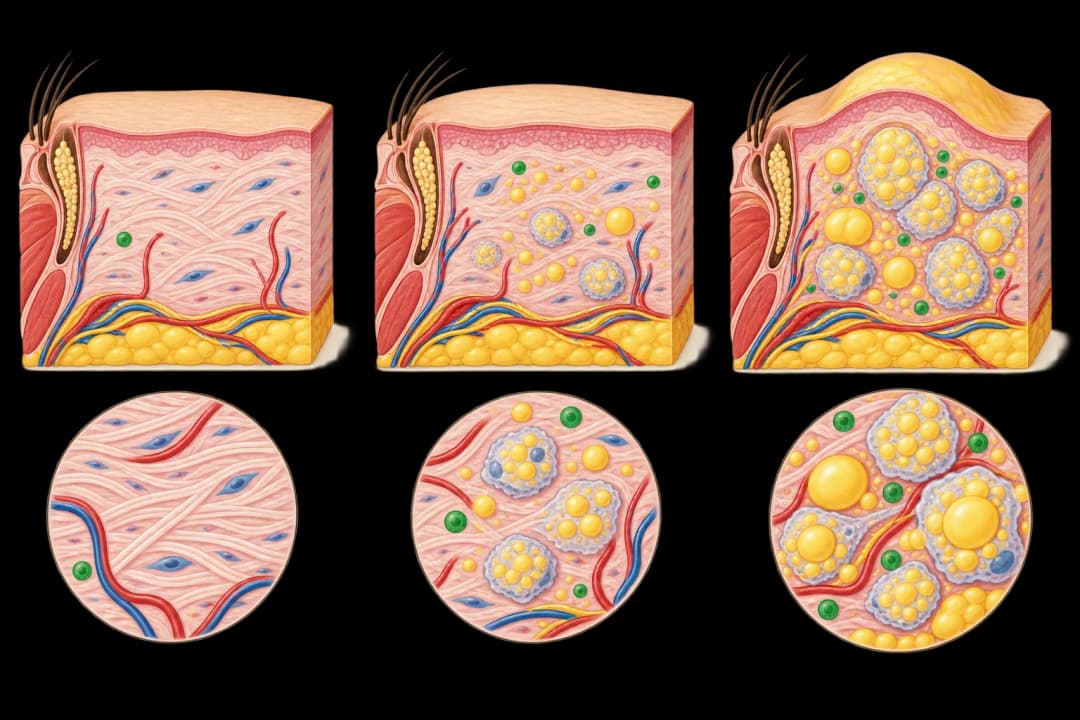
Although people may describe it as facial xanthelasma, the typical site is the skin around the eyes, especially near the inner corners of the upper or lower lids. Plaques may be pale yellow, soft, flat, or raised, and can occur on both sides. They usually do not cause a change in vision. A clinician can assess texture, edges, symmetry, and any associated irritation to distinguish xanthelasma from other facial or eyelid lesions.
Choosing a care plan
Photograph the area for your own comparison, avoid squeezing or covering it with harsh concealers, and arrange a dermatology review if it is new or bothersome. The clinician may discuss CO2 laser resurfacing for selected superficial plaques or surgical excision when tissue needs to be removed directly. The eye's position, plaque thickness, skin tone, healing history, and cosmetic goals all affect the plan. A health review may include cholesterol testing or discussion of related conditions. Treatment of those factors is useful for overall wellbeing but does not guarantee that the facial plaque will fade.
Signs that need prompt review
Seek prompt medical assessment if the lesion grows quickly, becomes painful, bleeds, forms an ulcer, or is associated with pronounced redness or swelling. Vision change, eye pain, light sensitivity, or difficulty moving or closing the eye warrants urgent care because those features are not typical cosmetic concerns.
What to discuss
Ask whether the appearance fits xanthelasma, whether both eyelids need examination, what result is realistic, how scars or pigment shifts may be handled, and what follow-up is advised if a plaque returns.
Find care
General Clinics & Polyclinics in Abu Dhabi
That answer is general. If you want it applied to your own case, these are licensed general clinics & polyclinics listed in Abu Dhabi.
27 Ar Ruwwad St - Shakhbout City - MSH4 - Abu Dhabi - United Arab Emirates
Accepts: Daman, Thiqa, Cigna, MetLife +20 more
Al Ruwais, Al Dhafrah
Accepts: Daman, Thiqa, AXA, Cigna +16 more
Al Bahyah - Al Bahyah Old - Abu Dhabi - United Arab Emirates
Accepts: Daman, Thiqa, Cigna, Allianz Care +18 more
Abu Dhabi
Accepts: Daman, Thiqa, AXA, Cigna +27 more
Ordered by verification status and how complete each clinic's public record is, then alphabetically. This is a directory listing, not a ranking — Zavis does not rate or recommend providers.
A factual listing drawn from the DHA, DOH and MOHAP licence registers. It is not a referral, an endorsement, or advice that any of these providers is right for you.
Questions people ask
Is xanthelasma on the face contagious?
No. Xanthelasma is a deposit in the skin and does not spread by contact with other people.
Can facial creams remove it?
Ordinary creams do not reliably remove xanthelasma, and strong products near the eye can cause injury.
Related
Related reading
Keep reading
Medical disclaimer. This page is general health information, not medical advice, and it cannot diagnose you. Always consult a licensed healthcare provider about your own symptoms and treatment. In an emergency in the UAE, call 998 for an ambulance.