
Why is an arthroscope used in ankle arthroscopy?
Short answer
An arthroscope is used in ankle arthroscopy to see the joint directly, identify the source of damage and guide treatment with controlled access.
This answers one question. It is not a diagnosis and does not replace an assessment by a licensed doctor.
At a glance
- Purpose
- Direct inspection and guided treatment
- Areas viewed
- Cartilage, joint lining, loose tissue and scar tissue
- Recovery
- Weight-bearing and movement are progressed gradually
What happens inside the ankle
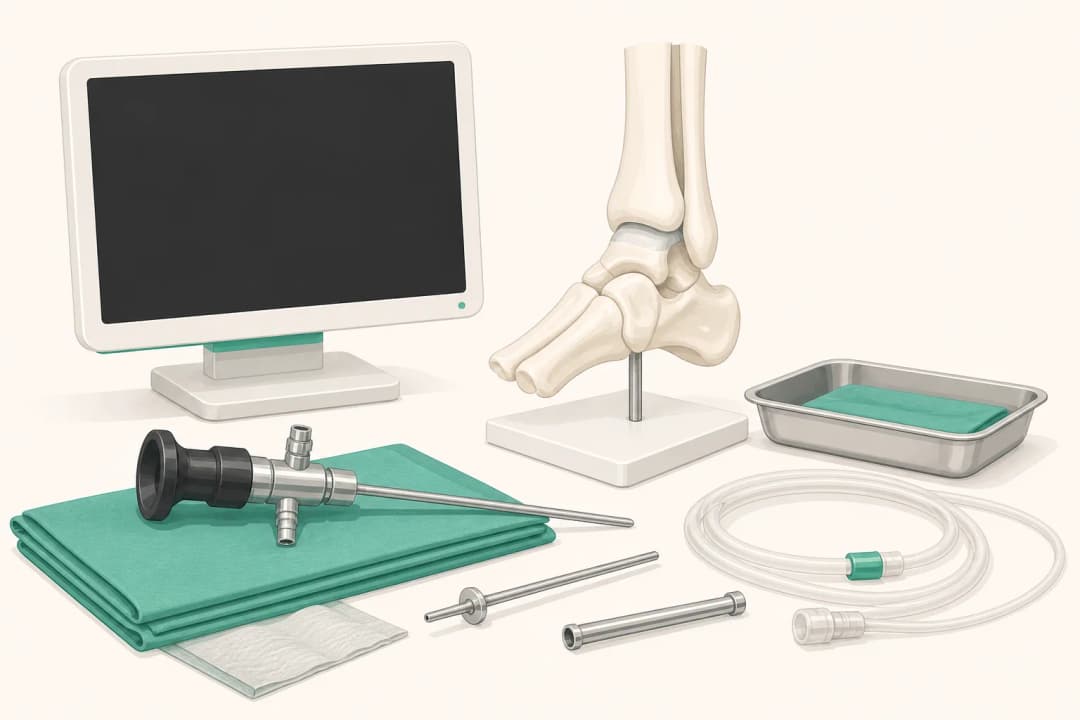
The arthroscope is a narrow camera placed through a small opening near the ankle. Fluid can expand and clear the joint so the surgeon can inspect cartilage, the lining of the joint, loose fragments, scar tissue and accessible ligament or tendon-related areas. A monitor displays the view while instruments enter through separate openings when treatment is needed.
This direct view can help match the procedure to what is found inside the joint. Depending on the planned operation, the surgeon may smooth an injured surface, remove loose tissue or address inflamed or scarred tissue. The arthroscope is a viewing and guiding tool, not a promise that every ankle problem can be treated this way.
Supporting your recovery
Ask which movements and how much weight the ankle can take after the procedure. Elevate it as advised, protect dressings and use crutches or a boot correctly. Once permitted, gentle movement and physiotherapy help prevent stiffness and rebuild calf, ankle and balance control. Do not remove a boot or return to impact exercise without clearance.
When to seek care
Report increasing redness, wound drainage, fever, severe pain, new numbness or swelling that is getting worse rather than settling. Seek urgent help if the foot becomes cold, pale or blue, if you cannot move the toes, or if chest pain or sudden breathing difficulty develops. A tight dressing causing increasing tingling also needs prompt advice.
Questions for your doctor
Ask what was seen in the joint, what was treated, when you may bear weight, how long a boot or splint is expected, and which ankle movements should begin with physiotherapy.
Find care
General Clinics & Polyclinics in Abu Dhabi
That answer is general. If you want it applied to your own case, these are licensed general clinics & polyclinics listed in Abu Dhabi.
27 Ar Ruwwad St - Shakhbout City - MSH4 - Abu Dhabi - United Arab Emirates
Accepts: Daman, Thiqa, Cigna, MetLife +20 more
Al Ruwais, Al Dhafrah
Accepts: Daman, Thiqa, AXA, Cigna +16 more
Al Bahyah - Al Bahyah Old - Abu Dhabi - United Arab Emirates
Accepts: Daman, Thiqa, Cigna, Allianz Care +18 more
Abu Dhabi
Accepts: Daman, Thiqa, AXA, Cigna +27 more
Ordered by verification status and how complete each clinic's public record is, then alphabetically. This is a directory listing, not a ranking — Zavis does not rate or recommend providers.
A factual listing drawn from the DHA, DOH and MOHAP licence registers. It is not a referral, an endorsement, or advice that any of these providers is right for you.
Questions people ask
Is ankle arthroscopy suitable for every ankle problem?
No. Suitability depends on the location and nature of the problem, examination findings, imaging and the goals of treatment.
Can I walk normally straight after ankle arthroscopy?
Walking instructions vary. A boot, splint, crutches or limited weight-bearing may be needed while the treated tissues settle.
Related
Related reading
Keep reading
Medical disclaimer. This page is general health information, not medical advice, and it cannot diagnose you. Always consult a licensed healthcare provider about your own symptoms and treatment. In an emergency in the UAE, call 998 for an ambulance.