
Why does peripheral arterial disease cause cold hands and feet?
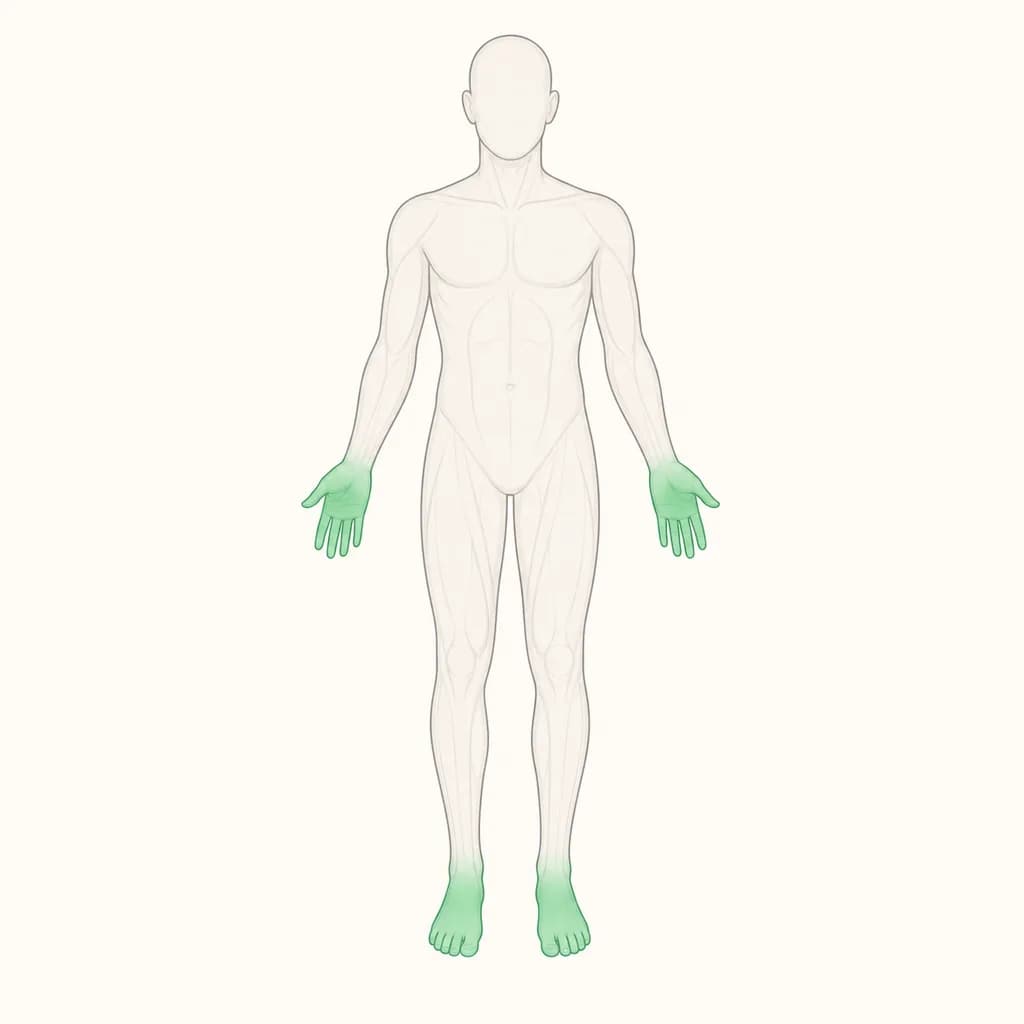
Short answer
Peripheral arterial disease can cause cold hands and feet when narrowed arteries limit blood flow, reducing the warmth delivered to the skin and tissues.
This answers one question. It is not a diagnosis and does not replace an assessment by a licensed doctor.
At a glance
- Why it feels cold
- Less blood reaching the skin carries less body heat.
- Important observation
- A cooler limb on one side deserves medical assessment.
How reduced circulation causes coldness
Arteries carry oxygen-rich blood from the heart to the body. In peripheral arterial disease, fatty deposits can narrow an artery and reduce the flow available beyond that point. The skin of an affected limb may feel cooler than the other side, particularly at the toes or feet.
Cold Hands and Feet is a common presentation of Peripheral Arterial Disease. It does not establish the cause of coldness on its own: room temperature, circulation responses to cold, nerve problems, and other conditions may also contribute. A clinician compares both limbs, checks pulses and skin changes, and considers your wider health.
What you can do now
Arrange a medical review for persistent or new limb coldness, especially if it occurs with pain on walking, slow-healing skin breaks, colour changes, or reduced sensation. Keep feet protected from injury and extreme temperatures. Check daily for cuts, blisters, or areas rubbed by footwear, because reduced circulation can make healing more difficult.
Avoid applying direct heat to a numb or poorly perfused foot, as it can burn before you notice. Bring a list of medicines and describe whether the coldness is one-sided, comes with activity, or changes when you rest.
When to get urgent help
Seek urgent medical care if a hand or foot suddenly becomes very cold, pale or blue, painful, numb, weak, or difficult to move. Urgent assessment is also needed for a new non-healing wound, blackened skin, spreading redness, fever, or severe pain at rest. These signs can indicate a serious circulation problem or infection.
Questions for your clinician
Could reduced arterial flow explain the temperature change? Should my leg and foot pulses be checked? Do I need tests of circulation? Which symptoms mean I should seek emergency care, and how should I protect my feet while waiting for review?
Find care
General Clinics & Polyclinics in Abu Dhabi
That answer is general. If you want it applied to your own case, these are licensed general clinics & polyclinics listed in Abu Dhabi.
27 Ar Ruwwad St - Shakhbout City - MSH4 - Abu Dhabi - United Arab Emirates
Accepts: Daman, Thiqa, Cigna, MetLife +20 more
Al Ruwais, Al Dhafrah
Accepts: Daman, Thiqa, AXA, Cigna +16 more
Al Bahyah - Al Bahyah Old - Abu Dhabi - United Arab Emirates
Accepts: Daman, Thiqa, Cigna, Allianz Care +18 more
Abu Dhabi
Accepts: Daman, Thiqa, AXA, Cigna +27 more
Ordered by verification status and how complete each clinic's public record is, then alphabetically. This is a directory listing, not a ranking — Zavis does not rate or recommend providers.
A factual listing drawn from the DHA, DOH and MOHAP licence registers. It is not a referral, an endorsement, or advice that any of these providers is right for you.
Questions people ask
Can peripheral arterial disease affect only the feet?
It often affects blood flow to the legs and feet. The exact area and severity depend on which arteries are narrowed.
Is a cold foot an emergency?
Sudden coldness with pain, colour change, numbness, weakness, or loss of movement needs urgent medical assessment.
Related
Related reading
Keep reading
Medical disclaimer. This page is general health information, not medical advice, and it cannot diagnose you. Always consult a licensed healthcare provider about your own symptoms and treatment. In an emergency in the UAE, call 998 for an ambulance.