
Why do kidney stones cause difficulty passing urine?
Short answer
A kidney stone can narrow or block part of the urinary tract, making it harder for urine to pass normally.
This answers one question. It is not a diagnosis and does not replace an assessment by a licensed doctor.
At a glance
- Also called
- Urinary hesitancy or a poor urine stream
- Possible mechanism
- Irritation, swelling, spasm, or blockage in the urinary tract
- Urgent sign
- Being unable to pass urine
What is happening in the urinary tract
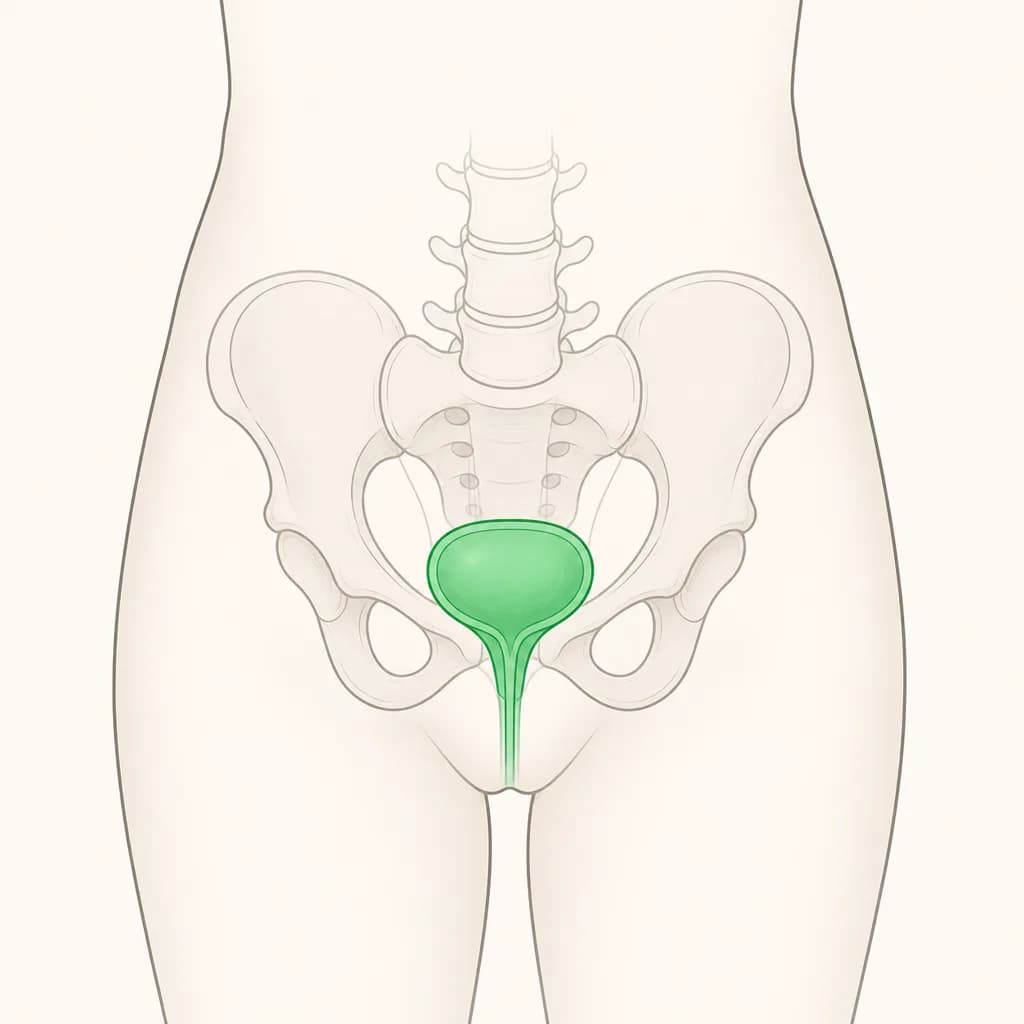
Urine normally travels from each kidney through a ureter to the bladder, then leaves through the urethra. A stone can irritate the lining as it moves, or lodge where the passage is narrower. Swelling and muscle spasm around the stone can further restrict flow, leading to hesitancy, a weak stream, straining, or the sense that the bladder has not emptied. Difficulty Passing Urine is a common presentation of Kidney Stones, but the same symptom can have other causes.
The location matters. A stone higher in a ureter may mainly cause pain or nausea, while a stone near the bladder outlet may make urinary symptoms more noticeable. Blood in the urine, urgency, or burning can occur when the urinary tract is irritated.
What you can do now
Seek a clinical assessment if trouble passing urine is new, persistent, or occurring with pain. A clinician may ask about the urine stream, examine you, test a urine sample, and decide whether imaging is needed to look for a stone or another blockage. Drink normally unless a clinician has told you to limit fluids; forcing large amounts of water when urine is not passing can be uncomfortable.
Use only pain relief that is suitable for you, taking account of kidney disease, stomach ulcers, pregnancy, blood-thinning medicines, and other health conditions. If you have been prescribed treatment for a known stone, follow those instructions and contact the prescribing team if symptoms change.
When to seek urgent care
Get urgent medical help if you cannot pass urine, develop fever or chills, feel severely unwell, have worsening one-sided back or abdominal pain, repeated vomiting, or notice confusion. These features can accompany a blocked urinary tract or an infection and need prompt assessment. Seek same-day advice for visible blood in the urine or difficulty passing urine that does not settle.
Questions to raise at your appointment
Ask whether your symptoms suggest obstruction, what tests could clarify the cause, whether infection needs to be excluded, and what changes should prompt urgent reassessment. If a stone is found, ask where it is, whether it is likely to pass, and how follow-up will be arranged.
Find care
General Clinics & Polyclinics in Abu Dhabi
That answer is general. If you want it applied to your own case, these are licensed general clinics & polyclinics listed in Abu Dhabi.
27 Ar Ruwwad St - Shakhbout City - MSH4 - Abu Dhabi - United Arab Emirates
Accepts: Daman, Thiqa, Cigna, MetLife +20 more
Al Ruwais, Al Dhafrah
Accepts: Daman, Thiqa, AXA, Cigna +16 more
Al Bahyah - Al Bahyah Old - Abu Dhabi - United Arab Emirates
Accepts: Daman, Thiqa, Cigna, Allianz Care +18 more
Abu Dhabi
Accepts: Daman, Thiqa, AXA, Cigna +27 more
Ordered by verification status and how complete each clinic's public record is, then alphabetically. This is a directory listing, not a ranking — Zavis does not rate or recommend providers.
A factual listing drawn from the DHA, DOH and MOHAP licence registers. It is not a referral, an endorsement, or advice that any of these providers is right for you.
Questions people ask
Can a kidney stone stop urine completely?
A stone can obstruct urine flow, particularly if it becomes lodged in a narrow part of the urinary tract. Inability to pass urine needs urgent medical assessment.
Does a weak urine stream confirm that I have a kidney stone?
No. A weak stream has several possible causes, so an assessment is needed to identify whether a stone, infection, prostate problem, medication effect, or another issue is involved.
Related
Related reading
Keep reading
Medical disclaimer. This page is general health information, not medical advice, and it cannot diagnose you. Always consult a licensed healthcare provider about your own symptoms and treatment. In an emergency in the UAE, call 998 for an ambulance.