
What should you know about throwing up blood liver?
Short answer
Throwing up blood with liver disease can indicate serious upper digestive tract bleeding and needs urgent medical assessment.
This answers one question. It is not a diagnosis and does not replace an assessment by a licensed doctor.
At a glance
- Symptom
- Blood in vomit
- Action
- Seek emergency assessment
- Possible source
- Upper digestive tract
What it can mean
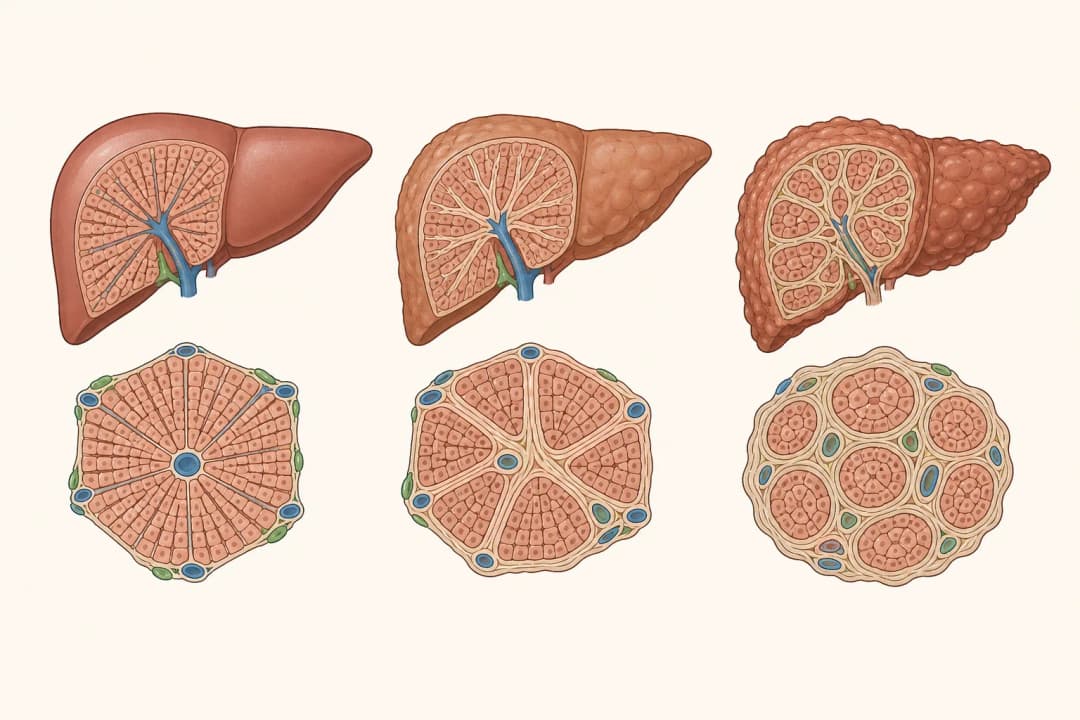
Blood in vomit may look bright red, dark brown, or like coffee grounds. Advanced liver scarring can raise pressure in veins that carry blood through the liver. Enlarged veins in the food pipe or stomach may then bleed. A stomach ulcer, irritation, a tear after repeated retching, or another digestive condition can also cause bleeding. The appearance of the blood does not show the cause by itself.
What to do now
Treat this as an emergency symptom. Stop eating and drinking until a clinician gives instructions, keep a record of medicines taken, and do not take aspirin or anti-inflammatory pain medicines unless a clinician has specifically advised them. If possible, have someone stay with you and bring your medicines. Do not drive yourself if you feel faint, confused, or weak.
When to seek care
Seek emergency care immediately for any blood in vomit, especially with black stools, dizziness, fainting, fast breathing, confusion, severe weakness, belly pain, or pale clammy skin. These signs can accompany significant blood loss. Call local emergency services if the bleeding is ongoing, you cannot stay awake, or you collapse. Even if the bleeding stops, urgent assessment is still needed.
Questions for your doctor
Ask what may have caused the bleeding, whether tests are needed to locate it, which medicines should be paused, and how liver disease changes your follow-up plan. Tell the team when the vomiting began, how the blood looked, how often it happened, and whether you have had black stools or faintness.
Questions people ask
Can liver disease cause vomiting blood?
Liver disease can contribute to bleeding from enlarged digestive-tract veins, but other causes are possible and require assessment.
What if the bleeding has stopped?
Arrange urgent medical evaluation anyway, because bleeding can recur or the underlying cause may still need treatment.
Related
Related reading
Keep reading
Cancer care in the UAE
Hospitals & Medical Centers in Abu Dhabi
Most UAE cancer care is delivered inside hospital services rather than by standalone oncology clinics, so these are licensed hospitals & medical centers listed in Abu Dhabi. Confirm the specific cancer service exists before you travel, and know that asking for a second opinion is routine.
Ahalia Hospital Musaffah Building - Musaffah - Musaffah Industrial - Abu Dhabi - United Arab Emirates
Accepts: Daman, Thiqa, AXA, Cigna +26 more
Al Ruwais Industrial City - Abu Dhabi - United Arab Emirates
Accepts: Daman, Thiqa, AXA, Cigna +30 more
Abu Dhabi, Abu Dhabi
Accepts: Daman, Thiqa, AXA, Cigna +30 more
Second opinions are routine in cancer care and asking for one does not affect your treatment. How to arrange a second opinion in the UAE.
Ordered by verification status and how complete each clinic's public record is, then alphabetically. This is a directory listing, not a ranking — Zavis does not rate or recommend providers.
A factual listing drawn from the DHA, DOH and MOHAP licence registers. It is not a referral, an endorsement, or advice that any of these providers is right for you.
Medical disclaimer. This page is general health information, not medical advice, and it cannot diagnose you. Always consult a licensed healthcare provider about your own symptoms and treatment. In an emergency in the UAE, call 998 for an ambulance.