
What should you know about spotty nappy rash?
Short answer
Spotty nappy rash often reflects irritation from moisture and friction, though yeast or another cause may need treatment.
This answers one question. It is not a diagnosis and does not replace an assessment by a licensed doctor.
At a glance
- Reduce irritation
- Change nappies promptly and pat skin dry
- Avoid
- Skip talc, fragrance, harsh antiseptics, and scrubbing
- Get advice
- For folds involved, edge spots, pain, spreading, or poor improvement
What the spots may mean
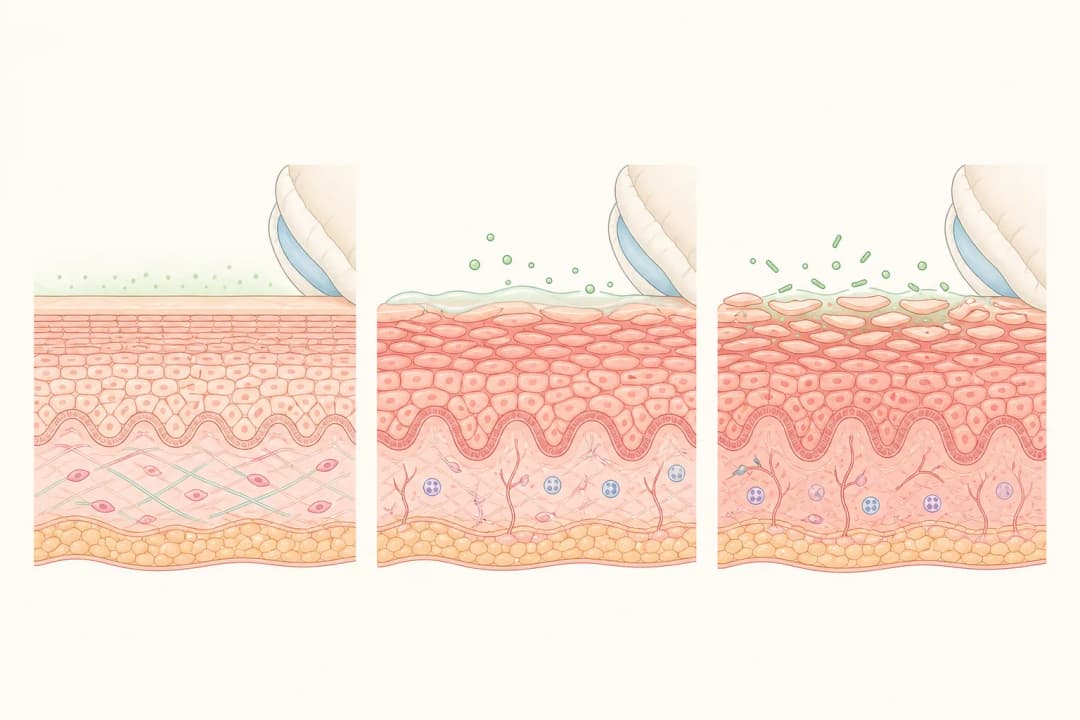
Irritant nappy rash commonly affects skin covered by the nappy and can look red, sore, shiny, or patchy. Warmth, dampness, stool, urine, rubbing, diarrhoea, antibiotics, and fragranced products can all weaken the skin barrier. Small spots around the edge of a bright red rash, or involvement of the skin folds, can occur with yeast irritation, but a clinician may need to confirm this.
Other rashes can mimic nappy rash, including contact reactions and some infections. The child’s age, comfort, feeding, temperature, and how quickly the rash appeared help determine urgency.
What you can do now
Change wet or soiled nappies promptly, rinse with lukewarm water or use fragrance-free wipes, and pat rather than rub. Give short periods without a nappy when practical, and apply a bland barrier or moisturiser to clean, dry skin; Emollient Therapy covers gentle barrier support. Avoid talc, fragranced products, harsh antiseptics, and scrubbing. Do not use an antifungal cream unless a pharmacist or clinician recommends the product and instructions.
When to seek care
Contact a clinician if the rash is spreading, very painful, blistered, bleeding, weeping, crusted, or not improving with gentle care. Seek prompt advice if the child has fever, seems unusually sleepy, feeds poorly, passes fewer wet nappies, or the rash involves the mouth or eyes. Topical Antifungal Treatment may be suitable when yeast is confirmed or strongly suspected.
Questions for your doctor
Ask whether the pattern is irritant, yeast-related, or another rash; which barrier product is suitable; and how often it should be applied. Tell the clinician when it began, how often nappies are changed, whether there is diarrhoea or recent antibiotic use, and what products have touched the skin.
Find care
General Clinics & Polyclinics in Abu Dhabi
That answer is general. If you want it applied to your own case, these are licensed general clinics & polyclinics listed in Abu Dhabi.
27 Ar Ruwwad St - Shakhbout City - MSH4 - Abu Dhabi - United Arab Emirates
Accepts: Daman, Thiqa, Cigna, MetLife +20 more
Al Ruwais, Al Dhafrah
Accepts: Daman, Thiqa, AXA, Cigna +16 more
Al Bahyah - Al Bahyah Old - Abu Dhabi - United Arab Emirates
Accepts: Daman, Thiqa, Cigna, Allianz Care +18 more
Abu Dhabi
Accepts: Daman, Thiqa, AXA, Cigna +27 more
Ordered by verification status and how complete each clinic's public record is, then alphabetically. This is a directory listing, not a ranking — Zavis does not rate or recommend providers.
A factual listing drawn from the DHA, DOH and MOHAP licence registers. It is not a referral, an endorsement, or advice that any of these providers is right for you.
Questions people ask
Why does nappy rash look spotty?
Moisture and friction can create patchy inflammation, while yeast irritation may add small spots around a red rash.
Can I use an antifungal cream straight away?
Ask a pharmacist or clinician first, because different rashes need different products and instructions.
Related
Related reading
Keep reading
Medical disclaimer. This page is general health information, not medical advice, and it cannot diagnose you. Always consult a licensed healthcare provider about your own symptoms and treatment. In an emergency in the UAE, call 998 for an ambulance.