
What should you know about SCLC stages?
Short answer
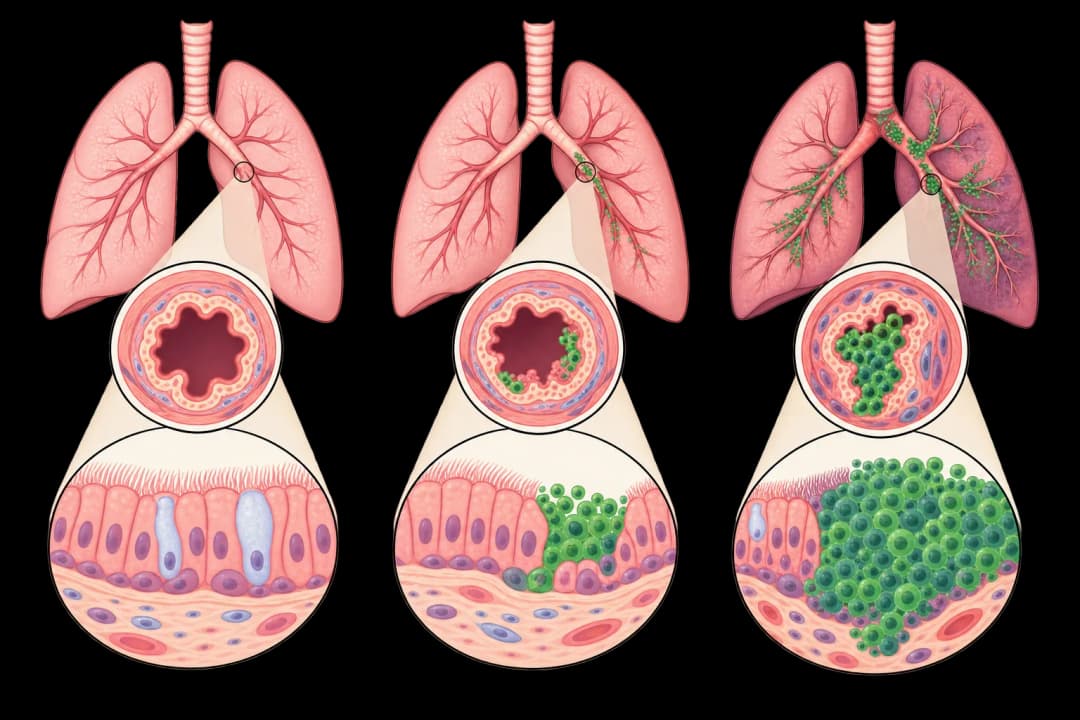
SCLC stages describe how far small-cell lung cancer has spread and whether it can be treated within a focused radiation plan.
This answers one question. It is not a diagnosis and does not replace an assessment by a licensed doctor.
At a glance
- Main groups
- Limited-stage and extensive-stage disease
- Stage evidence
- Imaging, biopsy, examination, and health assessment
- Urgent warning
- Severe breathing difficulty or sudden neurological change
How SCLC is grouped
Clinicians often use two practical groups for SCLC. Limited-stage disease is contained within one side of the chest and nearby lymph nodes so that the relevant area can be included in a manageable radiotherapy field. Extensive-stage disease has spread more widely in the chest or to distant parts of the body, or cannot be encompassed safely in one focused field. The label is based on imaging, biopsy results, examination, and overall health rather than on symptoms alone. A scan may assess the lungs, chest structures, abdomen, or bones. Brain imaging may also be recommended because SCLC can spread to the brain. The group can change if new information appears.
How stage guides care
Once staging is complete, ask the team to explain the treatment goal in plain language. Chemotherapy is often used because it travels through the bloodstream; Immunotherapy may be combined with systemic treatment in suitable plans. Radiotherapy can treat the chest or a troublesome area, and Whole Brain Radiotherapy may be discussed when brain involvement requires treatment. The plan also considers breathing, heart and kidney function, nutrition, other illnesses, and personal priorities. Staging is a planning tool, not a prediction of one person’s course. If tests conflict, the team may review images or obtain more tissue before finalising the approach.
When to seek care
Contact the clinical team promptly for worsening breathlessness, chest pain, coughing blood, new confusion, severe headache, weakness, balance trouble, or a seizure. Seek emergency help for severe breathing difficulty, sudden neurological changes, or heavy bleeding. During chemotherapy or immunotherapy, fever, chills, severe diarrhoea, persistent vomiting, or rapidly worsening fatigue may need same-day advice. A new symptom does not automatically mean the stage has changed, but it should be assessed rather than left until the next routine visit.
Questions for your doctor
Ask: Which staging group applies, and what findings support it? Have the brain and other likely sites been assessed? Is the disease suitable for a focused radiation field? What is the aim of chemotherapy, immunotherapy, or radiotherapy? Will staging be repeated after treatment? Which symptoms should trigger urgent contact, and who should I call outside clinic hours?
Questions people ask
Does extensive-stage SCLC mean treatment cannot help?
No. Extensive-stage disease can still be treated, with the goals and combination of treatments tailored to spread, symptoms, health, and response.
Can the stage change during care?
The initial group may be revised if later scans, pathology, or examination show additional disease or a different extent of spread.
Related
Related reading
Keep reading
Cancer care in the UAE
Hospitals & Medical Centers in Abu Dhabi
Most UAE cancer care is delivered inside hospital services rather than by standalone oncology clinics, so these are licensed hospitals & medical centers listed in Abu Dhabi. Confirm the specific cancer service exists before you travel, and know that asking for a second opinion is routine.
Ahalia Hospital Musaffah Building - Musaffah - Musaffah Industrial - Abu Dhabi - United Arab Emirates
Accepts: Daman, Thiqa, AXA, Cigna +26 more
Al Ruwais Industrial City - Abu Dhabi - United Arab Emirates
Accepts: Daman, Thiqa, AXA, Cigna +30 more
Abu Dhabi, Abu Dhabi
Accepts: Daman, Thiqa, AXA, Cigna +30 more
Second opinions are routine in cancer care and asking for one does not affect your treatment. How to arrange a second opinion in the UAE.
Ordered by verification status and how complete each clinic's public record is, then alphabetically. This is a directory listing, not a ranking — Zavis does not rate or recommend providers.
A factual listing drawn from the DHA, DOH and MOHAP licence registers. It is not a referral, an endorsement, or advice that any of these providers is right for you.
Medical disclaimer. This page is general health information, not medical advice, and it cannot diagnose you. Always consult a licensed healthcare provider about your own symptoms and treatment. In an emergency in the UAE, call 998 for an ambulance.