
Is rhabdomyolysis reversible?
Updated
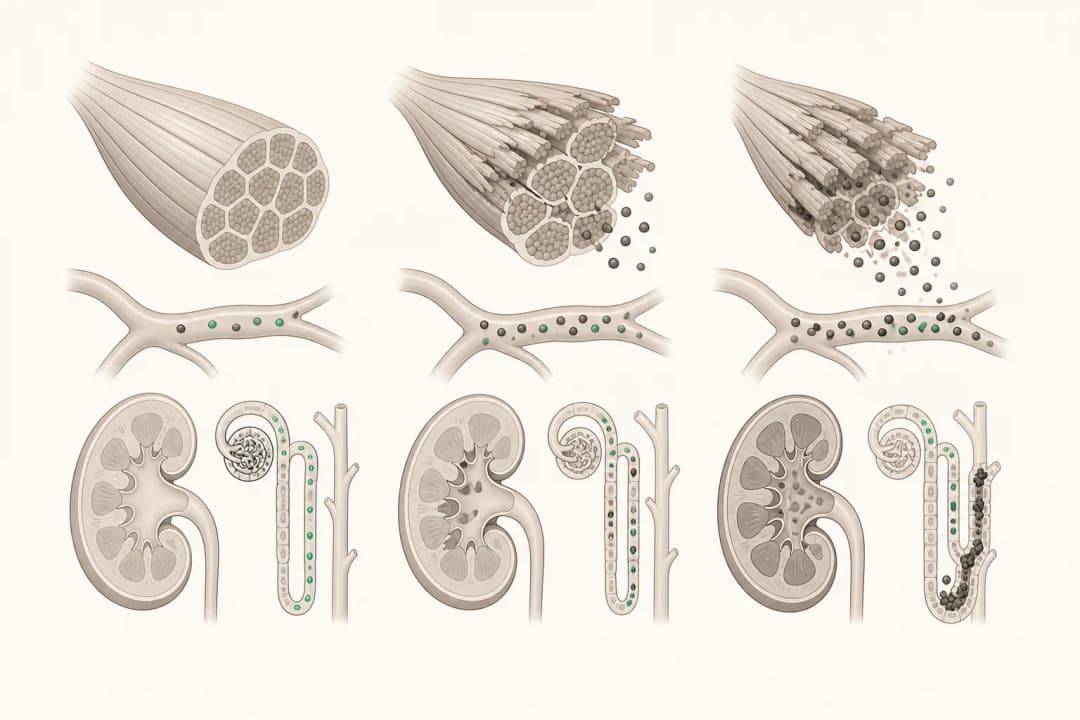
Short answer
Rhabdomyolysis can be reversible, especially when treated promptly, but recovery depends on the muscle damage and any kidney effects.
This answers one question. It is not a diagnosis and does not replace an assessment by a licensed doctor.
At a glance
- Recovery
- May be complete, but varies with muscle and kidney effects
- Follow-up
- Repeat testing may confirm that injury is settling
- Exercise
- Return gradually after clinical clearance
What recovery depends on
Treatment aims to support the body while injured muscle settles and to detect effects on the kidneys or body salts. Some people recover fully, while others need a longer period of monitoring, rehabilitation, or treatment for complications. Recovery is influenced by the cause, how much muscle was injured, general health, hydration, and how soon care began. Feeling less sore is encouraging but does not by itself show that blood tests have returned to a safe range. Muscle soreness after exercise is common, yet severe or unusual symptoms deserve a different level of attention.
Supporting a safe recovery
Follow the discharge and follow-up plan closely, including repeat blood or urine tests when requested. Rest from strenuous exercise until a clinician gives a staged return plan. Keep a record of urine changes, swelling, weakness, pain, fever, and fluid intake if asked. Avoid alcohol, heat stress, and new supplements unless cleared. Do not restart intense training simply because the muscles feel better; rebuilding strength and conditioning gradually helps reveal whether the body is tolerating activity.
When recovery may be going off course
Seek urgent care if dark urine returns, urination falls, swelling or weakness increases, pain becomes severe, or you develop vomiting, confusion, faintness, chest discomfort, or breathing difficulty. Contact the treating team about new symptoms during recovery rather than waiting for a scheduled appointment. Urgent symptoms can occur even after the original trigger has stopped.
Questions for your doctor
Ask which results show recovery, when repeat testing is due, what activity level is allowed now, whether physiotherapy is appropriate, and what future triggers to avoid. Ask how medicines, kidney health, heat, and hydration affect your personal plan.
Find care
General Clinics & Polyclinics in Dubai
That answer is general. If you want it applied to your own case, these are licensed general clinics & polyclinics listed in Dubai.
The Court Residence, 39B Street, Jumeirah 1, Dubai
Accepts: Tabby, Tamara
Elite Business Bay Residence - Shop 03 & 04, 34 Marasi Dr - Business Bay - Dubai - United Arab Emirates
Accepts: Tabby
Airport View Building, Al Garhoud, Dubai
Accepts: Daman, Thiqa, AXA, Cigna +25 more
IBIS Building, 5th Floor, Unit 5003, Deira, Dubai
Accepts: AXA, Cigna, MetLife, Allianz Care +18 more
Ordered by verification status and how complete each clinic's public record is, then alphabetically. This is a directory listing, not a ranking — Zavis does not rate or recommend providers.
A factual listing drawn from the UAE health regulators' public licence registers. It is not a referral, an endorsement, or advice that any of these providers is right for you.
Questions people ask
Does reversible mean I can exercise as soon as pain stops?
No. Symptoms can improve before muscle tests normalize, so follow the clinician’s staged return plan.
Can rhabdomyolysis leave lasting problems?
Many people recover well, but significant muscle or kidney injury can require prolonged monitoring and rehabilitation.
Related
Related reading
Keep reading
Medical disclaimer. This page is general health information, not medical advice, and it cannot diagnose you. Always consult a licensed healthcare provider about your own symptoms and treatment. In an emergency in the UAE, call 998 for an ambulance.