
What should you know about recurrent rhabdomyolysis causes?
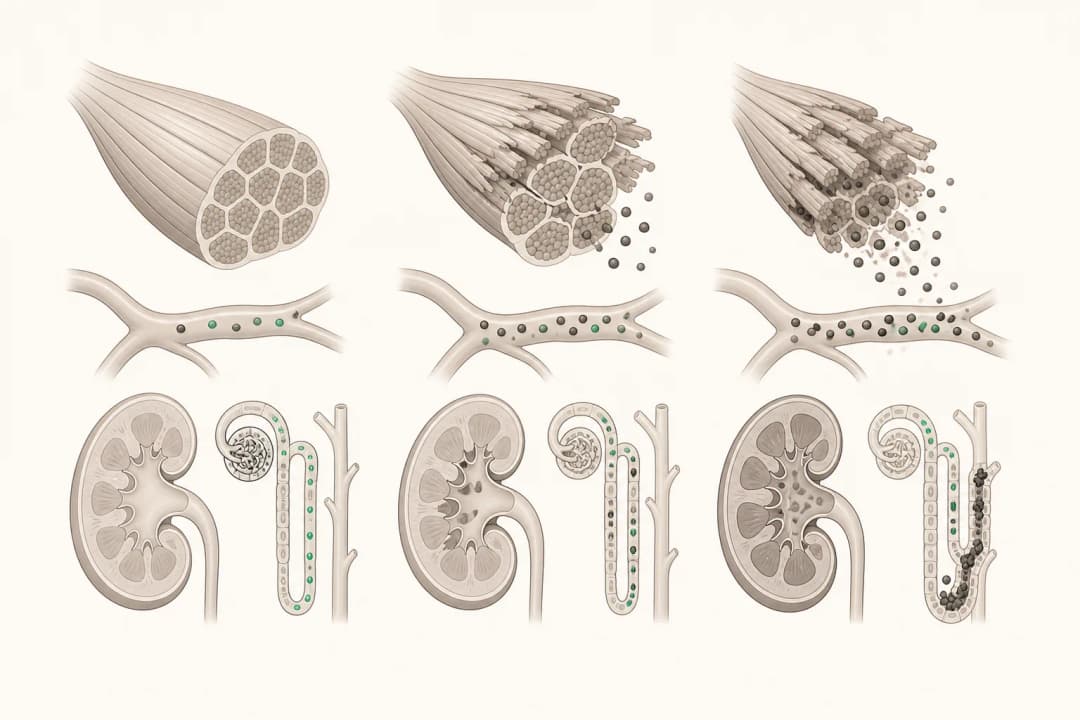
Short answer
Recurrent rhabdomyolysis needs medical assessment because repeated muscle breakdown may have an underlying trigger.
This answers one question. It is not a diagnosis and does not replace an assessment by a licensed doctor.
At a glance
- Main concern
- Repeated muscle breakdown
- Useful record
- Activity, illness, medicines, supplements, and urine changes
- Urgent sign
- Dark urine with weakness or reduced urination
What recurrence can mean
Rhabdomyolysis happens when damaged muscle releases substances into the bloodstream. A demanding or unfamiliar workout, prolonged heat exposure, dehydration, infection, a medication or supplement, or an injury can contribute. When episodes return after modest activity, a clinician may consider inherited muscle-energy disorders, problems affecting how muscles handle exertion, or another medical condition. Dark urine, marked weakness, swelling, and muscle soreness after exercise can occur, but symptoms vary.
A single episode does not identify the cause. Evaluation may include a history of exercise, heat, illness, medicines, supplements, family history, and previous test results, together with blood and urine testing. Muscle soreness after exercise can have many explanations and does not by itself establish rhabdomyolysis.
What to do next
Arrange a prompt medical review, especially if episodes have happened more than once or followed ordinary activity. Until assessed, avoid intense exercise, heat stress, alcohol, and non-prescribed performance products; drink according to your clinician’s advice. Keep a record of activities, illnesses, new medicines, supplements, urine changes, weakness, and how quickly symptoms began. Do not restart strenuous training until a clinician gives you a gradual plan.
When to seek urgent care
Seek urgent care for cola-coloured or very dark urine, very little urine, rapidly worsening muscle swelling or weakness, severe pain, vomiting, confusion, fainting, chest symptoms, or trouble breathing. These signs can accompany kidney or electrolyte problems and should not wait for a routine appointment.
Questions for your doctor
Ask which triggers are most relevant to your episodes, whether medicines or supplements should be changed, which tests are needed between episodes, and how to return safely to activity. Ask whether relatives should be assessed if the pattern began young or occurs in the family.
Find care
General Clinics & Polyclinics in Abu Dhabi
That answer is general. If you want it applied to your own case, these are licensed general clinics & polyclinics listed in Abu Dhabi.
27 Ar Ruwwad St - Shakhbout City - MSH4 - Abu Dhabi - United Arab Emirates
Accepts: Daman, Thiqa, Cigna, MetLife +20 more
Al Ruwais, Al Dhafrah
Accepts: Daman, Thiqa, AXA, Cigna +16 more
Al Bahyah - Al Bahyah Old - Abu Dhabi - United Arab Emirates
Accepts: Daman, Thiqa, Cigna, Allianz Care +18 more
Abu Dhabi
Accepts: Daman, Thiqa, AXA, Cigna +27 more
Ordered by verification status and how complete each clinic's public record is, then alphabetically. This is a directory listing, not a ranking — Zavis does not rate or recommend providers.
A factual listing drawn from the DHA, DOH and MOHAP licence registers. It is not a referral, an endorsement, or advice that any of these providers is right for you.
Questions people ask
Can exercise cause another episode?
It can, particularly when activity is intense, unfamiliar, prolonged, or combined with heat or dehydration; recurrence should be reviewed rather than self-managed.
Is muscle soreness after exercise always rhabdomyolysis?
No. Soreness is common after exertion, while rhabdomyolysis requires clinical assessment and testing, especially when weakness, swelling, or dark urine appears.
Related
Related reading
Keep reading
Medical disclaimer. This page is general health information, not medical advice, and it cannot diagnose you. Always consult a licensed healthcare provider about your own symptoms and treatment. In an emergency in the UAE, call 998 for an ambulance.