
Random hives on the body: what to know
Short answer
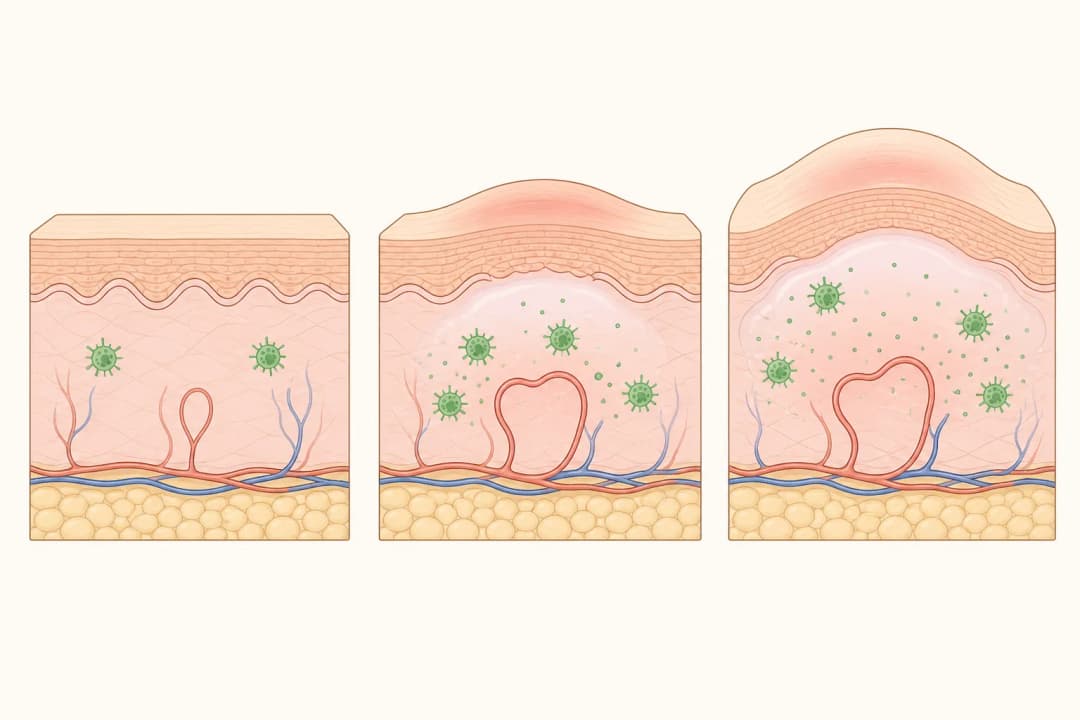
Random hives on the body are itchy, raised patches that can change position or shape while the episode is active.
This answers one question. It is not a diagnosis and does not replace an assessment by a licensed doctor.
At a glance
- Pattern
- Welts may fade in one place and appear elsewhere
- Comfort measures
- Cool compresses and loose clothing
- Emergency concern
- Tongue, throat, or breathing symptoms
How to interpret the pattern
A hive is a temporary area of skin inflammation. It may be pale, pink, or red and can join nearby areas into larger irregular patches. Heat, sweating, pressure from tight clothing, infections, foods, medicines, and contact exposures are possible triggers. Some people have repeated episodes even when no single cause can be identified.
The way the spots behave matters: hives commonly fade in one place and appear elsewhere. A mark that stays fixed, forms blisters, becomes scaly, or leaves bruising deserves a clinical review because it may not be ordinary urticaria.
Practical relief
Use cool compresses, lukewarm water, fragrance-free moisturiser, and loose clothing. Try not to scratch, since friction can stimulate more welts. Keep notes about meals, medicines, illness, heat, exercise, pressure, and products used before a flare; take a clear photograph before the appearance changes.
Ask a pharmacist or clinician about an oral antihistamine that fits your age, pregnancy status, medicines, and medical history. Avoid taking several allergy products together unless a professional has checked the ingredients. Steroid treatment should be prescribed when it is appropriate rather than self-started.
Warning signs
Get emergency help for swelling of the tongue or throat, tightness in the throat, breathing difficulty, dizziness, collapse, or repeated vomiting with hives. Widespread skin changes can accompany a serious reaction, and waiting for the welts to settle is unsafe when these symptoms occur.
Contact a clinician when flares recur, interfere with sleep, follow a new medicine, or include facial swelling. Seek assessment for painful or persistent marks, fever, or skin that looks bruised after the welts fade.
Questions to bring
What features suggest hives rather than another rash? Should I change or pause any medicine only under supervision? What should I use during a flare, and which symptoms mean I should seek emergency care?
Find care
General Clinics & Polyclinics in Abu Dhabi
That answer is general. If you want it applied to your own case, these are licensed general clinics & polyclinics listed in Abu Dhabi.
27 Ar Ruwwad St - Shakhbout City - MSH4 - Abu Dhabi - United Arab Emirates
Accepts: Daman, Thiqa, Cigna, MetLife +20 more
Al Ruwais, Al Dhafrah
Accepts: Daman, Thiqa, AXA, Cigna +16 more
Al Bahyah - Al Bahyah Old - Abu Dhabi - United Arab Emirates
Accepts: Daman, Thiqa, Cigna, Allianz Care +18 more
Abu Dhabi
Accepts: Daman, Thiqa, AXA, Cigna +27 more
Ordered by verification status and how complete each clinic's public record is, then alphabetically. This is a directory listing, not a ranking — Zavis does not rate or recommend providers.
A factual listing drawn from the DHA, DOH and MOHAP licence registers. It is not a referral, an endorsement, or advice that any of these providers is right for you.
Questions people ask
Should I scratch hives if they itch?
Avoid scratching because rubbing can aggravate the skin and trigger additional welts; cooling the area is gentler.
When should recurring hives be assessed?
Arrange an assessment when episodes return, affect sleep, follow a new medicine, or occur with deeper swelling.
Keep reading
Medical disclaimer. This page is general health information, not medical advice, and it cannot diagnose you. Always consult a licensed healthcare provider about your own symptoms and treatment. In an emergency in the UAE, call 998 for an ambulance.