
PPROM risk factors: what to know
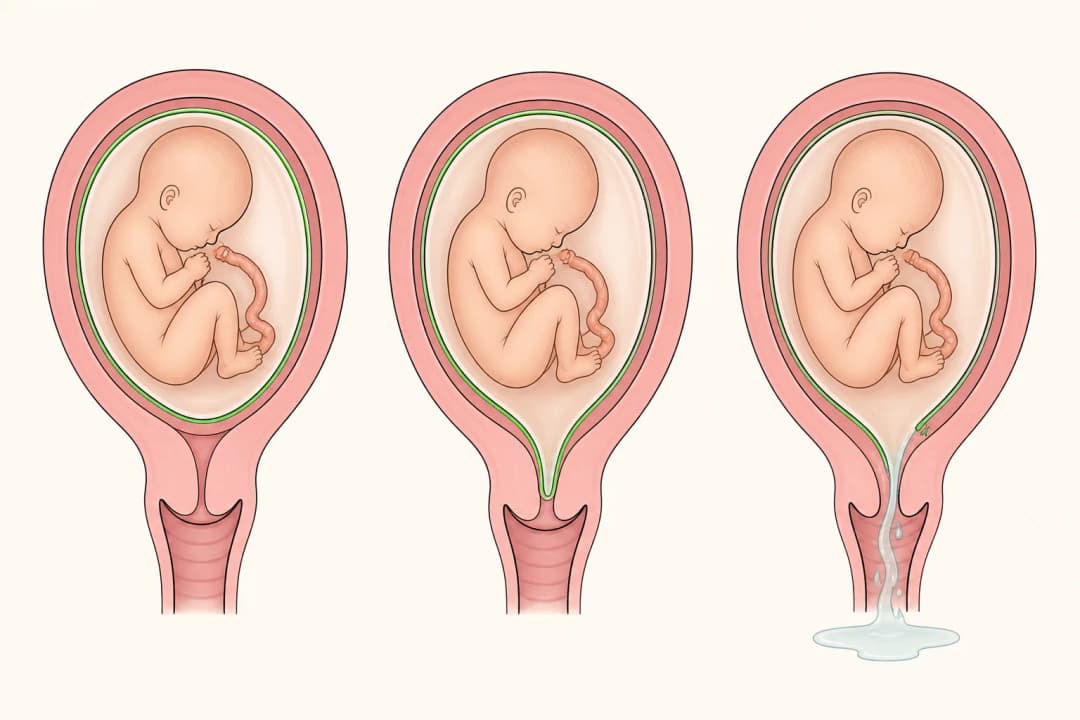
Short answer
PPROM risk factors can include previous membrane rupture, infection, bleeding, cervical problems or pregnancy complications, but it can occur without a clear cause.
This answers one question. It is not a diagnosis and does not replace an assessment by a licensed doctor.
At a glance
- Risk factors
- May include prior PPROM, infection, bleeding or cervical problems.
- Certainty
- A risk factor does not predict PPROM by itself.
- Action
- Report fluid leakage or red-flag symptoms promptly.
Factors clinicians consider
Your maternity team may ask about a previous preterm birth or earlier rupture of the membranes, vaginal or urinary infection, bleeding during pregnancy, cervical shortening or a procedure involving the cervix. Problems affecting the placenta, fluid around the baby or the uterus may also be relevant. Smoking and some underlying health conditions can affect pregnancy wellbeing, so share your full history without self-blame.
Having a risk factor does not confirm that PPROM will happen, and not having one does not rule it out. The cause is often not identifiable. A cerclage, which is a stitch placed around the cervix, is a separate part of the clinical picture and needs individual review if fluid leakage occurs.
What you can do
Keep scheduled antenatal visits and tell your clinician about unusual discharge, pelvic pressure, bleeding, pain or suspected fluid leakage. Take prescribed medicines as directed and ask before using a new medicine during pregnancy. If you have had PPROM or a preterm birth before, ask whether your pregnancy needs extra cervical, infection or fetal monitoring.
If PPROM is diagnosed, the team may discuss an antenatal steroid injection and may later consider induction of labour when birth is safer or clinically necessary. See [Antenatal Steroid Injection](/treatments/pregnancy-and-birth-care/antenatal-corticosteroid-injection/) and [Induction of Labour](/treatments/pregnancy-and-birth-care/induction-of-labour/).
When to seek urgent care
Go to urgent maternity assessment if you notice a sudden gush or continuing trickle of fluid, fever, chills, abdominal tenderness, contractions, vaginal bleeding, offensive-smelling fluid or reduced fetal movements. These symptoms need assessment because infection, labour or fetal concerns can require prompt treatment, regardless of whether you know any risk factor.
Questions to bring
Ask which factors apply to your pregnancy, whether you need additional monitoring, how infection is assessed, and what symptoms should trigger an immediate call. If you have a previous history, ask what early warning plan and birth plan are appropriate for you.
Find care
General Clinics & Polyclinics in Abu Dhabi
That answer is general. If you want it applied to your own case, these are licensed general clinics & polyclinics listed in Abu Dhabi.
27 Ar Ruwwad St - Shakhbout City - MSH4 - Abu Dhabi - United Arab Emirates
Accepts: Daman, Thiqa, Cigna, MetLife +20 more
Al Ruwais, Al Dhafrah
Accepts: Daman, Thiqa, AXA, Cigna +16 more
Al Bahyah - Al Bahyah Old - Abu Dhabi - United Arab Emirates
Accepts: Daman, Thiqa, Cigna, Allianz Care +18 more
Abu Dhabi
Accepts: Daman, Thiqa, AXA, Cigna +27 more
Ordered by verification status and how complete each clinic's public record is, then alphabetically. This is a directory listing, not a ranking — Zavis does not rate or recommend providers.
A factual listing drawn from the DHA, DOH and MOHAP licence registers. It is not a referral, an endorsement, or advice that any of these providers is right for you.
Questions people ask
Can PPROM happen without risk factors?
Yes. Some people develop PPROM without an obvious risk factor or identifiable cause.
Can risk factors be removed during pregnancy?
Some contributors, such as an infection, can be treated, while others require monitoring and a personalised plan rather than a guaranteed prevention.
Related
Related reading
Keep reading
Medical disclaimer. This page is general health information, not medical advice, and it cannot diagnose you. Always consult a licensed healthcare provider about your own symptoms and treatment. In an emergency in the UAE, call 998 for an ambulance.