
PPROM guidelines: how care is decided
Short answer
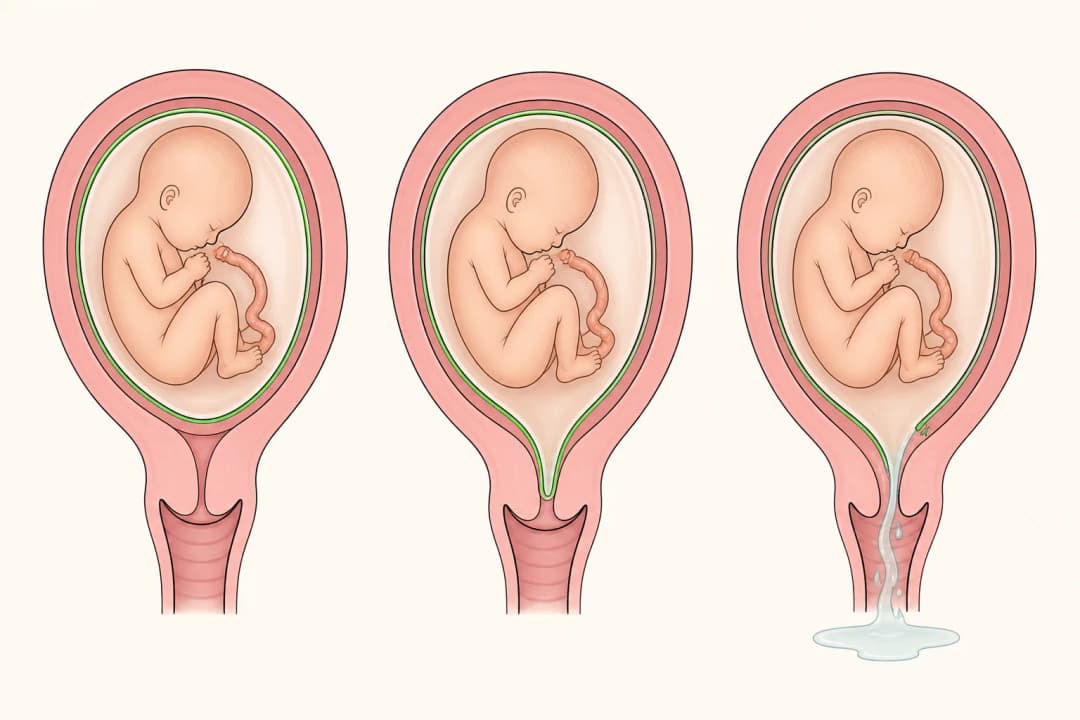
PPROM guidelines focus on confirming membrane rupture, assessing infection and fetal wellbeing, giving appropriate treatment, and deciding when birth is safest.
This answers one question. It is not a diagnosis and does not replace an assessment by a licensed doctor.
At a glance
- First step
- Confirm suspected rupture and assess maternal and fetal wellbeing
- Care factors
- Gestational age, infection, labour, bleeding and fetal condition
- Safety net
- Urgent review is needed when symptoms or movement change
How clinicians assess PPROM
Assessment usually starts with your history and a careful examination of the fluid, while avoiding unnecessary vaginal examinations. The team may record temperature, pulse and blood pressure, check for tenderness or contractions, take blood or urine tests, and monitor the baby’s heartbeat. Ultrasound can add information about fluid and growth.
Guideline-based care is adjusted for gestational age, confirmed or suspected infection, labour, bleeding, fetal presentation, fetal wellbeing and the resources available for premature newborn care. There is no single plan that fits every pregnancy. Your clinicians should explain the reason for each recommendation and what findings would change it.
Treatment and monitoring decisions
If PPROM is confirmed, the team may discuss antibiotics, corticosteroids for fetal lung development and other medicines according to gestation and local practice. Monitoring can be inpatient or arranged through specialist follow-up when appropriate. Ask about the purpose, timing and possible effects of an [Antenatal Steroid Injection](/treatments/pregnancy-and-birth-care/antenatal-corticosteroid-injection/). Keep a record of symptoms and follow the unit’s instructions about returning for review.
Urgent symptoms
Seek maternity advice immediately for fever, chills, feeling unwell, abdominal pain or tenderness, regular contractions, vaginal bleeding, foul-smelling or green fluid, or reduced fetal movement. These findings can point to infection, labour, bleeding or fetal compromise. Do not wait for the next planned check if symptoms change.
Making the plan clear
Ask how rupture was confirmed, which observations and tests are planned, what treatment is recommended at your gestation, and what would prompt delivery. Discuss the likely birth setting and whether [Induction of Labour](/treatments/pregnancy-and-birth-care/induction-of-labour/) could be used if birth is advised. Request clear out-of-hours contact instructions before leaving hospital.
Find care
General Clinics & Polyclinics in Abu Dhabi
That answer is general. If you want it applied to your own case, these are licensed general clinics & polyclinics listed in Abu Dhabi.
27 Ar Ruwwad St - Shakhbout City - MSH4 - Abu Dhabi - United Arab Emirates
Accepts: Daman, Thiqa, Cigna, MetLife +20 more
Al Ruwais, Al Dhafrah
Accepts: Daman, Thiqa, AXA, Cigna +16 more
Al Bahyah - Al Bahyah Old - Abu Dhabi - United Arab Emirates
Accepts: Daman, Thiqa, Cigna, Allianz Care +18 more
Abu Dhabi
Accepts: Daman, Thiqa, AXA, Cigna +27 more
Ordered by verification status and how complete each clinic's public record is, then alphabetically. This is a directory listing, not a ranking — Zavis does not rate or recommend providers.
A factual listing drawn from the DHA, DOH and MOHAP licence registers. It is not a referral, an endorsement, or advice that any of these providers is right for you.
Questions people ask
Are PPROM guidelines the same for everyone?
No. Recommendations are adapted to gestational age, examination findings, fetal wellbeing, infection risk and local specialist resources.
What happens if guideline checks suggest infection?
The team reassesses you and the baby promptly and may recommend treatment and delivery when continuing the pregnancy is unsafe.
Related
Related reading
Keep reading
Medical disclaimer. This page is general health information, not medical advice, and it cannot diagnose you. Always consult a licensed healthcare provider about your own symptoms and treatment. In an emergency in the UAE, call 998 for an ambulance.