
Post-cerclage care: what to know
Short answer
After a cervical cerclage, follow your maternity team's activity and medicine instructions, attend planned checks, and report bleeding, fluid loss, contractions or pain promptly.
This answers one question. It is not a diagnosis and does not replace an assessment by a licensed doctor.
At a glance
- Main priority
- Follow your personalised maternity instructions.
- Report promptly
- Bleeding, fluid loss, contractions, pain or fever.
What recovery can involve
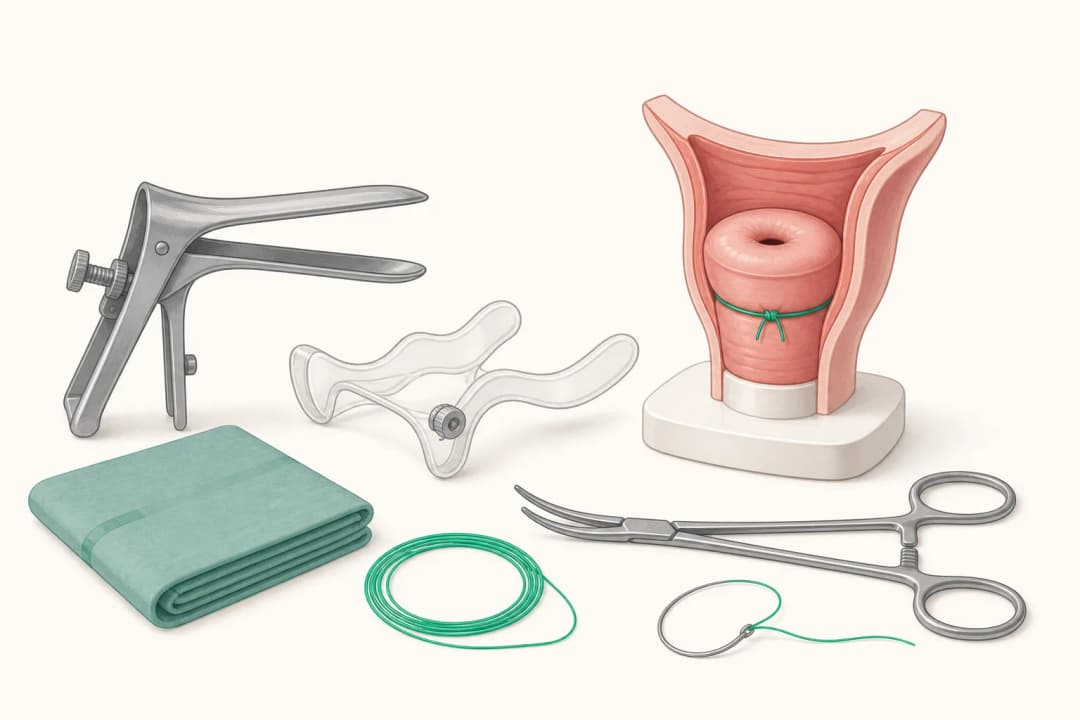
A cerclage is a stitch placed around the cervix to help it stay closed during pregnancy. Mild cramping, pelvic pressure or light spotting can occur soon after the procedure, but symptoms should settle according to the plan given by your maternity team. The stitch does not prevent every cause of early labour, so keep contact details for your maternity unit available.
Your clinician may advise avoiding intercourse, swimming, heavy lifting or strenuous activity for a period of time. The exact advice depends on why the stitch was placed, how the procedure went and your pregnancy history. The stitch is usually discussed again later in pregnancy, including how and when it will be removed.
Practical care at home
Rest when you need to, keep any prescribed medicines to the instructed schedule, and use sanitary pads if you need to observe spotting. Do not put anything into the vagina or change activity restrictions without checking with your maternity team. Keep antenatal appointments so they can assess symptoms, the cervix and the pregnancy.
Ask whether you should contact the unit before travelling, exercising or having sex. If your waters may have broken, avoid intercourse and seek advice straight away because the stitch may need specific management.
When to seek urgent advice
Contact your maternity unit promptly for fresh or increasing bleeding, watery fluid from the vagina, regular tightening or contractions, worsening pelvic or abdominal pain, fever, chills, smelly discharge, or reduced fetal movement later in pregnancy. These symptoms can signal infection, ruptured membranes or preterm labour and need assessment rather than home observation.
Questions to take to your appointment
Ask when you can return to work, drive, exercise and have sex; which symptoms should trigger a call; how the stitch will be monitored; and what plan applies if labour or your waters breaking begins. You can read more about [Cervical Cerclage](/treatments/pregnancy-and-birth-care/cervical-cerclage/) and [Preterm Labour](/conditions/preterm-labour/).
Find care
General Clinics & Polyclinics in Abu Dhabi
That answer is general. If you want it applied to your own case, these are licensed general clinics & polyclinics listed in Abu Dhabi.
27 Ar Ruwwad St - Shakhbout City - MSH4 - Abu Dhabi - United Arab Emirates
Accepts: Daman, Thiqa, Cigna, MetLife +20 more
Al Ruwais, Al Dhafrah
Accepts: Daman, Thiqa, AXA, Cigna +16 more
Al Bahyah - Al Bahyah Old - Abu Dhabi - United Arab Emirates
Accepts: Daman, Thiqa, Cigna, Allianz Care +18 more
Abu Dhabi
Accepts: Daman, Thiqa, AXA, Cigna +27 more
Ordered by verification status and how complete each clinic's public record is, then alphabetically. This is a directory listing, not a ranking — Zavis does not rate or recommend providers.
A factual listing drawn from the DHA, DOH and MOHAP licence registers. It is not a referral, an endorsement, or advice that any of these providers is right for you.
Questions people ask
Can I have light spotting after a cerclage?
Light spotting may occur after the procedure, but new, heavy or increasing bleeding should be discussed promptly with your maternity unit.
What if contractions start with a cerclage in place?
Call the maternity unit immediately so the team can assess labour, membranes and the safest plan for the stitch.
Related
Related reading
Keep reading
Medical disclaimer. This page is general health information, not medical advice, and it cannot diagnose you. Always consult a licensed healthcare provider about your own symptoms and treatment. In an emergency in the UAE, call 998 for an ambulance.