
What should you know about a portable cholesterol test?
Short answer
A portable cholesterol test uses a small blood sample to estimate cholesterol levels when testing is performed outside a standard laboratory.
This answers one question. It is not a diagnosis and does not replace an assessment by a licensed doctor.
At a glance
- Sample
- Usually a small finger-prick blood sample
- Preparation
- Fasting may or may not be required; check beforehand
- Meaning
- A result informs risk assessment but is not interpreted alone
What is a portable cholesterol test?
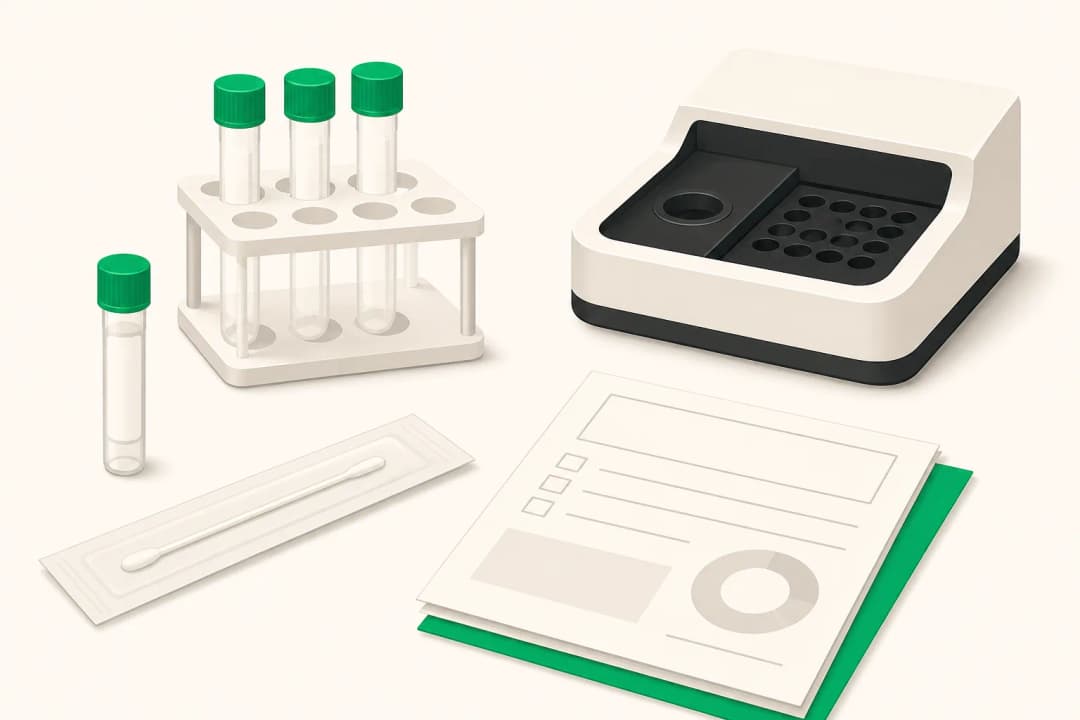
A portable cholesterol test uses a small blood sample to estimate cholesterol levels when testing is performed outside a standard laboratory. A finger-prick device may measure total cholesterol and, depending on the device, other parts of a lipid profile. The result is a screening measurement and should be interpreted in the context of your health and the test method.
Understanding the result
Cholesterol is carried in the blood in different particles, including LDL and HDL, while triglycerides are another blood fat often assessed with them. A result outside the range chosen for you does not by itself diagnose a condition or decide on medication. Recent food, illness, medicines, family history and cardiovascular risk can affect how the result is understood.
What to do before and after testing
Ask whether you need to fast and whether your usual medicines should be taken. Wash and dry your hands before a finger-prick sample if testing at home, and follow the device instructions exactly. Record the date, the values reported and whether you had eaten. Share the reading with a clinician, especially if it is unexpected or differs from a laboratory result.
When to seek medical care
A cholesterol reading is not an emergency diagnosis. Seek urgent help for chest pressure, severe breathlessness, sudden weakness, facial drooping or difficulty speaking, because these symptoms need immediate assessment rather than a home test. Arrange routine medical review for repeated abnormal readings or if you have diabetes, kidney disease, high blood pressure or a strong family history of early heart disease.
Questions for your doctor
Ask which cholesterol measures were tested, whether the result needs confirmation with a laboratory Cholesterol Test, and what target applies to your personal risk. If treatment is discussed, ask how Statin Therapy works, what monitoring is planned and which lifestyle changes would complement it.
Find care
General Clinics & Polyclinics in Abu Dhabi
That answer is general. If you want it applied to your own case, these are licensed general clinics & polyclinics listed in Abu Dhabi.
27 Ar Ruwwad St - Shakhbout City - MSH4 - Abu Dhabi - United Arab Emirates
Accepts: Daman, Thiqa, Cigna, MetLife +20 more
Al Ruwais, Al Dhafrah
Accepts: Daman, Thiqa, AXA, Cigna +16 more
Al Bahyah - Al Bahyah Old - Abu Dhabi - United Arab Emirates
Accepts: Daman, Thiqa, Cigna, Allianz Care +18 more
Abu Dhabi
Accepts: Daman, Thiqa, AXA, Cigna +27 more
Ordered by verification status and how complete each clinic's public record is, then alphabetically. This is a directory listing, not a ranking — Zavis does not rate or recommend providers.
A factual listing drawn from the DHA, DOH and MOHAP licence registers. It is not a referral, an endorsement, or advice that any of these providers is right for you.
Questions people ask
Can a portable cholesterol test replace a laboratory test?
It may be useful for screening, but an unexpected result or a treatment decision may require a laboratory measurement.
How often should cholesterol be checked?
The interval depends on your risk, previous results, medicines and clinician’s plan rather than one schedule for everyone.
Related
Related reading
Keep reading
Medical disclaimer. This page is general health information, not medical advice, and it cannot diagnose you. Always consult a licensed healthcare provider about your own symptoms and treatment. In an emergency in the UAE, call 998 for an ambulance.