
Polyhydramnios in twin pregnancy: what to know
Short answer
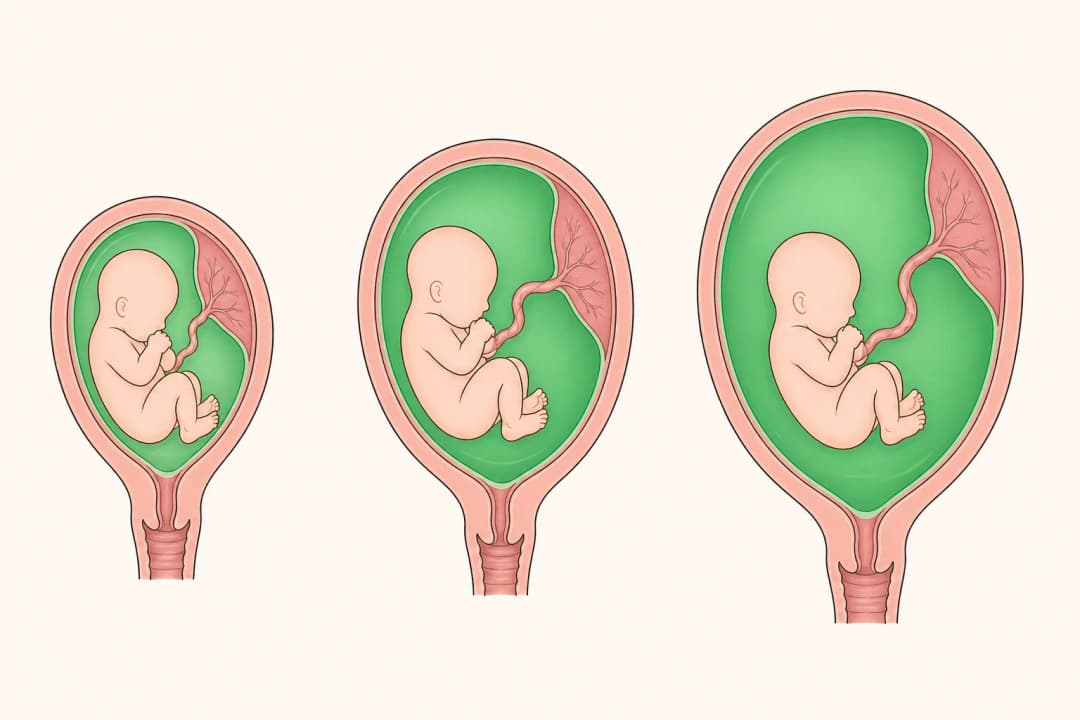
Polyhydramnios in a twin pregnancy means excess amniotic fluid around one or both babies and needs personalised ultrasound monitoring.
This answers one question. It is not a diagnosis and does not replace an assessment by a licensed doctor.
At a glance
- Can involve
- One or both babies’ fluid spaces
- Key checks
- Fluid, growth, position and blood flow
- Follow-up
- Twin-pregnancy ultrasound appointments
Why twins need careful assessment
With twins, each baby may have a separate fluid space, or the babies may share one. The fluid pattern, babies’ growth, placental arrangement and blood flow all help clinicians understand the finding. Extra fluid around one baby can have different implications from fluid around both. An ultrasound can check each baby’s pocket of fluid, bladder, growth and position. The finding does not automatically mean that either baby is unwell, but it gives the team a reason to watch the pregnancy more closely.
How to manage follow-up
Attend the scans and appointments your twin-pregnancy team recommends. Bring a record of movement patterns if your clinician has asked you to track them, and mention new pelvic pressure, tightening or shortness of breath. Your team may coordinate obstetric, fetal-medicine and neonatal planning according to the scan findings. A growth scan can support review of each baby’s size and the surrounding fluid.
When to contact the maternity unit
Call promptly for leaking fluid, vaginal bleeding, regular contractions, severe pain or reduced movement from either baby. Breathing difficulty at rest, sudden marked abdominal pressure or feeling faint also warrants urgent assessment. In a twin pregnancy, symptoms can change quickly, so use the contact plan supplied by your maternity unit rather than waiting for the next scheduled scan.
Useful questions
Ask whether the extra fluid surrounds one baby or both, whether the twins share a placenta or fluid space, and how their growth and blood flow look. Ask when the next scan is due, which movement changes matter, and how polyhydramnios could affect birth planning.
Find care
General Clinics & Polyclinics in Abu Dhabi
That answer is general. If you want it applied to your own case, these are licensed general clinics & polyclinics listed in Abu Dhabi.
27 Ar Ruwwad St - Shakhbout City - MSH4 - Abu Dhabi - United Arab Emirates
Accepts: Daman, Thiqa, Cigna, MetLife +20 more
Al Ruwais, Al Dhafrah
Accepts: Daman, Thiqa, AXA, Cigna +16 more
Al Bahyah - Al Bahyah Old - Abu Dhabi - United Arab Emirates
Accepts: Daman, Thiqa, Cigna, Allianz Care +18 more
Abu Dhabi
Accepts: Daman, Thiqa, AXA, Cigna +27 more
Ordered by verification status and how complete each clinic's public record is, then alphabetically. This is a directory listing, not a ranking — Zavis does not rate or recommend providers.
A factual listing drawn from the DHA, DOH and MOHAP licence registers. It is not a referral, an endorsement, or advice that any of these providers is right for you.
Questions people ask
Is polyhydramnios different with twins?
Assessment is more individual because clinicians evaluate each baby and the way the placenta and fluid spaces are arranged.
Should reduced movement be reported?
Yes. Contact your maternity unit promptly if movement from either baby is noticeably reduced or changes from its usual pattern.
Related
Related reading
Keep reading
Medical disclaimer. This page is general health information, not medical advice, and it cannot diagnose you. Always consult a licensed healthcare provider about your own symptoms and treatment. In an emergency in the UAE, call 998 for an ambulance.