
Polyhydramnios in the third trimester: what to know
Updated
Short answer
Polyhydramnios in the third trimester means there is more amniotic fluid than expected and usually calls for monitoring rather than immediate treatment.
This answers one question. It is not a diagnosis and does not replace an assessment by a licensed doctor.
At a glance
- Meaning
- More amniotic fluid than expected
- Assessment
- Ultrasound and pregnancy monitoring
- Action
- Follow the maternity team’s review plan
What it can mean
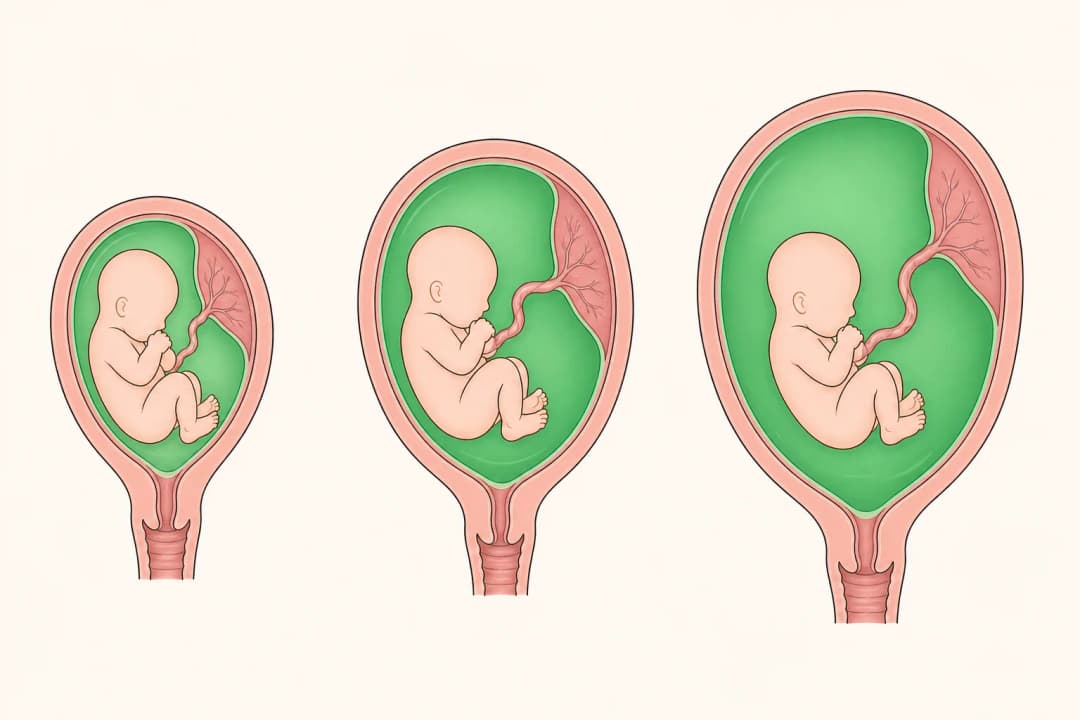
Amniotic fluid cushions the baby and allows movement. A higher fluid level may be mild, moderate or marked, and an ultrasound finding does not by itself identify the cause. Your maternity team may review your pregnancy history, check the baby’s growth and look for conditions that can influence fluid levels. Sometimes no clear reason is found. Extra fluid can stretch the uterus and make breathlessness, reflux or abdominal tightness more noticeable. It can also affect how the baby is positioned, so late-pregnancy planning may need extra attention.
What to do next
Keep the follow-up appointments arranged by your obstetric team. Monitoring may include repeat ultrasound, checks of growth and assessment of the baby’s wellbeing. Tell the team about worsening breathlessness, rapid abdominal enlargement, contractions or reduced movement. Do not change prescribed medicines or restrict fluids on your own. A growth scan can help your clinician assess fetal size and fluid alongside the wider pregnancy picture.
When to seek urgent care
Contact your maternity unit promptly if your waters break, you have regular painful contractions, vaginal bleeding, severe abdominal pain or noticeably reduced fetal movement. Seek urgent help for breathing difficulty at rest, faintness or sudden severe swelling. These symptoms need assessment because they can signal an obstetric problem, whether or not polyhydramnios is the cause.
Questions for your doctor
Ask what the fluid finding means in your case, whether the baby’s growth and position are reassuring, how often monitoring is needed, and what symptoms should prompt a same-day call. You can also ask how the finding may influence the timing and place of birth.
Find care
General Clinics & Polyclinics in Dubai
That answer is general. If you want it applied to your own case, these are licensed general clinics & polyclinics listed in Dubai.
The Court Residence, 39B Street, Jumeirah 1, Dubai
Accepts: Tabby, Tamara
Elite Business Bay Residence - Shop 03 & 04, 34 Marasi Dr - Business Bay - Dubai - United Arab Emirates
Accepts: Tabby
Airport View Building, Al Garhoud, Dubai
Accepts: Daman, Thiqa, AXA, Cigna +25 more
IBIS Building, 5th Floor, Unit 5003, Deira, Dubai
Accepts: AXA, Cigna, MetLife, Allianz Care +18 more
Ordered by verification status and how complete each clinic's public record is, then alphabetically. This is a directory listing, not a ranking — Zavis does not rate or recommend providers.
A factual listing drawn from the UAE health regulators' public licence registers. It is not a referral, an endorsement, or advice that any of these providers is right for you.
Questions people ask
Can polyhydramnios appear late in pregnancy?
Yes. It may be identified during a later ultrasound or after symptoms lead to assessment.
Does polyhydramnios always need treatment?
No. The plan depends on the fluid level, symptoms, cause and the baby’s wellbeing; monitoring alone may be appropriate.
Related
Related reading
Keep reading
Medical disclaimer. This page is general health information, not medical advice, and it cannot diagnose you. Always consult a licensed healthcare provider about your own symptoms and treatment. In an emergency in the UAE, call 998 for an ambulance.