
Partial molar pregnancy pathology outlines
Short answer
Partial molar pregnancy pathology outlines describe abnormal placental villi and genetic findings that help confirm the diagnosis and plan follow-up.
This answers one question. It is not a diagnosis and does not replace an assessment by a licensed doctor.
At a glance
- Report content
- Villi, trophoblasts, and genetic findings may be described
- Interpretation
- Pathology is considered with clinical and hormone results
Reading the report
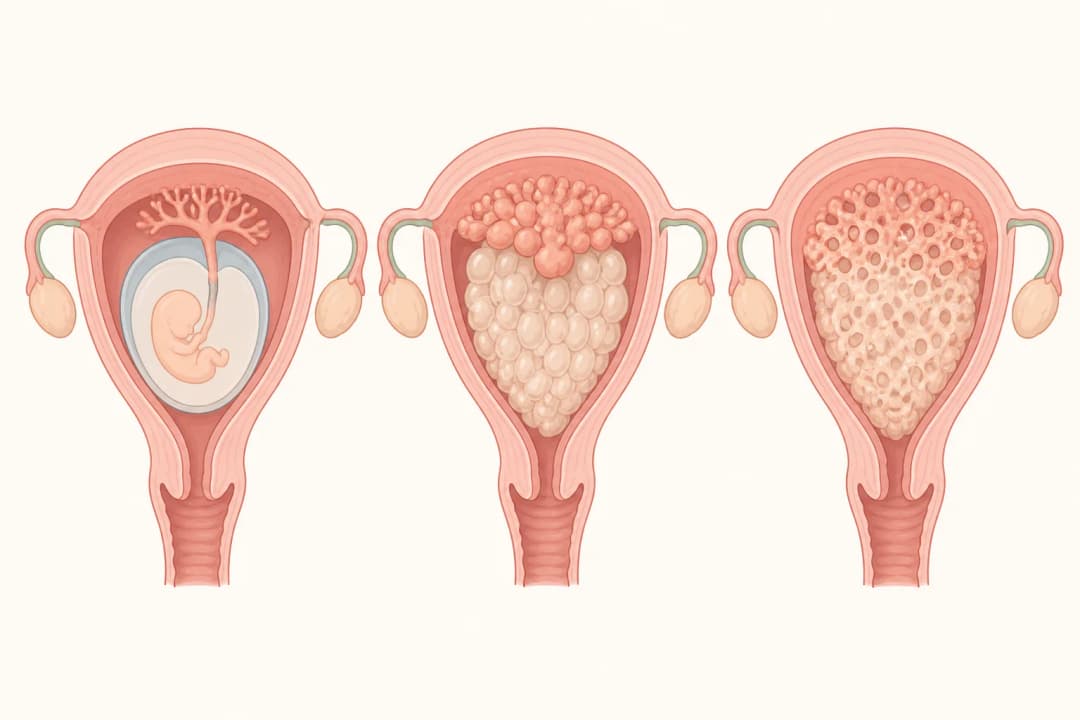
A pathology report may describe enlarged, irregular chorionic villi, swelling within the villi, and abnormal trophoblast growth. The report may also state whether the findings fit a partial mole or another type of pregnancy tissue. Immunostaining or chromosome testing can support the distinction. Wording varies between laboratories, so a specialist should interpret the report alongside ultrasound findings, symptoms, and pregnancy-hormone results.
After the result
Request an explanation of each unfamiliar term and ask whether the diagnosis is complete or needs additional testing. Follow the hormone-monitoring plan, attend review appointments, and discuss contraception during surveillance if advised. Keep the report for future care. If hormone levels remain abnormal, your team may discuss chemotherapy or another specialist treatment.
When to seek care
Seek urgent help for heavy bleeding, fainting, severe abdominal pain, chest pain, or difficulty breathing. Contact your clinician for fever, worsening pain, foul-smelling discharge, or bleeding that increases during follow-up.
Questions for your doctor
Ask which findings confirm the diagnosis, whether genetic testing was performed, how the report changes monitoring, and when the next hormone test is due.
Questions people ask
Can a pathology report alone explain everything?
It provides key evidence, but clinicians interpret it with examination, imaging, and hormone results.
What if the report is unclear?
Your team may request specialist review or additional genetic testing before finalising follow-up.
Related
Related reading
Keep reading
Cancer care in the UAE
Hospitals & Medical Centers in Abu Dhabi
Most UAE cancer care is delivered inside hospital services rather than by standalone oncology clinics, so these are licensed hospitals & medical centers listed in Abu Dhabi. Confirm the specific cancer service exists before you travel, and know that asking for a second opinion is routine.
Ahalia Hospital Musaffah Building - Musaffah - Musaffah Industrial - Abu Dhabi - United Arab Emirates
Accepts: Daman, Thiqa, AXA, Cigna +26 more
Al Ruwais Industrial City - Abu Dhabi - United Arab Emirates
Accepts: Daman, Thiqa, AXA, Cigna +30 more
Abu Dhabi, Abu Dhabi
Accepts: Daman, Thiqa, AXA, Cigna +30 more
Second opinions are routine in cancer care and asking for one does not affect your treatment. How to arrange a second opinion in the UAE.
Ordered by verification status and how complete each clinic's public record is, then alphabetically. This is a directory listing, not a ranking — Zavis does not rate or recommend providers.
A factual listing drawn from the DHA, DOH and MOHAP licence registers. It is not a referral, an endorsement, or advice that any of these providers is right for you.
Medical disclaimer. This page is general health information, not medical advice, and it cannot diagnose you. Always consult a licensed healthcare provider about your own symptoms and treatment. In an emergency in the UAE, call 998 for an ambulance.