
My bladder leaks when I cough
Short answer
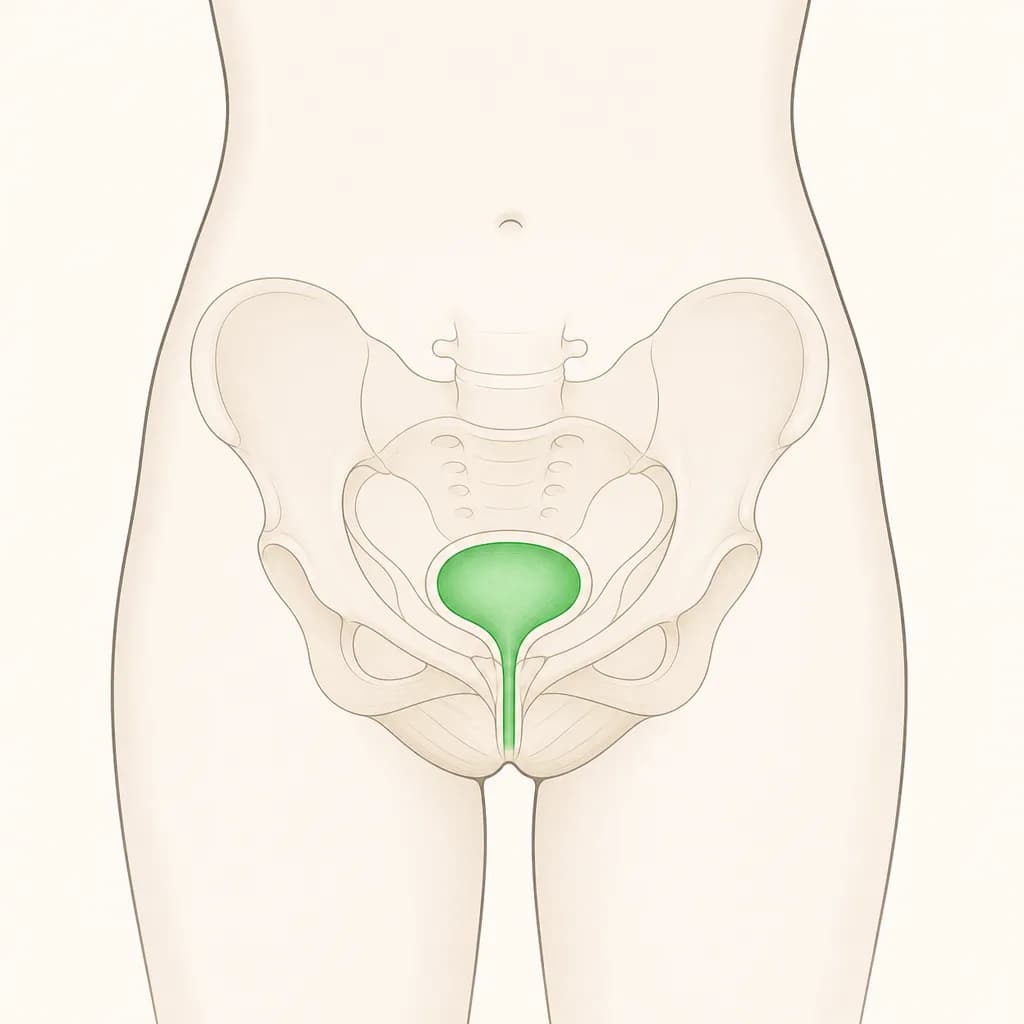
Bladder leakage when you cough is often stress urinary incontinence, caused by pressure briefly overwhelming the bladder outlet.
This answers one question. It is not a diagnosis and does not replace an assessment by a licensed doctor.
At a glance
- Typical trigger
- Coughing, sneezing, laughing, or lifting
- Useful assessment
- Urine check and pelvic-floor review
- First options
- Pelvic-floor support and tailored rehabilitation
What the pattern suggests
Coughing, sneezing, laughing, lifting, or exercise can raise pressure inside the abdomen. If the pelvic-floor muscles and urethral support do not close firmly at that moment, urine can escape. Pregnancy, birth, menopause, changes in pelvic support, constipation, and repeated coughing can contribute. A pelvic organ prolapse can also affect bladder control, so mention vaginal pressure or a bulge to a clinician.
Keep a brief diary of drinks, toilet trips, leakage triggers, urgency, and night-time symptoms. This helps separate stress leakage from urgency or another bladder problem.
Practical next steps
Arrange an assessment if leakage is recurring or limiting activity. A clinician may check your urine, ask about pregnancy and birth history, and assess pelvic-floor function. [Pelvic Floor Exercises](/treatments/pelvic-floor-and-rehabilitation/pelvic-floor-exercises/) and supervised [Pelvic Floor Physiotherapy](/treatments/pelvic-floor-and-rehabilitation/pelvic-floor-physiotherapy/) can improve coordination and strength. If symptoms began after birth, [Postnatal Physiotherapy](/treatments/pelvic-floor-and-rehabilitation/postnatal-physiotherapy/) may be suitable.
Avoid straining with constipation, treat an ongoing cough with medical guidance, and do not drastically restrict fluids. [Bladder Training](/treatments/pelvic-floor-and-rehabilitation/bladder-training/) may help when urgency is also present. Persistent stress leakage can be discussed with a specialist; a [Mid-Urethral Sling](/treatments/gynaecological-surgery/mid-urethral-sling/) is one possible surgical option.
When to seek care
Seek prompt advice for burning urine, blood in the urine, fever, back or side pain, difficulty emptying your bladder, new leg weakness, or loss of bowel control. Arrange review if leakage starts suddenly, follows an operation, or comes with a vaginal bulge. These features can point to infection, nerve problems, prolapse, or another issue needing targeted care.
Questions for your doctor
Ask which type of incontinence you have, whether your pelvic floor is tightening correctly, and whether a urine test or bladder diary would help. Ask how long to try physiotherapy, how to modify exercise safely, and when specialist or surgical treatment should be considered.
Find care
General Clinics & Polyclinics in Abu Dhabi
That answer is general. If you want it applied to your own case, these are licensed general clinics & polyclinics listed in Abu Dhabi.
27 Ar Ruwwad St - Shakhbout City - MSH4 - Abu Dhabi - United Arab Emirates
Accepts: Daman, Thiqa, Cigna, MetLife +20 more
Al Ruwais, Al Dhafrah
Accepts: Daman, Thiqa, AXA, Cigna +16 more
Al Bahyah - Al Bahyah Old - Abu Dhabi - United Arab Emirates
Accepts: Daman, Thiqa, Cigna, Allianz Care +18 more
Abu Dhabi
Accepts: Daman, Thiqa, AXA, Cigna +27 more
Ordered by verification status and how complete each clinic's public record is, then alphabetically. This is a directory listing, not a ranking — Zavis does not rate or recommend providers.
A factual listing drawn from the DHA, DOH and MOHAP licence registers. It is not a referral, an endorsement, or advice that any of these providers is right for you.
Questions people ask
Is leaking urine when coughing normal after birth?
It can happen after pregnancy or birth, but ongoing leakage deserves assessment because targeted rehabilitation may help.
Should I drink less to prevent leaks?
Severe fluid restriction can irritate the bladder and cause dehydration; ask a clinician about a balanced fluid routine instead.
Related
Related reading
Keep reading
Medical disclaimer. This page is general health information, not medical advice, and it cannot diagnose you. Always consult a licensed healthcare provider about your own symptoms and treatment. In an emergency in the UAE, call 998 for an ambulance.