
What should you know about moto ceramic bearings?
Short answer
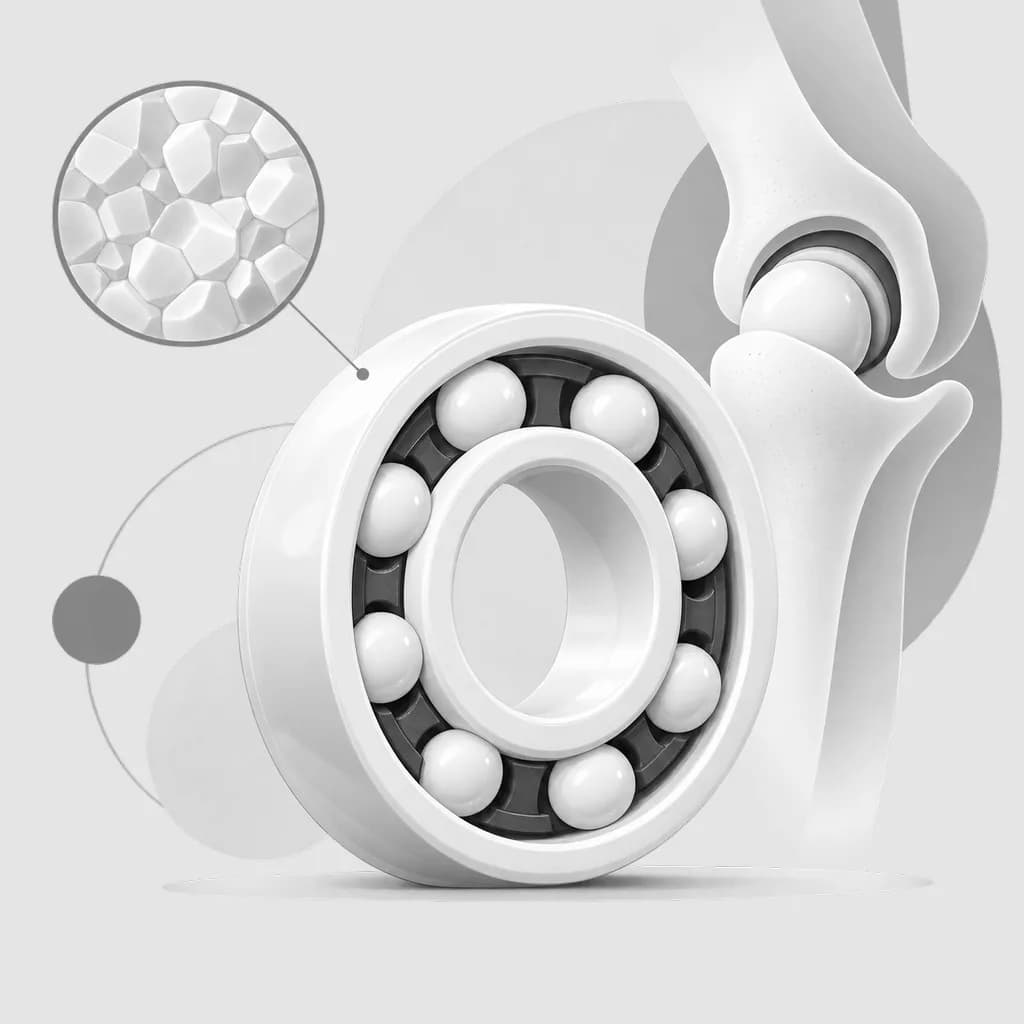
Moto ceramic bearings are ceramic bearing components considered in some joint replacements, with the choice depending on the joint, implant design, and your clinical needs.
This answers one question. It is not a diagnosis and does not replace an assessment by a licensed doctor.
At a glance
- Material
- Ceramic used as a bearing component in selected implant designs
- Decision
- Depends on the joint, implant system, anatomy, and clinical needs
What the term means
A bearing is the moving interface inside an artificial joint. Ceramic is a hard, smooth material used in selected implant designs. “Moto” may be used informally in a product or search phrase, so the exact manufacturer, bearing pairing, and implant system should be confirmed rather than assumed.
The bearing is only one part of a replacement joint. Bone quality, activity, anatomy, age, previous operations, and the surgeon’s preferred system can affect which materials are suitable. A ceramic option does not by itself determine how the operation will feel or how long an implant will serve you.
How to approach the choice
Ask the orthopaedic team to name the proposed implant and explain why its bearing combination fits your hip or other joint. Compare the alternatives in terms of movement, wear, fracture or breakage considerations, noise, revision planning, and follow-up needs.
Bring a list of medicines, prior joint procedures, allergies, and the activities you hope to return to. Use the implant’s exact name when seeking a second opinion. General information about a ceramic bearing cannot replace review of your imaging and examination.
When to contact your care team
Before surgery, contact the team if you develop a skin infection, fever, a new wound, or a sudden change in joint pain. After surgery, seek prompt medical advice for increasing redness or drainage, worsening swelling, fever, sudden loss of function, a new leg-length concern, or pain after a fall.
Questions for your doctor
Which ceramic bearing and implant system are you recommending? What alternatives are appropriate for me? What movement and loading limits apply during recovery? How will you investigate new pain, clicking, or reduced function?
Find care
General Clinics & Polyclinics in Abu Dhabi
That answer is general. If you want it applied to your own case, these are licensed general clinics & polyclinics listed in Abu Dhabi.
27 Ar Ruwwad St - Shakhbout City - MSH4 - Abu Dhabi - United Arab Emirates
Accepts: Daman, Thiqa, Cigna, MetLife +20 more
Al Ruwais, Al Dhafrah
Accepts: Daman, Thiqa, AXA, Cigna +16 more
Al Bahyah - Al Bahyah Old - Abu Dhabi - United Arab Emirates
Accepts: Daman, Thiqa, Cigna, Allianz Care +18 more
Abu Dhabi
Accepts: Daman, Thiqa, AXA, Cigna +27 more
Ordered by verification status and how complete each clinic's public record is, then alphabetically. This is a directory listing, not a ranking — Zavis does not rate or recommend providers.
A factual listing drawn from the DHA, DOH and MOHAP licence registers. It is not a referral, an endorsement, or advice that any of these providers is right for you.
Questions people ask
Are ceramic bearings used in every joint replacement?
No. Material choices vary by joint, implant design, anatomy, and the surgeon’s assessment.
Does the word moto identify one standard implant?
Not necessarily. Ask for the exact manufacturer and implant name before drawing conclusions.
Related
Related reading
Keep reading
Medical disclaimer. This page is general health information, not medical advice, and it cannot diagnose you. Always consult a licensed healthcare provider about your own symptoms and treatment. In an emergency in the UAE, call 998 for an ambulance.