
What is molar tissue pregnancy?
Short answer
Molar tissue pregnancy is abnormal placental-type tissue that requires removal or specialist management and follow-up hormone testing.
This answers one question. It is not a diagnosis and does not replace an assessment by a licensed doctor.
At a glance
- Tissue origin
- Placental-type trophoblastic cells
- Main follow-up marker
- Human chorionic gonadotropin, or hCG
- Key safety step
- Complete the monitoring schedule
Understanding molar tissue
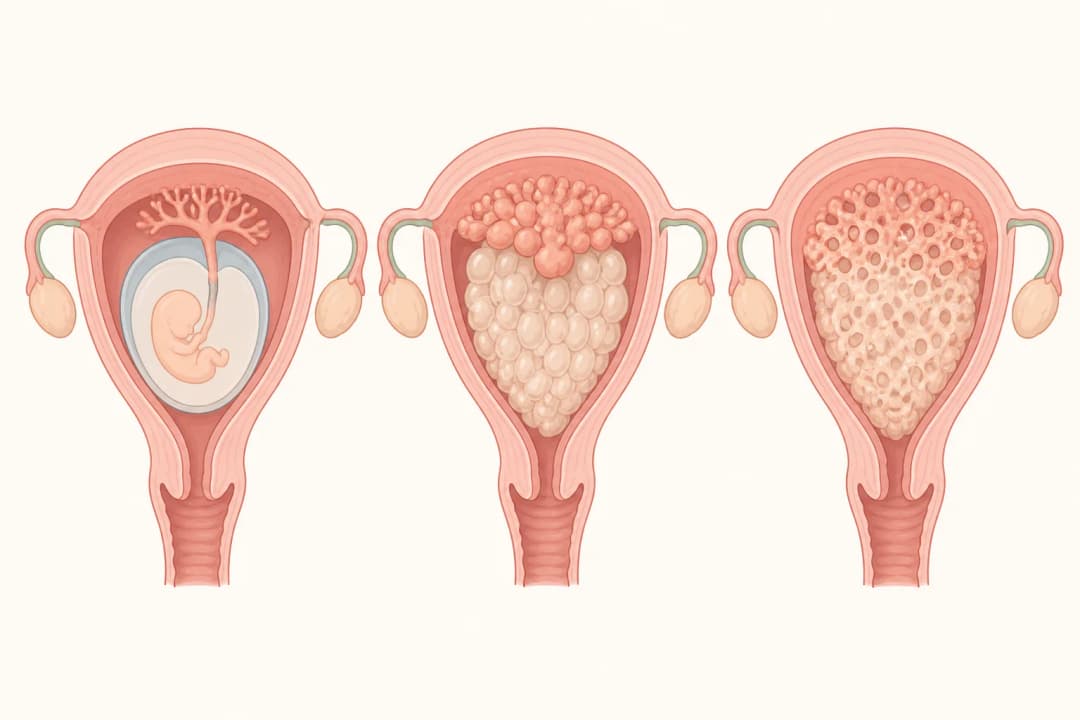
The tissue comes from cells that normally help form the placenta, but it grows in an abnormal pattern. In a complete mole, fetal development is absent. In a partial mole, some fetal tissue may be present but the pregnancy cannot develop normally. The tissue produces hCG, so hormone levels may be higher or behave differently than expected.
Possible symptoms include vaginal bleeding, pelvic discomfort, unusually severe nausea and symptoms related to pregnancy hormones. Some people have no clear symptoms and are diagnosed during ultrasound. The diagnosis may be refined by examining tissue after it is removed.
Treatment and monitoring
The gynaecology team usually removes the molar tissue and arranges follow-up blood tests. hCG should decline in a predictable pattern; a plateau or rise needs prompt review because active tissue may remain. Keep a record of appointments and tell the team about medicines, new symptoms and any possibility of pregnancy.
Avoid conception until your specialist confirms that monitoring is complete. This protects your health plan and prevents a new pregnancy from making hCG results hard to interpret. You can ask for grief counselling or other support after the loss of a wanted pregnancy.
When to seek urgent care
Seek urgent care for heavy bleeding, faintness, severe abdominal pain, fever, persistent vomiting, chest pain, breathing difficulty, or a severe headache with visual changes. Tell the clinician that molar tissue has been diagnosed or treated. Report hCG results that stop falling or begin to rise to the specialist team without waiting for a routine appointment.
Questions for your doctor
Ask whether the tissue is complete or partial, how it will be removed, what the pathology examination can show, and which hCG schedule applies to you. Confirm contraception advice, the symptoms that need urgent review, when future pregnancy can be considered, and when additional treatment such as chemotherapy might be discussed.
Questions people ask
Is molar tissue the same as a normal placenta?
No. It is abnormal trophoblastic tissue with a growth pattern that cannot support a normal pregnancy.
What does a rising hCG mean after treatment?
It needs prompt specialist assessment because persistent active tissue or a new pregnancy may be possible explanations.
Related
Related reading
Keep reading
Cancer care in the UAE
Hospitals & Medical Centers in Abu Dhabi
Most UAE cancer care is delivered inside hospital services rather than by standalone oncology clinics, so these are licensed hospitals & medical centers listed in Abu Dhabi. Confirm the specific cancer service exists before you travel, and know that asking for a second opinion is routine.
Ahalia Hospital Musaffah Building - Musaffah - Musaffah Industrial - Abu Dhabi - United Arab Emirates
Accepts: Daman, Thiqa, AXA, Cigna +26 more
Al Ruwais Industrial City - Abu Dhabi - United Arab Emirates
Accepts: Daman, Thiqa, AXA, Cigna +30 more
Abu Dhabi, Abu Dhabi
Accepts: Daman, Thiqa, AXA, Cigna +30 more
Second opinions are routine in cancer care and asking for one does not affect your treatment. How to arrange a second opinion in the UAE.
Ordered by verification status and how complete each clinic's public record is, then alphabetically. This is a directory listing, not a ranking — Zavis does not rate or recommend providers.
A factual listing drawn from the DHA, DOH and MOHAP licence registers. It is not a referral, an endorsement, or advice that any of these providers is right for you.
Medical disclaimer. This page is general health information, not medical advice, and it cannot diagnose you. Always consult a licensed healthcare provider about your own symptoms and treatment. In an emergency in the UAE, call 998 for an ambulance.