
What should you know about molar pregnancy placenta?
Short answer
In a molar pregnancy, placental cells grow abnormally and do not form a healthy placenta, so tissue testing and hormone monitoring guide care.
This answers one question. It is not a diagnosis and does not replace an assessment by a licensed doctor.
At a glance
- What changes
- Placental-type cells grow abnormally instead of forming a healthy placenta.
- How it is monitored
- Follow-up blood tests measure the pregnancy hormone over time.
How the placenta is affected
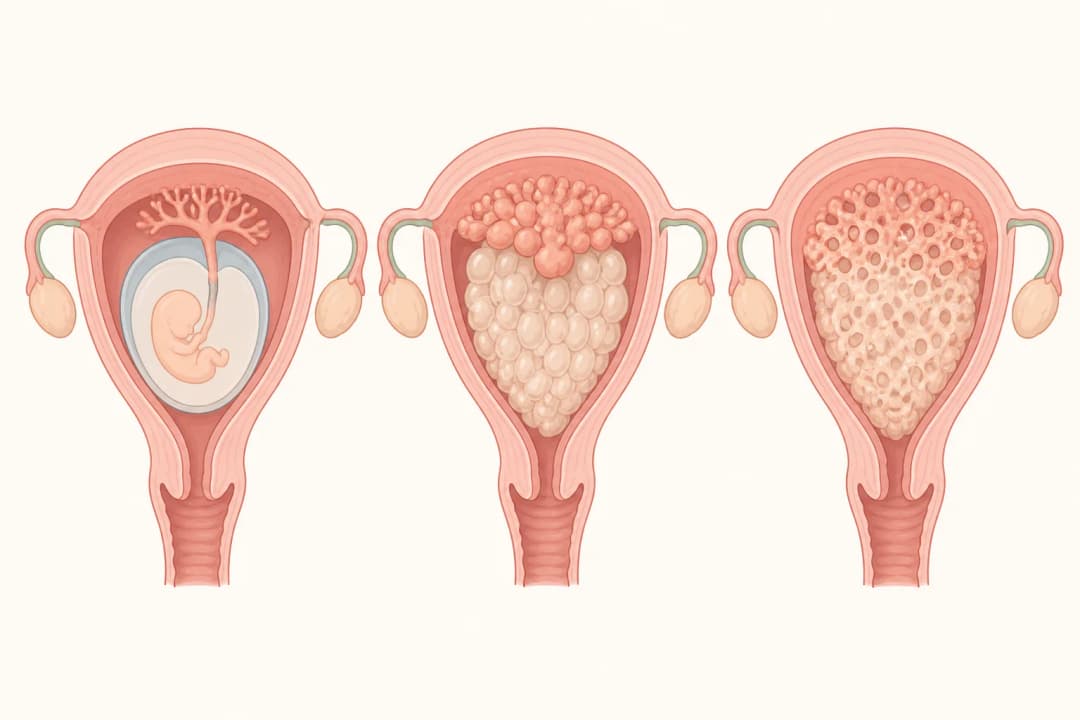
The placenta normally forms a connection between the pregnancy and the uterus, allowing exchange of oxygen and nutrients. In a molar pregnancy, the cells that would contribute to placental tissue multiply in an abnormal pattern. A complete mole has no normal embryo, while a partial mole may contain some fetal tissue that cannot develop normally.
The tissue may appear swollen or made up of many small cyst-like spaces. That appearance can be seen on ultrasound or after removal, but the laboratory examination gives the clearest classification. The abnormal cells also produce pregnancy hormone, which is why serial blood testing is part of follow-up.
How it is managed
Care usually involves removing the molar tissue from the uterus, followed by planned blood tests until the pregnancy hormone has cleared. Use the follow-up schedule provided by the specialist, even if bleeding and other symptoms improve. Tell the team about medicines, future pregnancy plans, and any new symptoms.
If hormone results plateau or rise, the specialist may investigate persistent gestational trophoblastic disease. Chemotherapy is one possible treatment for persistent or spreading disease, and the choice depends on the type and extent of the condition.
When to seek care promptly
Seek urgent help for heavy vaginal bleeding, dizziness or fainting, severe abdominal pain, chest symptoms, or difficulty breathing. Bleeding between periods is not specific to a molar pregnancy, but bleeding connected with a suspected or confirmed pregnancy should be assessed without delay.
Questions for your doctor
Ask whether the tissue is a complete or partial mole, what the laboratory report means, how often hormone tests are needed, which contraception advice applies during monitoring, and what treatment would be offered if results do not fall as expected.
Questions people ask
Is molar pregnancy tissue the same as a normal placenta?
No. It contains abnormally growing placental-type cells and needs laboratory assessment after removal.
Can a partial mole contain fetal tissue?
Yes, a partial mole may contain some fetal tissue, but the pregnancy cannot develop normally.
Related
Related reading
Keep reading
Cancer care in the UAE
Hospitals & Medical Centers in Abu Dhabi
Most UAE cancer care is delivered inside hospital services rather than by standalone oncology clinics, so these are licensed hospitals & medical centers listed in Abu Dhabi. Confirm the specific cancer service exists before you travel, and know that asking for a second opinion is routine.
Ahalia Hospital Musaffah Building - Musaffah - Musaffah Industrial - Abu Dhabi - United Arab Emirates
Accepts: Daman, Thiqa, AXA, Cigna +26 more
Al Ruwais Industrial City - Abu Dhabi - United Arab Emirates
Accepts: Daman, Thiqa, AXA, Cigna +30 more
Abu Dhabi, Abu Dhabi
Accepts: Daman, Thiqa, AXA, Cigna +30 more
Second opinions are routine in cancer care and asking for one does not affect your treatment. How to arrange a second opinion in the UAE.
Ordered by verification status and how complete each clinic's public record is, then alphabetically. This is a directory listing, not a ranking — Zavis does not rate or recommend providers.
A factual listing drawn from the DHA, DOH and MOHAP licence registers. It is not a referral, an endorsement, or advice that any of these providers is right for you.
Medical disclaimer. This page is general health information, not medical advice, and it cannot diagnose you. Always consult a licensed healthcare provider about your own symptoms and treatment. In an emergency in the UAE, call 998 for an ambulance.