
What should you know about hypertrichosis cure?
Short answer
Hypertrichosis may not have one universal cure, but identifying its cause and choosing a suitable hair-removal method can provide meaningful long-term management.
This answers one question. It is not a diagnosis and does not replace an assessment by a licensed doctor.
At a glance
- Meaning
- Excess hair for a person or body area
- First step
- Review the pattern, timing, and possible cause
- Options
- Laser treatment or electrolysis, among others
Why the cause matters
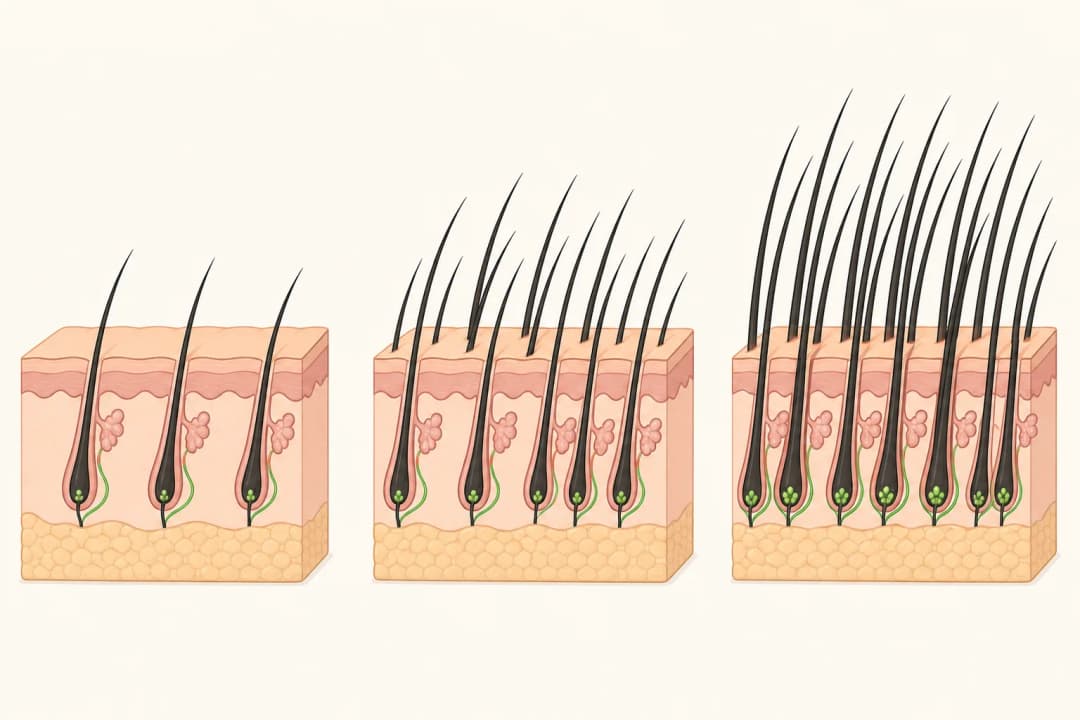
Hypertrichosis means more hair than expected for a person’s age, sex, or body area. It may be present from childhood, develop later, affect a limited patch, or involve broader areas. It is different from hirsutism, which describes a male-pattern distribution of hair in women. A clinician reviews timing, distribution, family history, medicines, and other symptoms before deciding whether a medical cause needs investigation.
Removing visible hair does not correct the reason it is growing. Treating an identified trigger may change the plan, while some forms are managed mainly with cosmetic techniques.
Management options
Discuss the goal first: reducing visibility, treating a local patch, or investigating a new change. Laser hair removal can reduce growth by targeting pigment in follicles and is often considered for suitable dark hair and skin combinations. Electrolysis uses a fine probe to treat individual follicles and may suit lighter hairs or smaller areas. Both require a planned course and careful skin assessment. Shaving, trimming, or depilatory products may offer temporary control when used safely for your skin.
When to seek care
Arrange medical review when hair growth starts suddenly, spreads quickly, affects a new body area, or appears with scalp hair loss, voice change, acne, menstrual changes, or new medicines. Seek care for redness, pus, marked pain, or scarring after a removal method. These features may need attention to an underlying condition or a skin reaction.
Questions for your doctor
Which type of excess hair growth do I have? Do my timing or other symptoms suggest a cause that needs testing? Which method fits my hair colour, skin tone, and treatment area? How should I prepare and protect the skin between sessions?
Find care
General Clinics & Polyclinics in Abu Dhabi
That answer is general. If you want it applied to your own case, these are licensed general clinics & polyclinics listed in Abu Dhabi.
27 Ar Ruwwad St - Shakhbout City - MSH4 - Abu Dhabi - United Arab Emirates
Accepts: Daman, Thiqa, Cigna, MetLife +20 more
Al Ruwais, Al Dhafrah
Accepts: Daman, Thiqa, AXA, Cigna +16 more
Al Bahyah - Al Bahyah Old - Abu Dhabi - United Arab Emirates
Accepts: Daman, Thiqa, Cigna, Allianz Care +18 more
Abu Dhabi
Accepts: Daman, Thiqa, AXA, Cigna +27 more
Ordered by verification status and how complete each clinic's public record is, then alphabetically. This is a directory listing, not a ranking — Zavis does not rate or recommend providers.
A factual listing drawn from the DHA, DOH and MOHAP licence registers. It is not a referral, an endorsement, or advice that any of these providers is right for you.
Questions people ask
Can hypertrichosis go away on its own?
That depends on its cause. New or spreading growth deserves review rather than assumptions about how it will behave.
Does hair removal treat hypertrichosis?
Hair removal manages visible growth; it may not address an underlying medical or medication-related cause.
Related
Related reading
Keep reading
Medical disclaimer. This page is general health information, not medical advice, and it cannot diagnose you. Always consult a licensed healthcare provider about your own symptoms and treatment. In an emergency in the UAE, call 998 for an ambulance.