
How is sinusitis treated?
Short answer
Sinusitis is treated with symptom relief and treatment of its cause, using saline care, medicines for inflammation or allergies, and antibiotics only when appropriate.
This answers one question. It is not a diagnosis and does not replace an assessment by a licensed doctor.
At a glance
- First measures
- Saline care, fluids and rest
- Antibiotics
- Used only when clinically appropriate
Understanding sinusitis
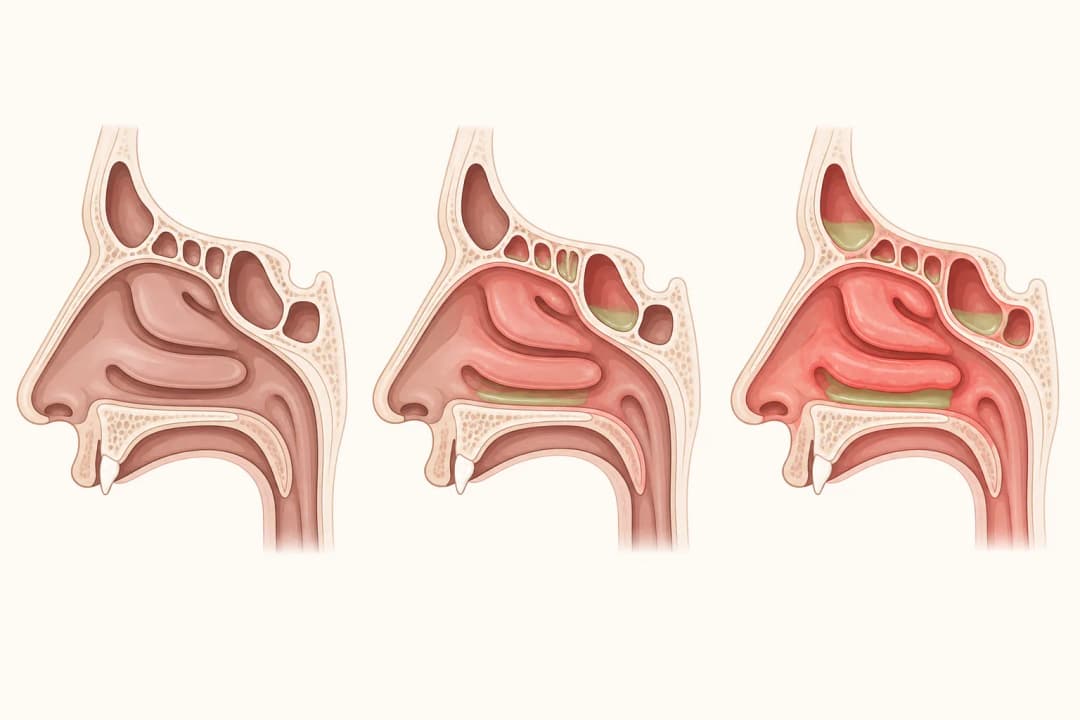
Sinusitis is inflammation of the spaces around the nose. Swelling can block drainage and cause a blocked nose, facial pressure, reduced smell, headache, runny nose or postnasal drip. A common cold can trigger it, and allergic rhinitis can keep the lining swollen. Some episodes improve as the underlying viral illness settles; persistent or severe symptoms need assessment.
Relief and medical treatment
Rest, drink fluids, and use a saline spray or rinse as directed. A pharmacist or clinician can advise on suitable pain relief, a nasal treatment for inflammation, or allergy treatment when allergies are contributing. Use nasal decongestants only as directed because prolonged use can worsen blockage. A GP consultation can help when symptoms are persistent, recurrent or difficult to control. Antibiotic treatment is reserved for cases where a bacterial infection is suspected or complications are a concern.
When to seek care
Arrange medical advice for severe facial pain, symptoms that worsen after initial improvement, repeated episodes, or symptoms that are not settling. Seek urgent help for swelling or redness around an eye, vision changes, severe headache, neck stiffness, confusion, or a high fever with rapid deterioration. A nosebleed that is heavy or will not stop also needs prompt care.
Questions for your doctor
Ask whether your symptoms fit viral sinusitis, allergy-related inflammation or bacterial infection, and which nasal treatment is suitable. Check how to perform a saline rinse safely, how long to use any spray, whether antibiotics are needed, and which warning signs should bring you back.
Find care
General Clinics & Polyclinics in Abu Dhabi
That answer is general. If you want it applied to your own case, these are licensed general clinics & polyclinics listed in Abu Dhabi.
27 Ar Ruwwad St - Shakhbout City - MSH4 - Abu Dhabi - United Arab Emirates
Accepts: Daman, Thiqa, Cigna, MetLife +20 more
Al Ruwais, Al Dhafrah
Accepts: Daman, Thiqa, AXA, Cigna +16 more
Al Bahyah - Al Bahyah Old - Abu Dhabi - United Arab Emirates
Accepts: Daman, Thiqa, Cigna, Allianz Care +18 more
Abu Dhabi
Accepts: Daman, Thiqa, AXA, Cigna +27 more
Ordered by verification status and how complete each clinic's public record is, then alphabetically. This is a directory listing, not a ranking — Zavis does not rate or recommend providers.
A factual listing drawn from the DHA, DOH and MOHAP licence registers. It is not a referral, an endorsement, or advice that any of these providers is right for you.
Questions people ask
Does sinusitis always need antibiotics?
No. Many episodes follow a viral illness or allergy, and a clinician decides whether antibiotic treatment is appropriate.
Can allergies contribute to sinusitis symptoms?
Yes. Allergic rhinitis can swell the nasal lining and interfere with sinus drainage.
Related
Related reading
Keep reading
Medical disclaimer. This page is general health information, not medical advice, and it cannot diagnose you. Always consult a licensed healthcare provider about your own symptoms and treatment. In an emergency in the UAE, call 998 for an ambulance.