
How is COPD treated?
Short answer
COPD is treated with inhaler medicines, stopping smoking, activity support, vaccinations, and prompt care for flare-ups.
This answers one question. It is not a diagnosis and does not replace an assessment by a licensed doctor.
At a glance
- Core treatment
- Inhaler therapy plus support to stop smoking
- Review focus
- Breathing symptoms, inhaler technique, and flare-up planning
What treatment involves
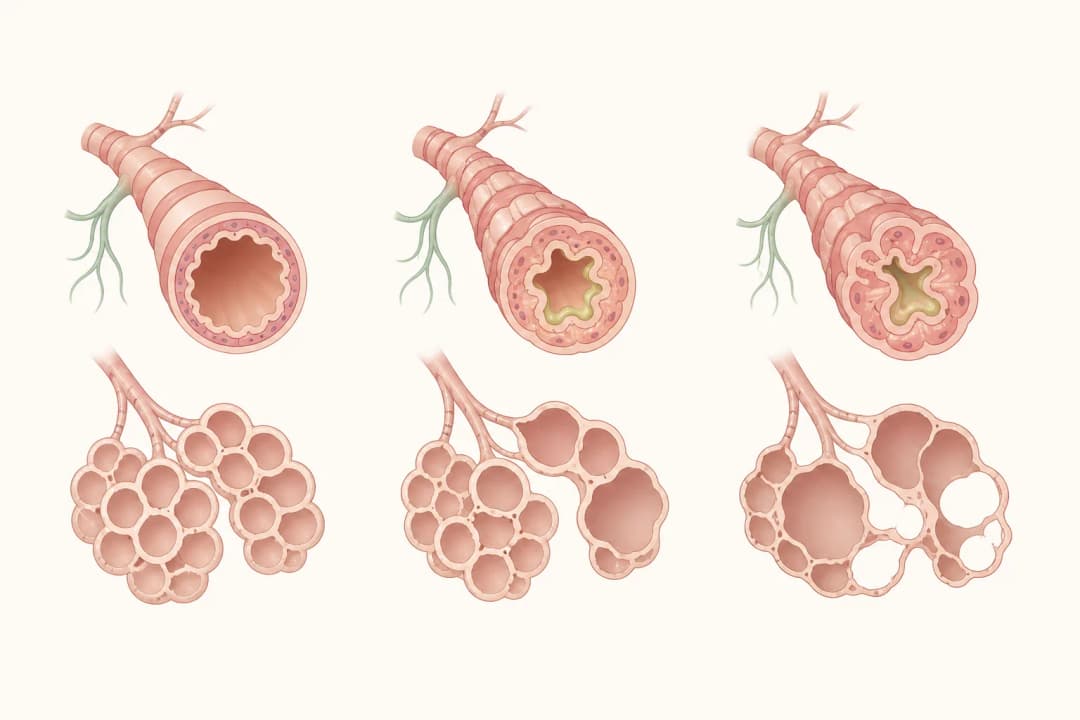
COPD can narrow the airways and make it harder to move air out. Inhalers may relax airway muscles, reduce inflammation, or combine these effects. Your clinician will match the inhaler to your symptoms, breathing tests, other illnesses, and ability to use the device. Technique matters: a medicine can work poorly if it does not reach the lungs.
A cough, phlegm, chest tightness, and shortness of breath may change over time. A flare-up can bring a noticeable increase in breathlessness or sputum. A written action plan can explain which prescribed medicines to use and when to contact the care team.
Managing COPD day to day
If you smoke, a smoking cessation programme can provide practical and medical support; nicotine dependence can make stopping difficult and is treatable. Use inhalers exactly as prescribed, check your technique at reviews, and keep follow-up appointments. Gentle activity, breathing exercises, nutritious meals, and avoiding smoke or strong irritants can support daily function. Ask about vaccinations and pulmonary rehabilitation if they fit your care plan. Do not start antibiotics or steroid tablets without clinical advice.
When to seek care
Contact your clinician promptly if breathlessness, cough, or phlegm is increasing or your usual inhaler is helping less. Seek emergency help for severe difficulty breathing, inability to speak comfortably, blue or grey lips, new confusion, fainting, or chest pain. Sit upright and use your prescribed reliever plan while arranging help.
Questions for your doctor
Which inhaler is for daily control and which is for sudden symptoms? Can you check my technique? What is my flare-up plan, and would smoking support or pulmonary rehabilitation help me?
Find care
General Clinics & Polyclinics in Abu Dhabi
That answer is general. If you want it applied to your own case, these are licensed general clinics & polyclinics listed in Abu Dhabi.
27 Ar Ruwwad St - Shakhbout City - MSH4 - Abu Dhabi - United Arab Emirates
Accepts: Daman, Thiqa, Cigna, MetLife +20 more
Al Ruwais, Al Dhafrah
Accepts: Daman, Thiqa, AXA, Cigna +16 more
Al Bahyah - Al Bahyah Old - Abu Dhabi - United Arab Emirates
Accepts: Daman, Thiqa, Cigna, Allianz Care +18 more
Abu Dhabi
Accepts: Daman, Thiqa, AXA, Cigna +27 more
Ordered by verification status and how complete each clinic's public record is, then alphabetically. This is a directory listing, not a ranking — Zavis does not rate or recommend providers.
A factual listing drawn from the DHA, DOH and MOHAP licence registers. It is not a referral, an endorsement, or advice that any of these providers is right for you.
Questions people ask
Can COPD be treated without inhalers?
Some people need additional measures, but inhalers are commonly used to open airways or reduce inflammation; the plan depends on symptoms and breathing assessment.
When is a COPD flare-up urgent?
Severe breathing difficulty, blue or grey lips, confusion, fainting, or chest pain requires emergency help.
Related
Related reading
Keep reading
Medical disclaimer. This page is general health information, not medical advice, and it cannot diagnose you. Always consult a licensed healthcare provider about your own symptoms and treatment. In an emergency in the UAE, call 998 for an ambulance.