
How effective is a urine test for benign prostatic hyperplasia?
Short answer
A urine test helps rule out infection and other urinary causes, but it cannot confirm benign prostatic hyperplasia on its own.
This answers one question. It is not a diagnosis and does not replace an assessment by a licensed doctor.
At a glance
- Main use
- Looks for infection, blood, or other urinary clues
- Main limit
- Does not diagnose prostate enlargement by itself
What the result can mean
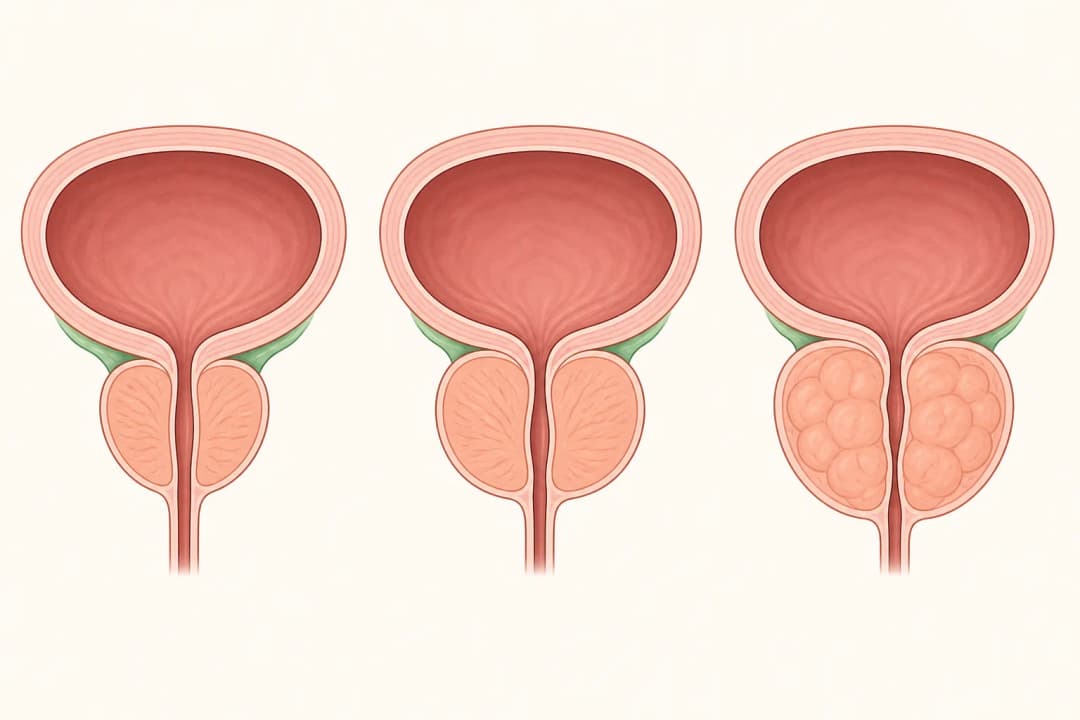
Benign prostatic hyperplasia, also called an enlarged prostate, can narrow the outlet from the bladder and cause a weak stream, hesitancy, frequent urination, or a feeling that the bladder has not emptied. A urine sample may show signs of infection, blood, glucose, or inflammation that point to another or additional explanation. A normal result does not exclude prostate enlargement. Assessment usually combines your symptom pattern with an examination and, when appropriate, bladder measurements, a prostate-specific blood test, or imaging.
What to do with the result
Give the sample exactly as instructed and tell the clinician about medicines, previous urinary infections, visible blood, pain, fever, and changes in your stream. Do not start, stop, or borrow antibiotics based only on a urine result. If symptoms continue despite a normal sample, arrange a review because prostate-related obstruction can still be present. Keep a brief record of night-time trips to the toilet, urgency, leakage, and how much you drink; this helps distinguish storage symptoms from difficulty emptying.
When to seek care promptly
Seek urgent medical assessment if you cannot pass urine, have severe lower abdominal pain, fever with urinary symptoms, pain in the side or back, or visible blood in the urine. These features may need treatment or investigation beyond a routine urine check. New or worsening urinary symptoms should be reviewed, especially when they interfere with sleep or daily activities.
Questions for your doctor
Ask what the sample tested for, whether the findings suggest infection or another cause, and which assessment will check how well your bladder empties. You can also ask whether your medicines or fluid habits may be worsening symptoms and when follow-up is needed.
Find care
General Clinics & Polyclinics in Abu Dhabi
That answer is general. If you want it applied to your own case, these are licensed general clinics & polyclinics listed in Abu Dhabi.
27 Ar Ruwwad St - Shakhbout City - MSH4 - Abu Dhabi - United Arab Emirates
Accepts: Daman, Thiqa, Cigna, MetLife +20 more
Al Ruwais, Al Dhafrah
Accepts: Daman, Thiqa, AXA, Cigna +16 more
Al Bahyah - Al Bahyah Old - Abu Dhabi - United Arab Emirates
Accepts: Daman, Thiqa, Cigna, Allianz Care +18 more
Abu Dhabi
Accepts: Daman, Thiqa, AXA, Cigna +27 more
Ordered by verification status and how complete each clinic's public record is, then alphabetically. This is a directory listing, not a ranking — Zavis does not rate or recommend providers.
A factual listing drawn from the DHA, DOH and MOHAP licence registers. It is not a referral, an endorsement, or advice that any of these providers is right for you.
Questions people ask
Can a normal urine test rule out benign prostatic hyperplasia?
No. A normal sample may make infection or some other urinary causes less likely, but prostate enlargement can still explain persistent obstruction symptoms.
What test confirms an enlarged prostate?
There is no single urine test that confirms it. Clinicians use symptoms, examination, and selected bladder, blood, or imaging assessments.
Related
Related reading
Keep reading
Medical disclaimer. This page is general health information, not medical advice, and it cannot diagnose you. Always consult a licensed healthcare provider about your own symptoms and treatment. In an emergency in the UAE, call 998 for an ambulance.