
How effective is spirometry for COPD?
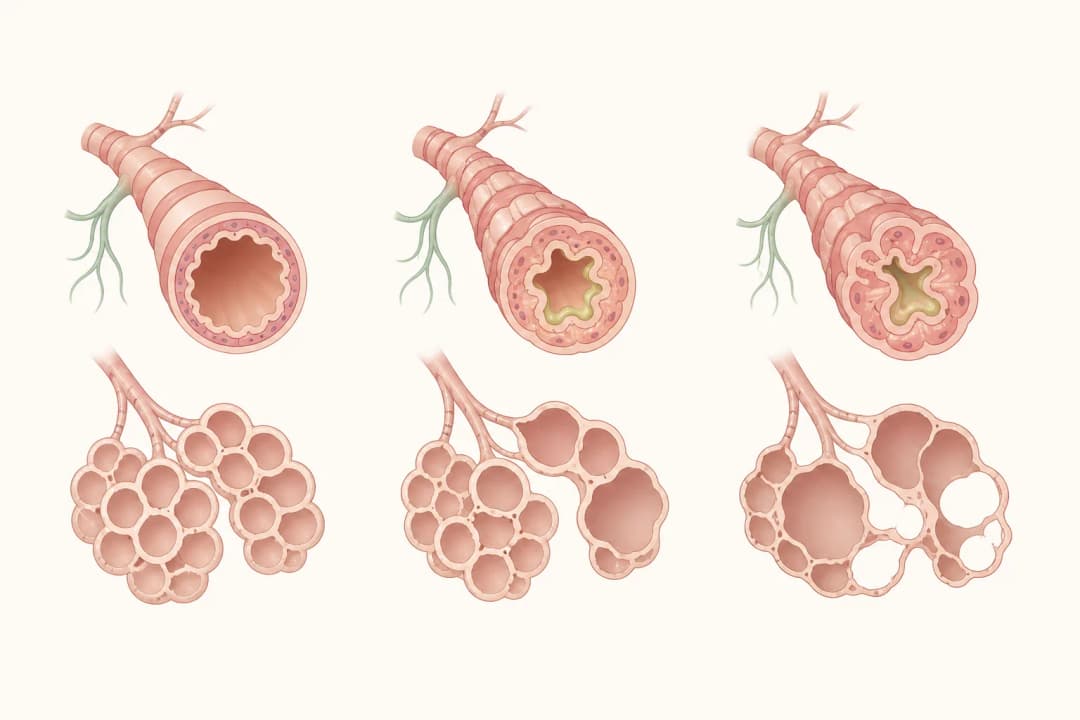
Short answer
Spirometry is an important test for confirming persistent airflow limitation in COPD, while symptoms and other assessments determine its effect on your daily life.
This answers one question. It is not a diagnosis and does not replace an assessment by a licensed doctor.
At a glance
- Core role
- Confirms and describes persistent airflow limitation
- Also consider
- Symptoms, exposures, examination and flare-ups
- Before testing
- Check instructions about inhalers and recent illness
Why it matters in COPD
The test measures how much air you can exhale and how quickly. It helps identify persistent obstruction and gives your clinician a reference point for discussing symptoms, inhaler choices and follow-up. Results are interpreted with breathlessness, cough, sputum, smoking or occupational exposure and examination findings.
Spirometry does not measure every part of COPD. It cannot by itself show how often you flare, how active you can be, or whether another condition contributes to symptoms. A result may be affected by technique, recent illness and whether prescribed inhalers were used before testing.
Preparing for testing and follow-up
Ask the clinic whether any inhaler should be withheld before the appointment; do not change prescribed treatment without clear instructions. Tell the team about recent infections, chest pain, dizziness and your usual activity level.
You will usually perform several coached breaths through a mouthpiece. Make a strong start and continue exhaling as instructed. Bring earlier lung-function results and note changes in walking tolerance, cough, sputum or rescue-inhaler use so the numbers can be interpreted meaningfully.
When to seek care
Arrange review if breathlessness is increasing, usual activities are becoming harder, or cough and sputum change. Seek urgent help for severe or sudden breathing difficulty, chest pain, blue lips, new confusion, fainting or inability to speak comfortably. Use your agreed flare-up plan when symptoms worsen.
Questions for your doctor
Ask what the result says about airflow, whether it is comparable with your earlier test, how symptoms relate to the reading, and what plan will reduce flare-ups and preserve activity.
Find care
General Clinics & Polyclinics in Abu Dhabi
That answer is general. If you want it applied to your own case, these are licensed general clinics & polyclinics listed in Abu Dhabi.
27 Ar Ruwwad St - Shakhbout City - MSH4 - Abu Dhabi - United Arab Emirates
Accepts: Daman, Thiqa, Cigna, MetLife +20 more
Al Ruwais, Al Dhafrah
Accepts: Daman, Thiqa, AXA, Cigna +16 more
Al Bahyah - Al Bahyah Old - Abu Dhabi - United Arab Emirates
Accepts: Daman, Thiqa, Cigna, Allianz Care +18 more
Abu Dhabi
Accepts: Daman, Thiqa, AXA, Cigna +27 more
Ordered by verification status and how complete each clinic's public record is, then alphabetically. This is a directory listing, not a ranking — Zavis does not rate or recommend providers.
A factual listing drawn from the DHA, DOH and MOHAP licence registers. It is not a referral, an endorsement, or advice that any of these providers is right for you.
Questions people ask
Is spirometry enough to diagnose COPD?
It is a key part of diagnosis, but your clinician also considers symptoms, exposure history and other possible explanations.
Can spirometry show how severe my symptoms feel?
It describes airflow, but symptom burden and daily function may not match the reading, so both need discussion.
Related
Related reading
Keep reading
Medical disclaimer. This page is general health information, not medical advice, and it cannot diagnose you. Always consult a licensed healthcare provider about your own symptoms and treatment. In an emergency in the UAE, call 998 for an ambulance.