
Hives spots: what they may mean
Short answer
Hives spots are raised, itchy welts that can shift or fade; photograph their pattern, reduce irritation, and watch for swelling or breathing problems.
This answers one question. It is not a diagnosis and does not replace an assessment by a licensed doctor.
At a glance
- Spot pattern
- Raised areas may fade while new ones appear
- Useful evidence
- Photographs with timing and trigger notes
- Needs urgent help
- Airway symptoms or rapidly increasing facial swelling
How the spots behave
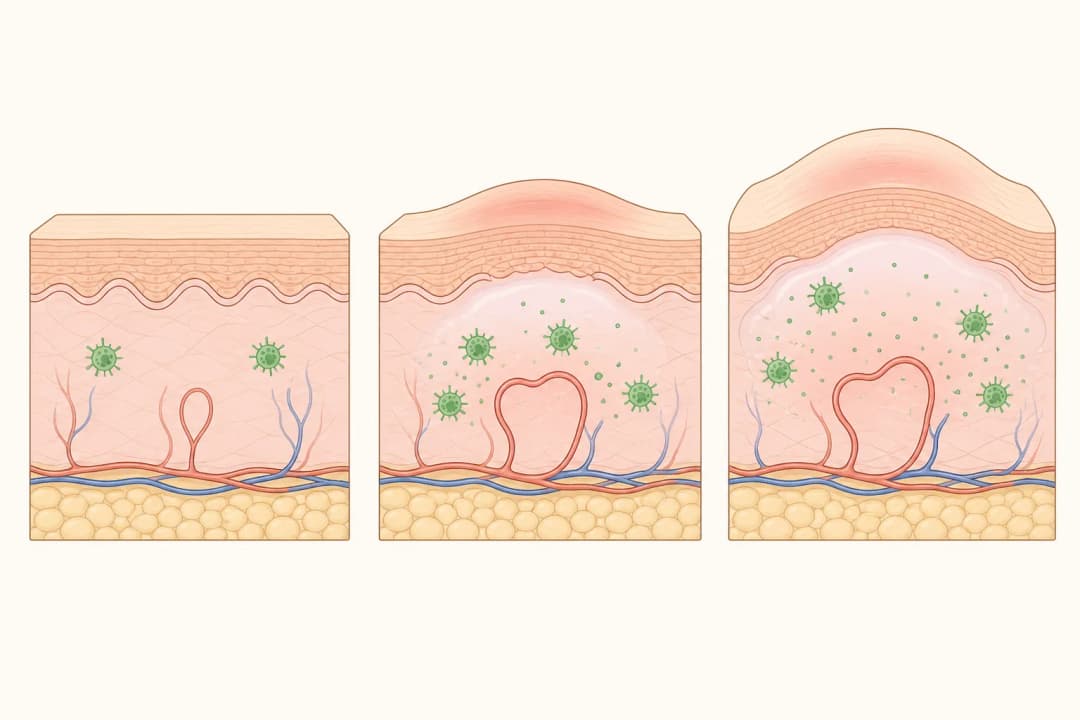
A hives spot is usually a raised area rather than a flat discolouration. It may be pale in the centre, red around the edge, or similar in colour to the surrounding skin, depending on your skin tone. Spots can be small, join into broad patches, and appear in new areas as earlier ones fade. Itching is common. Hives may follow an infection, medicine, food, heat, cold, exercise, or pressure from tight clothing, though no cause may be found. Swelling below the surface can affect the lips, eyelids, or tongue and may occur with the spots.
Care for the skin
Take a clear photograph when the spots are most visible and record when they began. Use a cool compress, avoid hot water and friction, and choose soft, loose clothing. Do not apply a new cream or take someone else’s medicine in an attempt to clear the spots. A pharmacist or clinician can advise whether an oral antihistamine fits your age, health history, and other treatments. Note recent meals, medicines, illness, exercise, temperature changes, and pressure on the skin. This record is more useful than trying to judge the cause from colour alone.
Red flags around hives spots
Get emergency help for tongue or throat swelling, difficulty breathing or swallowing, wheezing, hoarseness, severe dizziness, or fainting. Seek prompt advice when the spots appear soon after a new medicine or sting, facial swelling is increasing, or you feel seriously unwell. A medical review is appropriate if spots stay in the same place, become painful, blister, leave bruising, or recur often, because those features may point to a different skin process.
What to ask
Ask whether the photographs and timing fit hives, what exposures to avoid, which treatment may help, and whether persistent or recurring spots need specialist review. Confirm the emergency symptoms relevant to you.
Find care
General Clinics & Polyclinics in Abu Dhabi
That answer is general. If you want it applied to your own case, these are licensed general clinics & polyclinics listed in Abu Dhabi.
27 Ar Ruwwad St - Shakhbout City - MSH4 - Abu Dhabi - United Arab Emirates
Accepts: Daman, Thiqa, Cigna, MetLife +20 more
Al Ruwais, Al Dhafrah
Accepts: Daman, Thiqa, AXA, Cigna +16 more
Al Bahyah - Al Bahyah Old - Abu Dhabi - United Arab Emirates
Accepts: Daman, Thiqa, Cigna, Allianz Care +18 more
Abu Dhabi
Accepts: Daman, Thiqa, AXA, Cigna +27 more
Ordered by verification status and how complete each clinic's public record is, then alphabetically. This is a directory listing, not a ranking — Zavis does not rate or recommend providers.
A factual listing drawn from the DHA, DOH and MOHAP licence registers. It is not a referral, an endorsement, or advice that any of these providers is right for you.
Questions people ask
Are hives spots always red?
No. Their colour varies with skin tone, and some spots have a pale centre or subtle change that is easier to feel than see.
What if one spot stays put?
Tell a clinician if a mark remains fixed, becomes painful, blisters, or bruises, because that pattern is less typical of ordinary hives.
Keep reading
Medical disclaimer. This page is general health information, not medical advice, and it cannot diagnose you. Always consult a licensed healthcare provider about your own symptoms and treatment. In an emergency in the UAE, call 998 for an ambulance.