
Hives reaction: how to respond
Updated
Short answer
A hives reaction causes itchy raised welts; calm the skin, review possible triggers, and seek urgent help for airway symptoms.
This answers one question. It is not a diagnosis and does not replace an assessment by a licensed doctor.
At a glance
- Main symptom
- Itch with raised, changing welts
- Possible triggers
- Food, medicine, infection, heat, exercise, or pressure
- Urgent sign
- Breathing or throat symptoms
How a reaction appears
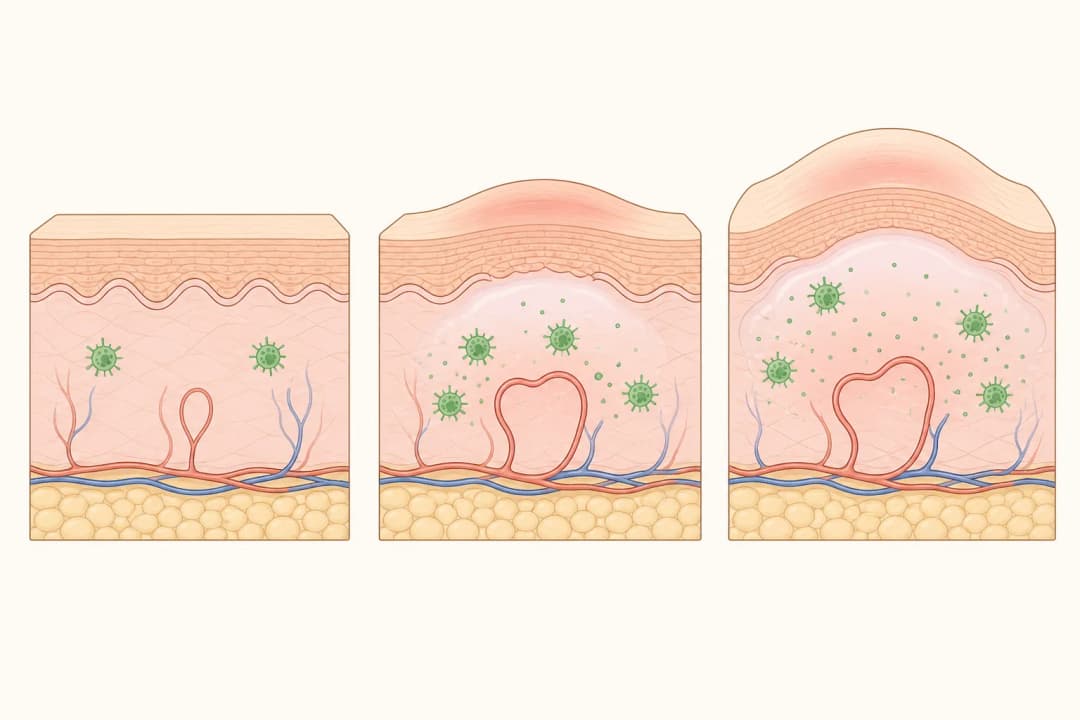
Hives are a skin response in which chemical signals widen small blood vessels and make nearby tissue swell. The result is a raised welt, often pink, red, or similar in colour to the surrounding skin. Itching is common, and separate welts can join into larger patches. A reaction may follow a food, medicine, insect contact, infection, temperature change, exercise, or pressure, but a cause is not always found. Deeper swelling of the lips or eyelids may accompany hives and is known as angioedema.
Responding safely
Move away from a suspected contact trigger and rinse exposed skin with water if appropriate. Use a cool compress, keep nails short, and avoid rubbing the welts. Ask a pharmacist or clinician about an oral antihistamine that suits your age, medical history, and current medicines. Read the label carefully and avoid taking more than directed. Record when the reaction started, what you ate or took, and whether exercise, heat, or pressure came first. This information helps a clinician separate hives from other types of skin rash and decide whether further assessment is useful.
Warning signs
Treat breathing difficulty, throat or tongue swelling, wheezing, voice change, dizziness, faintness, or collapse as an emergency and call emergency services. Do not wait to see whether the welts disappear. Get prompt advice for widespread hives after a new medicine, repeated vomiting, severe abdominal symptoms, or rapidly increasing facial swelling. Medical review is also sensible when the rash is painful, leaves bruising, comes with fever, or does not behave like fleeting welts.
Useful questions
Ask what may have started the reaction, whether your symptoms suggest angioedema, which treatment is appropriate, and what plan to follow if the reaction returns. Ask how to distinguish a routine flare from an emergency.
Find care
General Clinics & Polyclinics in Dubai
That answer is general. If you want it applied to your own case, these are licensed general clinics & polyclinics listed in Dubai.
The Court Residence, 39B Street, Jumeirah 1, Dubai
Accepts: Tabby, Tamara
Elite Business Bay Residence - Shop 03 & 04, 34 Marasi Dr - Business Bay - Dubai - United Arab Emirates
Accepts: Tabby
Airport View Building, Al Garhoud, Dubai
Accepts: Daman, Thiqa, AXA, Cigna +25 more
IBIS Building, 5th Floor, Unit 5003, Deira, Dubai
Accepts: AXA, Cigna, MetLife, Allianz Care +18 more
Ordered by verification status and how complete each clinic's public record is, then alphabetically. This is a directory listing, not a ranking — Zavis does not rate or recommend providers.
A factual listing drawn from the UAE health regulators' public licence registers. It is not a referral, an endorsement, or advice that any of these providers is right for you.
Questions people ask
Can a hives reaction spread?
New welts can appear in different places and may merge into larger areas; spread alone does not show how severe the reaction is.
What should I photograph?
Capture the welts in good light and include facial or lip swelling if present; note the time and any new exposure.
Related
Related reading
Keep reading
Medical disclaimer. This page is general health information, not medical advice, and it cannot diagnose you. Always consult a licensed healthcare provider about your own symptoms and treatment. In an emergency in the UAE, call 998 for an ambulance.