
What should you know about hives from dust?
Short answer
Dust can irritate the skin or carry allergens, but hives are a specific raised, itchy reaction that needs careful assessment.
This answers one question. It is not a diagnosis and does not replace an assessment by a licensed doctor.
At a glance
- Typical appearance
- Raised, itchy welts that may change location
- Useful clue
- Record timing and the full list of exposures
- Urgent warning
- Breathing or mouth and tongue swelling
What dust-related hives may mean
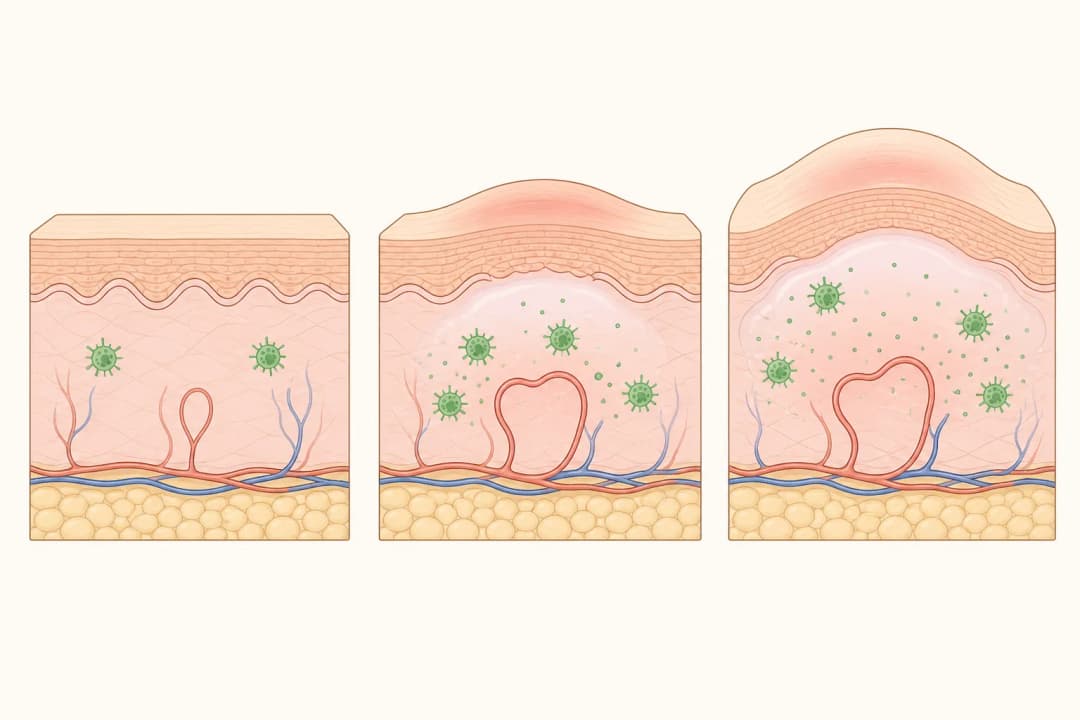
Hives, also called urticaria, are raised welts that can appear, fade, and reappear in different places. Dust itself is not one single substance: household dust may contain dust-mite particles, fibres, mould fragments, or other irritants. A flare after cleaning may therefore reflect contact, inhalation, heat, friction, or another exposure that happened at the same time. Hives can also occur without an identifiable trigger. Itchy skin and a skin rash may accompany the welts, while deeper swelling around the lips or eyelids is called angioedema.
Steps that may help
Move away from the dusty area, change out of dusty clothing, and gently rinse exposed skin with lukewarm water. Avoid scratching, tight clothing, hot showers, and fragranced products while the reaction settles. Keep a note of where you were, what disturbed the dust, how quickly the welts appeared, and any food, medicine, exercise, or cleaning product used that day. A clinician or pharmacist can advise whether an oral antihistamine treatment is suitable; do not start oral corticosteroid treatment without medical guidance.
When to seek care
Get emergency help immediately for trouble breathing, wheezing, throat tightness, faintness, or swelling of the tongue or mouth. Seek prompt medical assessment for rapidly increasing skin swelling, repeated episodes, or welts that do not improve. A clinician can distinguish hives from other causes of a skin rash and review possible triggers without assuming that dust is responsible.
Questions to take to an appointment
Could this be hives or another rash? Which exposures should I record? Is an antihistamine appropriate for me, and what symptoms would change the plan?
Find care
General Clinics & Polyclinics in Abu Dhabi
That answer is general. If you want it applied to your own case, these are licensed general clinics & polyclinics listed in Abu Dhabi.
27 Ar Ruwwad St - Shakhbout City - MSH4 - Abu Dhabi - United Arab Emirates
Accepts: Daman, Thiqa, Cigna, MetLife +20 more
Al Ruwais, Al Dhafrah
Accepts: Daman, Thiqa, AXA, Cigna +16 more
Al Bahyah - Al Bahyah Old - Abu Dhabi - United Arab Emirates
Accepts: Daman, Thiqa, Cigna, Allianz Care +18 more
Abu Dhabi
Accepts: Daman, Thiqa, AXA, Cigna +27 more
Ordered by verification status and how complete each clinic's public record is, then alphabetically. This is a directory listing, not a ranking — Zavis does not rate or recommend providers.
A factual listing drawn from the DHA, DOH and MOHAP licence registers. It is not a referral, an endorsement, or advice that any of these providers is right for you.
Questions people ask
Can dust cause hives?
Dust may coincide with hives through allergens or irritation, but other triggers and unexplained episodes are also possible.
Should I avoid all dust permanently?
Reduce exposure while identifying the pattern, then discuss recurring episodes with a clinician rather than making broad long-term restrictions.
Related
Related reading
Keep reading
Medical disclaimer. This page is general health information, not medical advice, and it cannot diagnose you. Always consult a licensed healthcare provider about your own symptoms and treatment. In an emergency in the UAE, call 998 for an ambulance.