
Hives From a Bee Sting: What to Know
Short answer
Hives after a bee sting can be part of an allergic reaction, and symptoms beyond the sting site require urgent attention because the reaction can progress.
This answers one question. It is not a diagnosis and does not replace an assessment by a licensed doctor.
At a glance
- Local reaction
- Pain, redness, and swelling near the sting
- Wider reaction
- Hives away from the sting site may signal an allergic response
- Emergency sign
- Breathing, throat, faintness, vomiting, or mouth swelling
Why hives may follow a sting
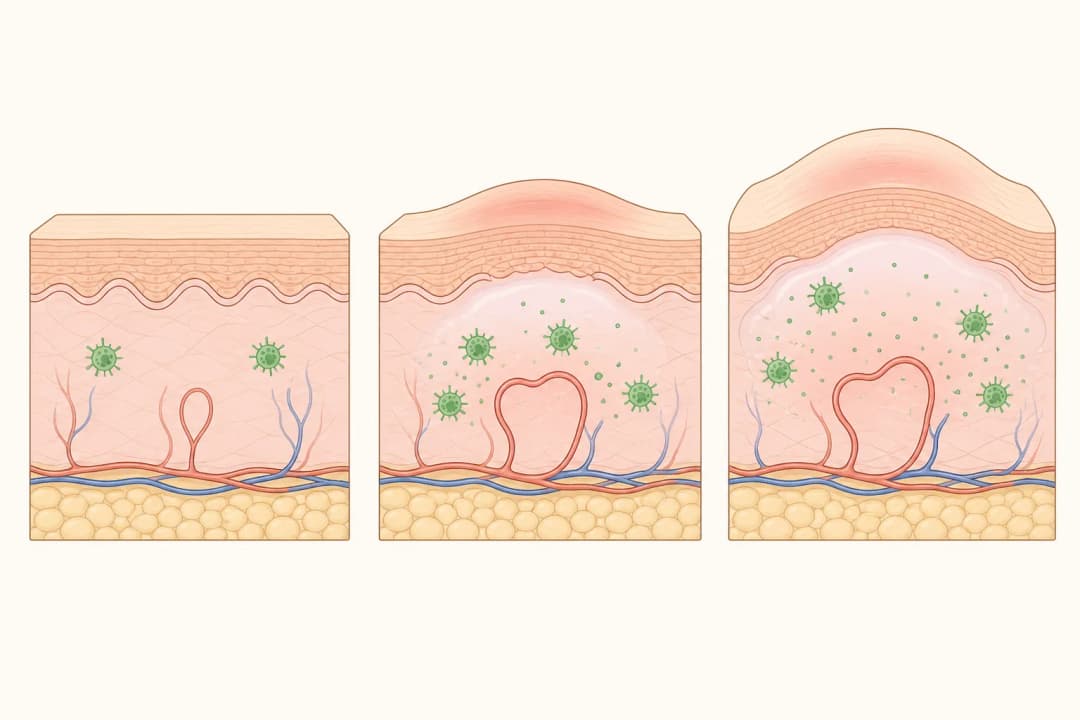
A bee sting can cause local pain, redness, and swelling around the sting. Hives appearing away from that area suggest a body-wide immune response rather than only local irritation. Watch for swelling of the lips, eyelids, tongue, or throat, as well as breathing or circulation symptoms. A clinician may call deeper swelling angioedema. The timing, number of sting sites, location of the welts, and any symptoms involving the mouth, lungs, or stomach are useful details to record.
What to do after the sting
Move away from the insect and follow any emergency allergy plan you already have. If a stinger is visible, remove it promptly without squeezing the venom sac; then wash the area and use a cool compress for local discomfort. Do not rely on a skin cream to treat widespread hives. Contact a pharmacist or clinician about an oral antihistamine, and only use prescribed emergency medicine according to your personal instructions. Have someone stay with you while symptoms are changing.
Treat these signs as an emergency
Call emergency services immediately for trouble breathing, wheezing, throat tightness, hoarse voice, faintness, confusion, repeated vomiting, or swelling of the tongue or mouth. Widespread hives after a sting deserve urgent medical advice even when breathing is currently normal, because symptoms can change. After recovery, arrange an allergy or medical review to discuss future stings, an emergency plan, and whether you need specialist assessment. Do not deliberately expose yourself to bees to test a suspected allergy.
Questions for your doctor
Does this reaction need allergy assessment? What should I carry or do if I am stung again? Which symptoms mean I should call emergency services immediately?
Find care
General Clinics & Polyclinics in Abu Dhabi
That answer is general. If you want it applied to your own case, these are licensed general clinics & polyclinics listed in Abu Dhabi.
27 Ar Ruwwad St - Shakhbout City - MSH4 - Abu Dhabi - United Arab Emirates
Accepts: Daman, Thiqa, Cigna, MetLife +20 more
Al Ruwais, Al Dhafrah
Accepts: Daman, Thiqa, AXA, Cigna +16 more
Al Bahyah - Al Bahyah Old - Abu Dhabi - United Arab Emirates
Accepts: Daman, Thiqa, Cigna, Allianz Care +18 more
Abu Dhabi
Accepts: Daman, Thiqa, AXA, Cigna +27 more
Ordered by verification status and how complete each clinic's public record is, then alphabetically. This is a directory listing, not a ranking — Zavis does not rate or recommend providers.
A factual listing drawn from the DHA, DOH and MOHAP licence registers. It is not a referral, an endorsement, or advice that any of these providers is right for you.
Questions people ask
Are hives after a bee sting an emergency?
Widespread hives need urgent medical advice, and breathing trouble, throat or mouth swelling, faintness, or vomiting require emergency help.
What should I do if hives spread after a sting?
Move away from the insect, follow your emergency plan, seek urgent advice, and watch closely for breathing or mouth and throat symptoms.
Related
Related reading
Keep reading
Medical disclaimer. This page is general health information, not medical advice, and it cannot diagnose you. Always consult a licensed healthcare provider about your own symptoms and treatment. In an emergency in the UAE, call 998 for an ambulance.