
Healing Nappy Rash: What to Know
Short answer
Healing nappy rash depends on keeping the skin clean and dry, reducing friction, and treating inflammation or infection when present.
This answers one question. It is not a diagnosis and does not replace an assessment by a licensed doctor.
At a glance
- Also called
- Diaper dermatitis or diaper rash
- First care step
- Change nappies promptly and dry the skin gently
- Possible cause
- Moisture, friction, irritation, or fungal overgrowth
What healing nappy rash can look like
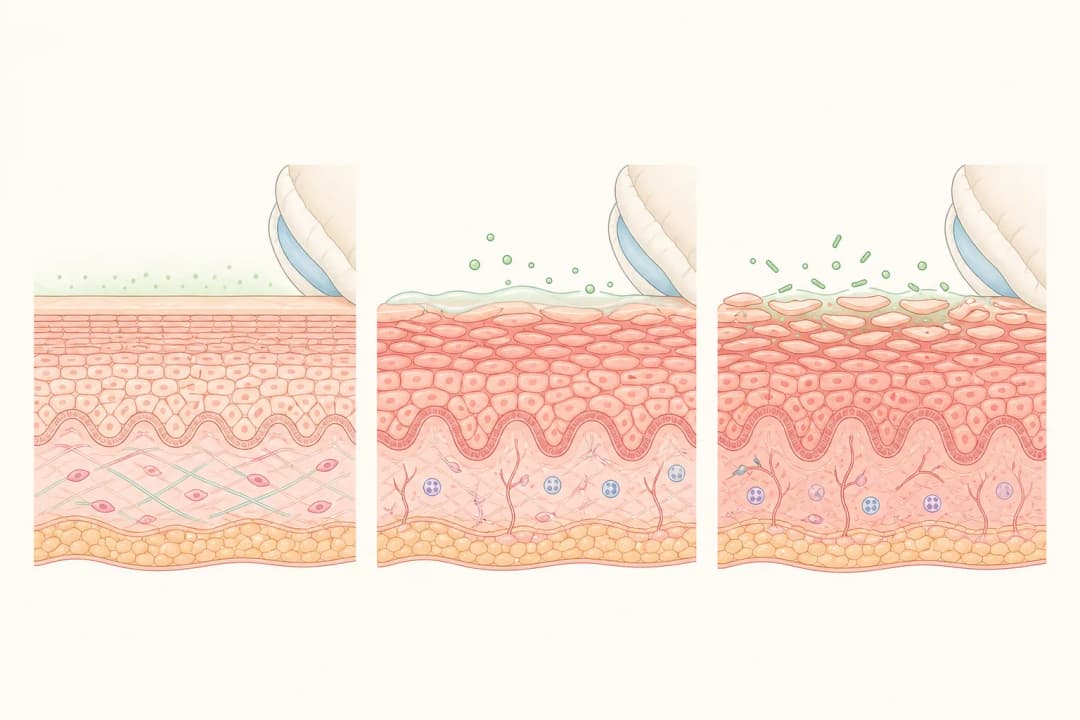
Nappy rash, also called diaper dermatitis, often affects skin covered by the nappy. Irritation from moisture, stool, urine, rubbing, or a product can leave the skin red, sore, and tender. During healing, redness should become less intense, the skin should feel more comfortable, and raw areas should begin to close. Mild colour change can remain after the irritation has settled.
A rash that involves skin folds, has small separate spots around its edge, or does not improve with barrier care may have a fungal component. Other conditions can resemble nappy rash, so persistent or unusual changes deserve an examination rather than repeated self-treatment.
Care that helps the skin recover
Change wet or soiled nappies promptly and clean gently with lukewarm water or a mild fragrance-free product. Pat the area dry, allow nappy-free time when practical, and fasten the nappy so it does not rub. Apply a protective, fragrance-free barrier layer to clean dry skin. Avoid talcum powder, fragranced wipes, harsh soaps, and scrubbing the sore area.
If irritation continues, a clinician may suggest an emollient routine to support the skin barrier. If the pattern suggests yeast or another fungal cause, a healthcare professional may recommend a topical antifungal treatment; use it only as directed and keep routine hygiene measures in place. See [Emollient Therapy](/treatments/medical-dermatology/emollient-therapy/) and [Topical Antifungal Treatment](/treatments/medical-dermatology/topical-antifungal-therapy/).
When to seek medical care
Contact a healthcare professional if the rash is worsening, very painful, blistered, bleeding, weeping, or not settling despite careful nappy care. Prompt advice is needed for pus, spreading redness, marked swelling, fever, or a child who seems unusually sleepy, distressed, or unwell. A baby with a widespread rash or significant skin breakdown should be assessed without delay.
Questions for your doctor
Ask what may be irritating the skin, which cleanser and barrier product to use, how often to apply it, and whether the rash could be fungal. Ask how long to try the plan, which signs suggest infection, and whether a prescribed treatment should be stopped or continued when the skin starts to improve.
Find care
General Clinics & Polyclinics in Abu Dhabi
That answer is general. If you want it applied to your own case, these are licensed general clinics & polyclinics listed in Abu Dhabi.
27 Ar Ruwwad St - Shakhbout City - MSH4 - Abu Dhabi - United Arab Emirates
Accepts: Daman, Thiqa, Cigna, MetLife +20 more
Al Ruwais, Al Dhafrah
Accepts: Daman, Thiqa, AXA, Cigna +16 more
Al Bahyah - Al Bahyah Old - Abu Dhabi - United Arab Emirates
Accepts: Daman, Thiqa, Cigna, Allianz Care +18 more
Abu Dhabi
Accepts: Daman, Thiqa, AXA, Cigna +27 more
Ordered by verification status and how complete each clinic's public record is, then alphabetically. This is a directory listing, not a ranking — Zavis does not rate or recommend providers.
A factual listing drawn from the DHA, DOH and MOHAP licence registers. It is not a referral, an endorsement, or advice that any of these providers is right for you.
Questions people ask
Should nappy-free time be part of care?
Yes, when practical, brief nappy-free periods can reduce trapped moisture and rubbing while the skin recovers.
When might an antifungal treatment be needed?
A clinician may consider it when the rash has features suggesting fungal involvement or has not improved with barrier care.
Related
Related reading
Keep reading
Medical disclaimer. This page is general health information, not medical advice, and it cannot diagnose you. Always consult a licensed healthcare provider about your own symptoms and treatment. In an emergency in the UAE, call 998 for an ambulance.