
What should you know about gonadotropin-dependent precocious puberty?
Short answer
Gonadotropin-dependent precocious puberty is early puberty driven by brain hormone signals, and care focuses on confirming the pattern and slowing progression when appropriate.
This answers one question. It is not a diagnosis and does not replace an assessment by a licensed doctor.
At a glance
- Underlying pathway
- Early activation of brain-to-pituitary puberty signals
- Assessment
- Growth, examination, hormone tests, and selected imaging
- Specialist
- Paediatric endocrinologist
What the diagnosis describes
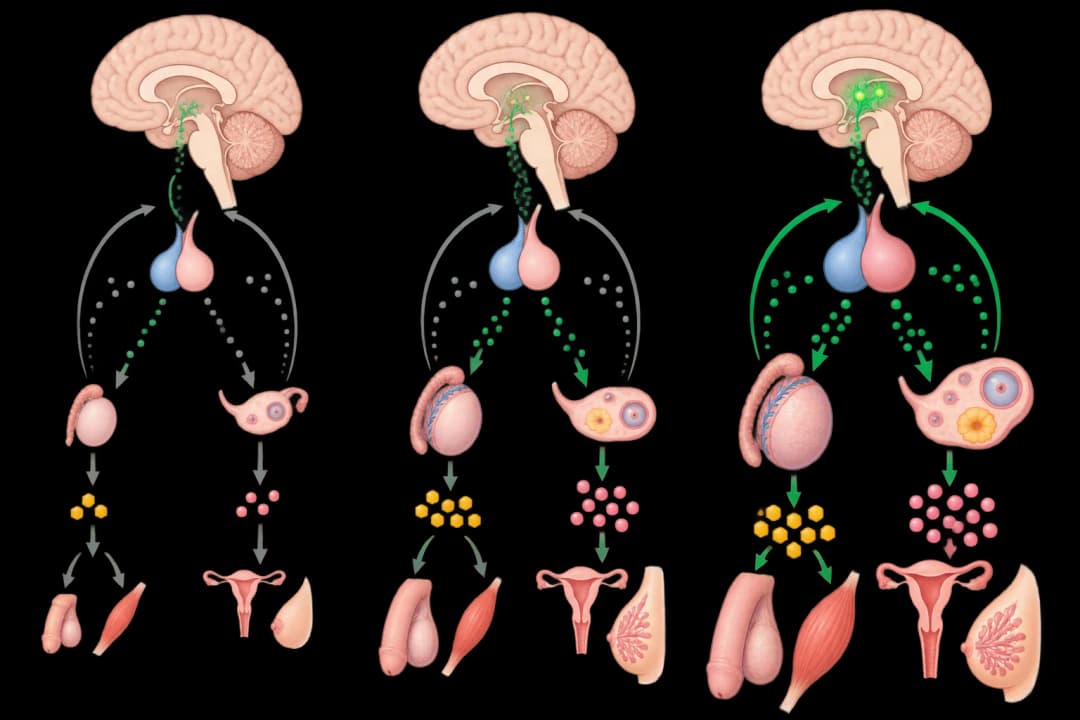
Normally, the brain begins puberty by releasing signals that prompt the pituitary gland to make gonadotropins. These signals then stimulate the ovaries or testes. In gonadotropin-dependent precocious puberty, this pathway becomes active earlier than expected. A child may show breast or testicular development, pubic hair, body odour, growth acceleration, or menstrual bleeding. The pattern, speed of change, growth measurements, examination, and hormone testing help clinicians assess whether puberty is progressing.
How assessment and care work
A paediatric endocrinologist may review the child’s growth chart, examine puberty signs, arrange hormone tests, and consider bone-age imaging or other investigations. A female hormone blood panel may be one part of the assessment when clinically suitable. If puberty is progressing and treatment is appropriate, a GnRH medicine may suppress the signals temporarily. Keep follow-up visits so growth and development can be reviewed and the plan adjusted.
When to seek care
Arrange medical review for puberty signs appearing unusually early, rapid growth, vaginal bleeding, headaches, visual changes, or neurological symptoms. Seek urgent care for a severe sudden headache, seizure, confusion, weakness, or new loss of vision. These symptoms need prompt assessment regardless of whether early puberty has been diagnosed.
Questions for your doctor
Which findings show that puberty is centrally driven? What tests are needed now? Is treatment recommended, and what change is it intended to slow? How will growth and bone development be followed? What symptoms should prompt urgent review?
Find care
General Clinics & Polyclinics in Abu Dhabi
That answer is general. If you want it applied to your own case, these are licensed general clinics & polyclinics listed in Abu Dhabi.
27 Ar Ruwwad St - Shakhbout City - MSH4 - Abu Dhabi - United Arab Emirates
Accepts: Daman, Thiqa, Cigna, MetLife +20 more
Al Ruwais, Al Dhafrah
Accepts: Daman, Thiqa, AXA, Cigna +16 more
Al Bahyah - Al Bahyah Old - Abu Dhabi - United Arab Emirates
Accepts: Daman, Thiqa, Cigna, Allianz Care +18 more
Abu Dhabi
Accepts: Daman, Thiqa, AXA, Cigna +27 more
Ordered by verification status and how complete each clinic's public record is, then alphabetically. This is a directory listing, not a ranking — Zavis does not rate or recommend providers.
A factual listing drawn from the DHA, DOH and MOHAP licence registers. It is not a referral, an endorsement, or advice that any of these providers is right for you.
Questions people ask
Is every early puberty change gonadotropin-dependent?
No. Clinicians distinguish central hormone activation from other causes using the examination, timing, progression, and test results.
Can treatment stop puberty forever?
Treatment is intended to pause the active hormone pathway; the specialist explains duration and follow-up for each child.
Related
Related reading
Keep reading
Medical disclaimer. This page is general health information, not medical advice, and it cannot diagnose you. Always consult a licensed healthcare provider about your own symptoms and treatment. In an emergency in the UAE, call 998 for an ambulance.