
What should you know about FUT hair transplant procedure?
Short answer
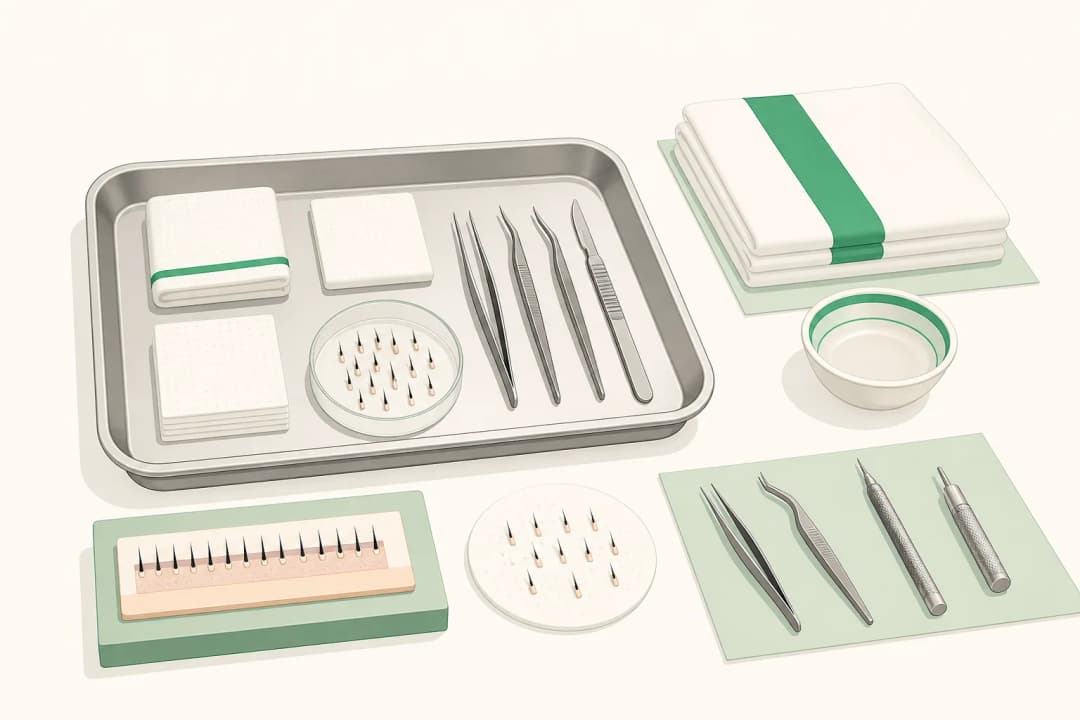
A FUT hair transplant procedure removes a donor scalp strip, separates grafts, and places them into planned recipient sites.
This answers one question. It is not a diagnosis and does not replace an assessment by a licensed doctor.
At a glance
- Harvesting
- A strip is removed from the donor scalp.
- Grafts
- The strip is separated into follicular units.
- Placement
- Grafts are inserted into planned recipient sites.
What happens during FUT
The team marks the hairline and recipient zones, prepares the donor area, and uses local anaesthetic to numb the scalp. A narrow strip is removed from the donor area, commonly at the back of the head, and the wound is closed. Staff then divide the strip into follicular unit grafts under magnification.
The surgeon makes recipient openings that match the intended direction and angle of growth, then inserts the grafts. Planning considers facial proportions, donor supply, hair calibre, and the possibility that untransplanted hair may change over time.
How to prepare
Bring a complete medicine and supplement list, and mention scalp conditions, keloid scars, bleeding tendencies, allergies, and previous operations. Follow instructions about washing, food, alcohol, smoking, and medicines; do not stop a prescribed medicine unless the treating clinician tells you to.
Arrange a calm journey home and protect the grafts from rubbing. Use only the recommended cleansing method, avoid picking crusts, and postpone strenuous activity until cleared. The incision and transplanted area need different care, so request written instructions for both.
Warning signs after the procedure
Call the clinic if pain or swelling is worsening rather than settling, or if you notice fever, pus, spreading redness, persistent bleeding, or separation of the donor wound. Get urgent help for severe allergic symptoms, fainting, breathing problems, or uncontrolled bleeding.
Useful questions
How will you design the hairline and close the donor wound? What scar-care options are suitable for my skin? When can I wash, sleep normally, exercise, work, and wear headwear? How will you monitor ongoing hair loss?
Find care
General Clinics & Polyclinics in Abu Dhabi
That answer is general. If you want it applied to your own case, these are licensed general clinics & polyclinics listed in Abu Dhabi.
27 Ar Ruwwad St - Shakhbout City - MSH4 - Abu Dhabi - United Arab Emirates
Accepts: Daman, Thiqa, Cigna, MetLife +20 more
Al Ruwais, Al Dhafrah
Accepts: Daman, Thiqa, AXA, Cigna +16 more
Al Bahyah - Al Bahyah Old - Abu Dhabi - United Arab Emirates
Accepts: Daman, Thiqa, Cigna, Allianz Care +18 more
Abu Dhabi
Accepts: Daman, Thiqa, AXA, Cigna +27 more
Ordered by verification status and how complete each clinic's public record is, then alphabetically. This is a directory listing, not a ranking — Zavis does not rate or recommend providers.
A factual listing drawn from the DHA, DOH and MOHAP licence registers. It is not a referral, an endorsement, or advice that any of these providers is right for you.
Questions people ask
Will FUT leave a scar?
FUT leaves a linear donor-area scar, whose visibility depends on healing, closure, hair length, and individual skin response.
When does transplanted hair look settled?
Healing and growth occur gradually; the clinic should explain the expected stages for your plan.
Related
Related reading
Keep reading
Medical disclaimer. This page is general health information, not medical advice, and it cannot diagnose you. Always consult a licensed healthcare provider about your own symptoms and treatment. In an emergency in the UAE, call 998 for an ambulance.