
What should you know about full ceramic bearings?
Short answer
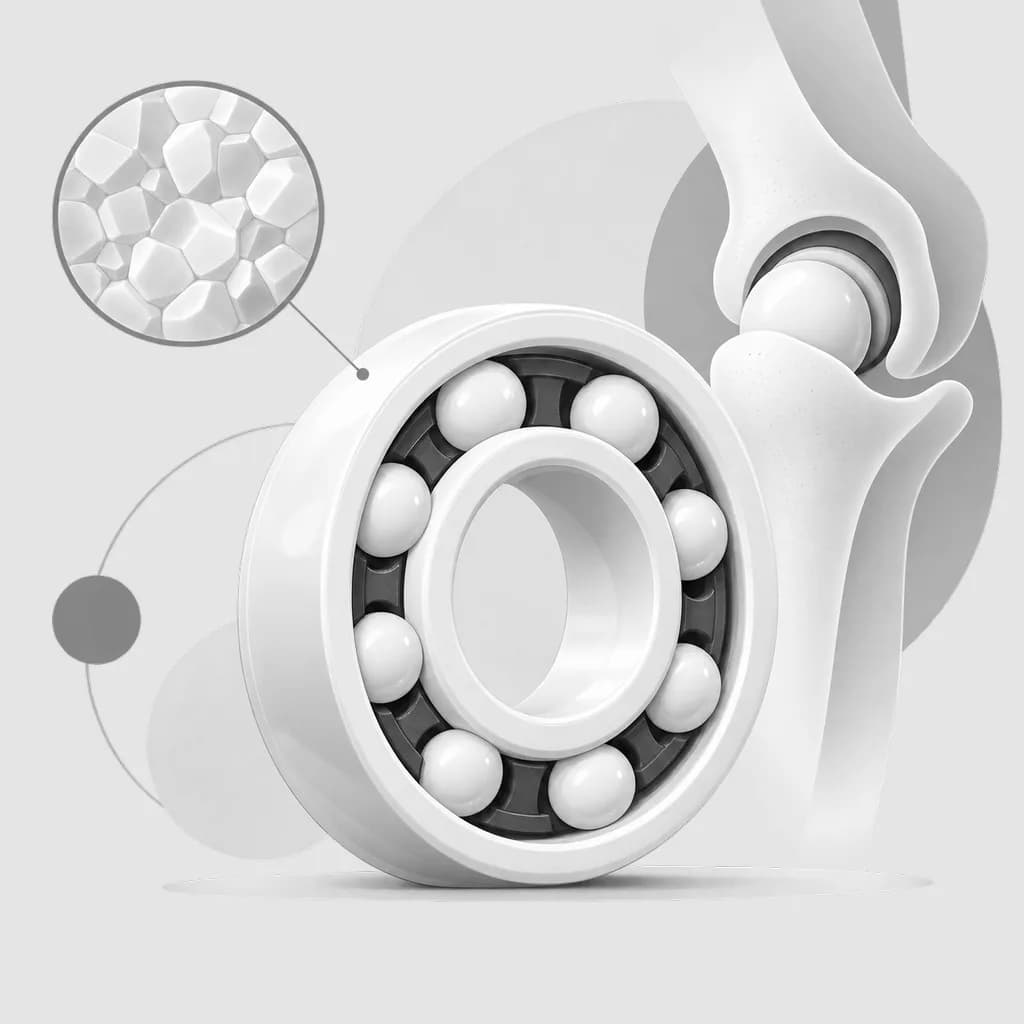
Full ceramic bearings pair a ceramic ball with a ceramic socket surface in a replacement joint, while the wider implant choice depends on your individual needs.
This answers one question. It is not a diagnosis and does not replace an assessment by a licensed doctor.
At a glance
- Bearing surfaces
- Ceramic ball paired with ceramic socket surface
- Not included in the term
- Every part of the implant or the rehabilitation plan
- Important factors
- Joint anatomy, bone, activity, and implant design
How the pairing works
A replacement joint has surfaces that move against one another. In a full ceramic pairing, both of those bearing surfaces are ceramic. This can provide a hard, smooth contact surface, but it does not remove the need for accurate implant positioning, balanced soft tissues, and appropriate rehabilitation.
The term does not tell you whether the implant is for the hip or another joint, nor does it describe every part of the device. A surgeon considers joint anatomy, bone strength, previous operations, movement demands, and the available implant design before recommending a bearing.
Making sense of your options
Request the exact bearing description and ask which components are ceramic. Discuss how the choice affects activity guidance, follow-up, and warning signs. Keep a record of the implant information supplied by your hospital. During recovery, follow the prescribed loading and exercise plan; do not change activity because the material sounds especially durable.
Symptoms that need review
Contact your surgical team for increasing pain, warmth or drainage at the wound, fever, a new limp, repeated clicking with discomfort, instability, or reduced joint movement. Sudden swelling in a limb, chest pain, or difficulty breathing needs urgent medical attention. These symptoms require assessment of the whole joint and surrounding tissues, not just the bearing.
Questions for your appointment
Ask why full ceramic bearings are being considered, what alternatives are appropriate, how the components are secured, and which movements should be limited while healing. Ask how follow-up checks will assess comfort, alignment, and function. The Ceramic Bearing and Total Hip Replacement pages provide useful background terms for that conversation.
Find care
General Clinics & Polyclinics in Abu Dhabi
That answer is general. If you want it applied to your own case, these are licensed general clinics & polyclinics listed in Abu Dhabi.
27 Ar Ruwwad St - Shakhbout City - MSH4 - Abu Dhabi - United Arab Emirates
Accepts: Daman, Thiqa, Cigna, MetLife +20 more
Al Ruwais, Al Dhafrah
Accepts: Daman, Thiqa, AXA, Cigna +16 more
Al Bahyah - Al Bahyah Old - Abu Dhabi - United Arab Emirates
Accepts: Daman, Thiqa, Cigna, Allianz Care +18 more
Abu Dhabi
Accepts: Daman, Thiqa, AXA, Cigna +27 more
Ordered by verification status and how complete each clinic's public record is, then alphabetically. This is a directory listing, not a ranking — Zavis does not rate or recommend providers.
A factual listing drawn from the DHA, DOH and MOHAP licence registers. It is not a referral, an endorsement, or advice that any of these providers is right for you.
Questions people ask
Are full ceramic bearings suitable for everyone?
No. Suitability depends on the joint, anatomy, bone, activity needs, and the implant options available to your surgeon.
What should I do if I hear a new joint noise?
Mention it to the care team, especially when it comes with pain, instability, swelling, or reduced movement.
Related
Related reading
Keep reading
Medical disclaimer. This page is general health information, not medical advice, and it cannot diagnose you. Always consult a licensed healthcare provider about your own symptoms and treatment. In an emergency in the UAE, call 998 for an ambulance.