
What should you know about feet and hands get cold?
Short answer
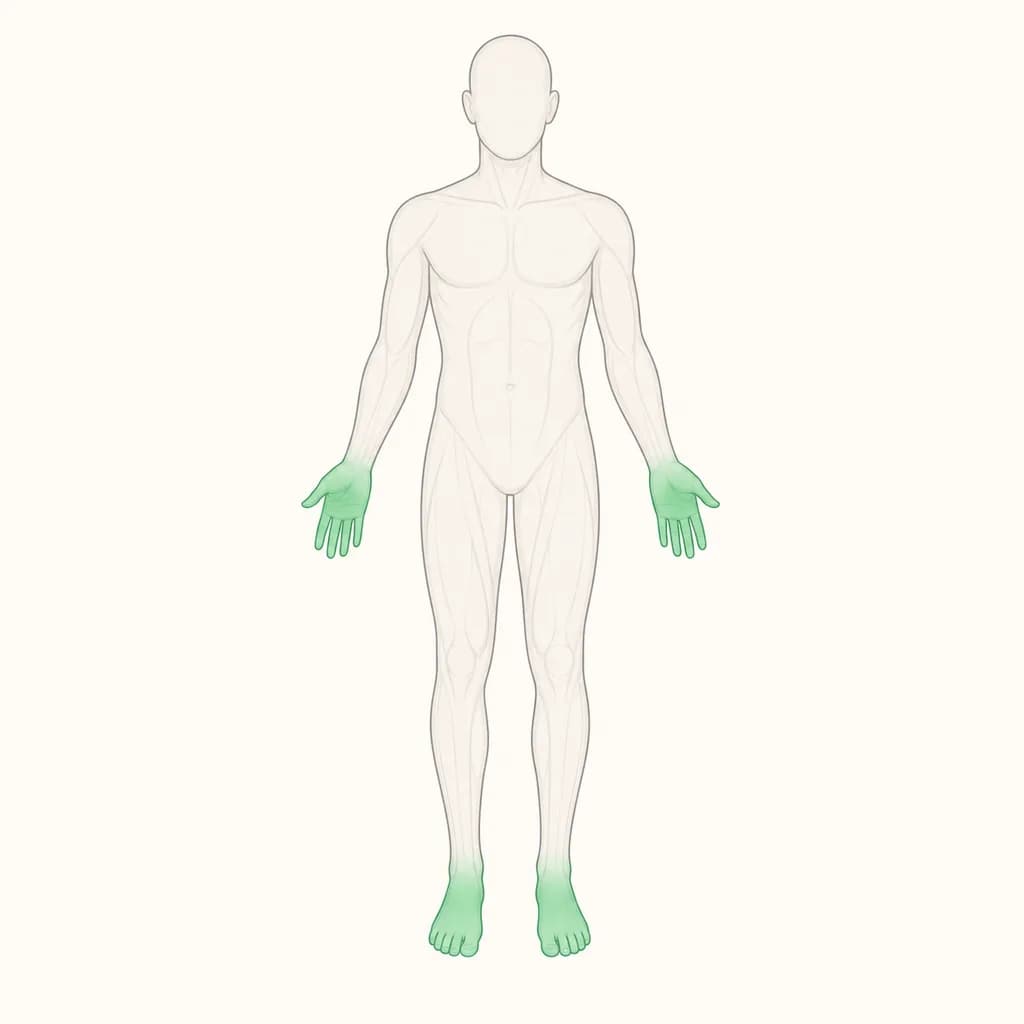
Cold hands and feet are commonly a response to the environment, while ongoing or one-sided coldness needs assessment.
This answers one question. It is not a diagnosis and does not replace an assessment by a licensed doctor.
At a glance
- Observe
- Warmth, colour, sensation, and whether both sides match
- Book care
- For persistent, worsening, or activity-limiting symptoms
The short answer
Cold hands and feet are commonly a response to the environment, while ongoing or one-sided coldness needs assessment. The symptom can also accompany low iron or anaemia, an underactive thyroid, or reduced circulation. It does not by itself identify a particular condition.
Clues worth noticing
Write down when the coldness starts and whether warming restores normal sensation and colour. Persistent pallor or blue colouring, pins and needles, cramps when walking, skin changes, or unusual fatigue gives a clinician useful context. Iron-deficiency anaemia may cause tiredness and feeling cold; hypothyroidism can cause broader cold intolerance. Peripheral arterial disease more often affects circulation to the legs and may cause exertional discomfort. A symptom diary cannot diagnose the cause, but it can reveal a pattern.
Steps at home
Use layers, warm footwear, and regular gentle movement. Keep the skin dry and inspect toes and fingers if sensation is reduced. Do not smoke, and avoid tight shoes or gloves that restrict movement. Make a routine appointment if the problem persists despite warmth, is getting worse, or affects sleep or walking. Bring a list of medicines and mention heavy periods, dietary restrictions, or previous low blood counts.
Warning signs
Get urgent care for sudden coldness in one limb, intense pain, marked colour change, new weakness, or inability to move the hand or foot. Seek prompt advice for sores, blackened skin, or pain at rest. Chest pain or breathlessness alongside cold, clammy skin needs emergency help.
Useful questions
Ask what causes are most relevant to your history, whether a blood count or thyroid test is appropriate, and how circulation will be checked. If iron deficiency is suspected, ask what is causing it before considering iron supplementation.
Find care
General Clinics & Polyclinics in Abu Dhabi
That answer is general. If you want it applied to your own case, these are licensed general clinics & polyclinics listed in Abu Dhabi.
27 Ar Ruwwad St - Shakhbout City - MSH4 - Abu Dhabi - United Arab Emirates
Accepts: Daman, Thiqa, Cigna, MetLife +20 more
Al Ruwais, Al Dhafrah
Accepts: Daman, Thiqa, AXA, Cigna +16 more
Al Bahyah - Al Bahyah Old - Abu Dhabi - United Arab Emirates
Accepts: Daman, Thiqa, Cigna, Allianz Care +18 more
Abu Dhabi
Accepts: Daman, Thiqa, AXA, Cigna +27 more
Ordered by verification status and how complete each clinic's public record is, then alphabetically. This is a directory listing, not a ranking — Zavis does not rate or recommend providers.
A factual listing drawn from the DHA, DOH and MOHAP licence registers. It is not a referral, an endorsement, or advice that any of these providers is right for you.
Questions people ask
Is coldness on both sides reassuring?
It may fit a general response to cold, but recurring symptoms on both sides can still deserve review when they persist or have other features.
Should I take iron for cold hands and feet?
Only after a clinician confirms iron deficiency or another reason for treatment and advises the dose.
Related
Related reading
Keep reading
Medical disclaimer. This page is general health information, not medical advice, and it cannot diagnose you. Always consult a licensed healthcare provider about your own symptoms and treatment. In an emergency in the UAE, call 998 for an ambulance.