
Extreme Hives: What You Should Know
Short answer
Extreme hives are widespread or intense raised welts that can signal a strong allergic response or another trigger and need prompt assessment when swelling or breathing symptoms occur.
This answers one question. It is not a diagnosis and does not replace an assessment by a licensed doctor.
At a glance
- Typical appearance
- Raised, itchy welts that may move or change shape
- Urgent warning
- Breathing difficulty or tongue and throat swelling
- Possible relief
- Cool compresses and clinician-guided antihistamine treatment
What extreme hives can mean
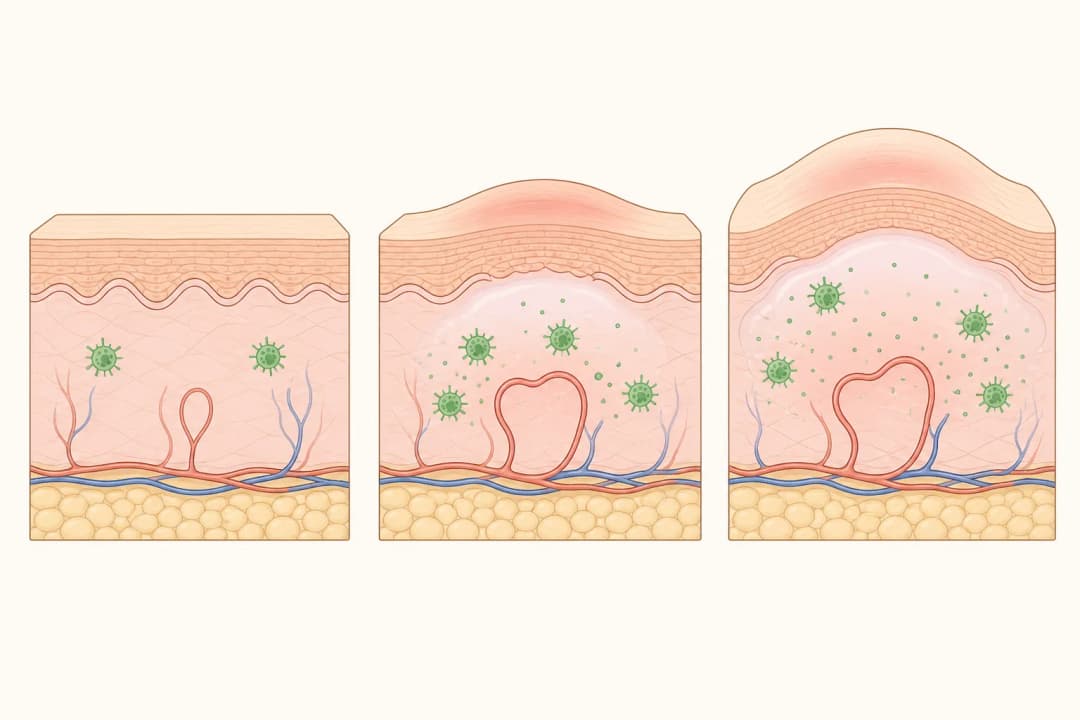
Hives, also called urticaria, are itchy, raised patches that may appear suddenly and change shape or location. Individual welts often fade while new ones form. Triggers can include foods, medicines, infections, heat, pressure, or contact with an irritant, although a clear trigger is not always found.
Marked swelling beneath the skin, especially around the lips, eyelids, tongue, or throat, is called angioedema and can occur with hives. See [Hives](/conditions/urticaria/) for the broader condition and [Angioedema](/conditions/angioedema/) for deeper swelling.
What to do now
Stop using any newly introduced skin product and make a note of recent foods, medicines, infections, heat exposure, or insect contact. Avoid scratching, hot showers, and tight clothing; a cool compress and loose, soft clothing may reduce irritation.
A clinician may recommend an oral antihistamine to reduce itch and wheals; follow the product instructions and check before using it if you are pregnant, treating a child, or taking other medicines. In selected severe episodes, an oral corticosteroid may be prescribed for a short course. Read about [Antihistamine Treatment](/treatments/medical-dermatology/oral-antihistamine-therapy/) and [Oral Corticosteroid Treatment](/treatments/medical-dermatology/oral-corticosteroid-therapy/).
When to seek care
Call emergency services immediately for trouble breathing, wheezing, throat tightness, difficulty swallowing, faintness, confusion, or rapidly increasing swelling of the tongue or face. These symptoms can accompany a serious allergic reaction; do not wait for the rash to settle.
Arrange prompt medical evaluation when hives are extensive, keep returning, interfere with sleep, or come with fever, painful lesions, bruising, vomiting, or swelling. If the rash is itchy without emergency symptoms, [Itchy Skin](/symptoms/itchy-skin/), [Skin Rash](/symptoms/skin-rash/), and [Skin Swelling](/symptoms/skin-swelling/) offer related explanations.
Questions for your doctor
Ask which triggers or medicines should be avoided, whether your symptoms suggest angioedema, how long to use a recommended antihistamine, and what warning signs should send you to emergency care. Bring photos of changing welts and a list of recent exposures.
Find care
General Clinics & Polyclinics in Abu Dhabi
That answer is general. If you want it applied to your own case, these are licensed general clinics & polyclinics listed in Abu Dhabi.
27 Ar Ruwwad St - Shakhbout City - MSH4 - Abu Dhabi - United Arab Emirates
Accepts: Daman, Thiqa, Cigna, MetLife +20 more
Al Ruwais, Al Dhafrah
Accepts: Daman, Thiqa, AXA, Cigna +16 more
Al Bahyah - Al Bahyah Old - Abu Dhabi - United Arab Emirates
Accepts: Daman, Thiqa, Cigna, Allianz Care +18 more
Abu Dhabi
Accepts: Daman, Thiqa, AXA, Cigna +27 more
Ordered by verification status and how complete each clinic's public record is, then alphabetically. This is a directory listing, not a ranking — Zavis does not rate or recommend providers.
A factual listing drawn from the DHA, DOH and MOHAP licence registers. It is not a referral, an endorsement, or advice that any of these providers is right for you.
Questions people ask
Can extreme hives affect breathing?
Hives themselves are skin welts, but hives with throat, tongue, or facial swelling or breathing difficulty require emergency care.
Should you scratch severe hives?
Scratching can further irritate the skin. Use a cool compress, loose clothing, and treatment recommended by a clinician instead.
Related
Related reading
Keep reading
Medical disclaimer. This page is general health information, not medical advice, and it cannot diagnose you. Always consult a licensed healthcare provider about your own symptoms and treatment. In an emergency in the UAE, call 998 for an ambulance.