
Dust mite hives: what should you know?
Short answer
Dust mite hives are raised itchy welts with many possible triggers, so their timing and associated symptoms matter more than the label alone.
This answers one question. It is not a diagnosis and does not replace an assessment by a licensed doctor.
At a glance
- Typical hives
- Raised itchy welts that change or move
- Possible companion symptoms
- Sneezing, itchy eyes, swelling, or breathing symptoms
- Emergency signs
- Throat, tongue, lip, or facial swelling with breathing trouble
How to recognise the pattern
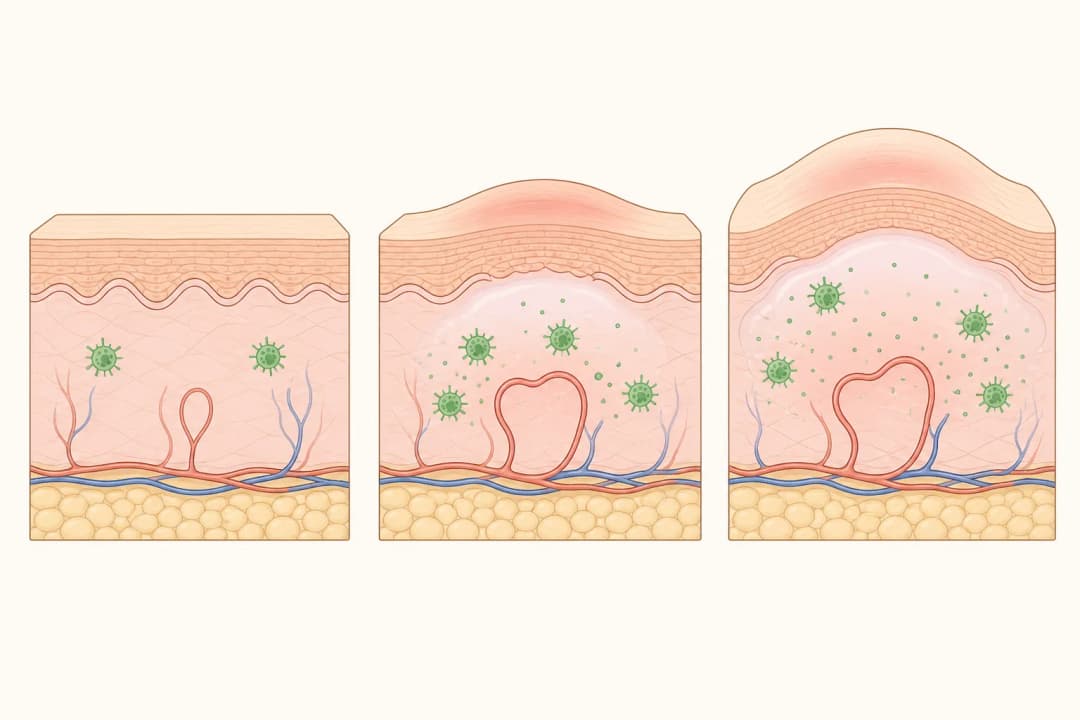
Hives can be pale, pink, or red raised areas that change shape, move, and fade while new welts appear. Dust mite exposure is often associated with nose, eye, or breathing symptoms, whereas hives may follow infection, food, medicine, pressure, heat, or another exposure. Deeper swelling around the eyes, lips, hands, or feet is called Angioedema. A photograph and a timeline can help a clinician test the dust-mite assumption.
Managing symptoms
Cool compresses, loose clothing, and avoiding hot water may reduce discomfort. Keep nails short and avoid rubbing the welts. Wash bedding as directed and consider practical dust-control measures, while remembering that a clean room does not prove the cause of hives. Ask a pharmacist or clinician about Antihistamine Treatment, especially if you are pregnant, have long-term conditions, or take other medicines. Do not borrow prescription treatment.
When urgent care is needed
Get emergency help if hives occur with wheezing, difficult breathing, throat tightness, faintness, or swelling of the tongue, lips, or face. Seek prompt review for extensive swelling, a new medicine or food exposure, repeated attacks, severe symptoms, or welts that last unusually long in one spot or bruise as they fade. Recurrent hives benefit from a structured history and examination.
Questions for your doctor
Ask whether the eruption is Hives, whether another trigger is more plausible, and which treatment is safe for you. Mention respiratory symptoms, photographs, recent infections, medicines, foods, pressure, heat, and cleaning activities.
Find care
General Clinics & Polyclinics in Abu Dhabi
That answer is general. If you want it applied to your own case, these are licensed general clinics & polyclinics listed in Abu Dhabi.
27 Ar Ruwwad St - Shakhbout City - MSH4 - Abu Dhabi - United Arab Emirates
Accepts: Daman, Thiqa, Cigna, MetLife +20 more
Al Ruwais, Al Dhafrah
Accepts: Daman, Thiqa, AXA, Cigna +16 more
Al Bahyah - Al Bahyah Old - Abu Dhabi - United Arab Emirates
Accepts: Daman, Thiqa, Cigna, Allianz Care +18 more
Abu Dhabi
Accepts: Daman, Thiqa, AXA, Cigna +27 more
Ordered by verification status and how complete each clinic's public record is, then alphabetically. This is a directory listing, not a ranking — Zavis does not rate or recommend providers.
A factual listing drawn from the DHA, DOH and MOHAP licence registers. It is not a referral, an endorsement, or advice that any of these providers is right for you.
Questions people ask
Are dust mites a proven cause of every episode called dust mite hives?
No. Hives have many triggers, and dust mite allergy more often causes respiratory symptoms; the timing and examination help clarify the cause.
What should I do if hives keep returning?
Record episodes and exposures and arrange a clinical review, particularly if swelling, medicine exposure, or breathing symptoms occur.
Related
Related reading
Keep reading
Medical disclaimer. This page is general health information, not medical advice, and it cannot diagnose you. Always consult a licensed healthcare provider about your own symptoms and treatment. In an emergency in the UAE, call 998 for an ambulance.