
Diagonal lines on forehead: what to know
Short answer
Diagonal lines on the forehead commonly come from repeated facial expressions and normal skin changes, but a new or inflamed mark should be examined before cosmetic treatment.
This answers one question. It is not a diagnosis and does not replace an assessment by a licensed doctor.
At a glance
- Main clue
- Whether the line changes with facial expression
- Protect
- Use sunscreen and reduce direct sun exposure
How diagonal lines develop
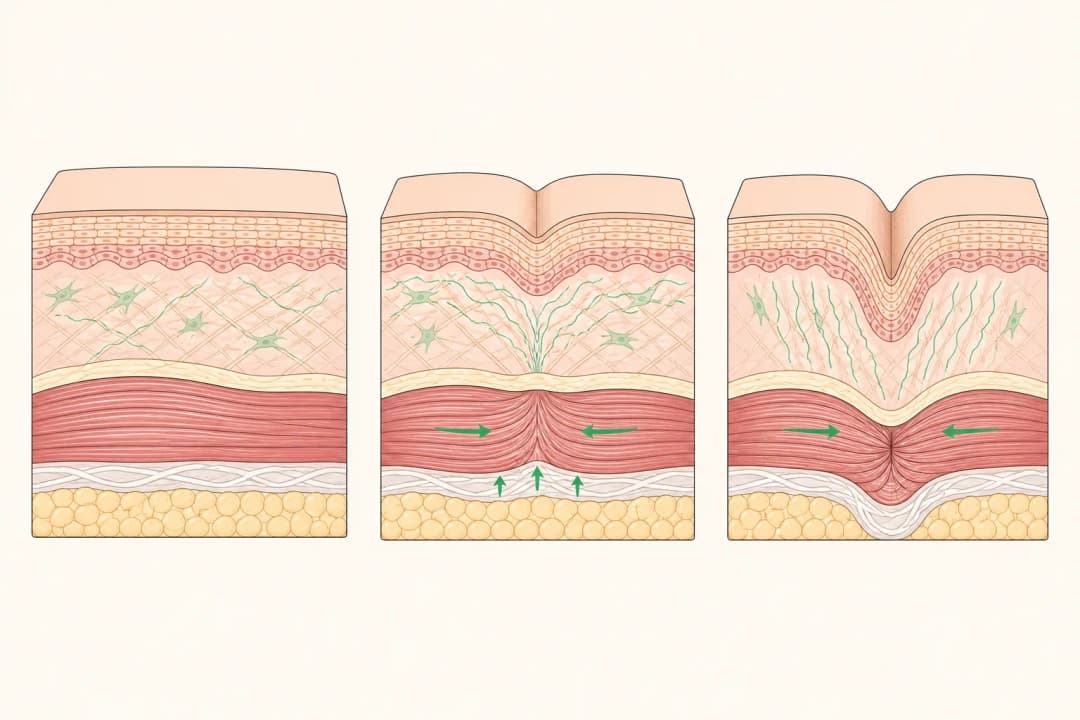
Forehead muscles lift and draw the brows in patterns that differ from person to person. Repeated expressions such as raising the brows, squinting, or frowning can create angled creases. With time, the skin may hold the fold for longer, and sun exposure can make surface texture more noticeable. Dryness can briefly emphasise fine lines without being the underlying cause. The line’s angle is not, by itself, a medical diagnosis.
Compare the mark in relaxed and expressive faces and notice whether it is smooth, scaly, red, itchy, tender, crusted, or bleeding. Those details are more useful than direction alone when deciding whether a skin check is needed.
Practical options
Protect the forehead from ultraviolet exposure with sunscreen, shade, and a hat, and use a gentle moisturiser. Avoid aggressive rubbing or unregulated products. If the concern is cosmetic, a clinician can assess whether the line is mainly movement-related or etched into the skin. Botox may reduce selected muscle movement; it requires an individual assessment and careful injection planning. Results and suitability vary, so discuss alternatives, expected change, and aftercare before proceeding.
When to seek care
Have a clinician examine a forehead line that changes rapidly, fails to heal, bleeds, crusts, becomes painful, or develops persistent scale or colour change. Sudden facial drooping, weakness, numbness, or severe headache needs urgent medical assessment. A rash beside the line also deserves diagnosis before a cosmetic procedure is considered.
Questions for your doctor
Ask whether the mark is a wrinkle or another skin change, whether movement is the main contributor, and which treatment fits its depth and location. Discuss side effects, timing, aftercare, and what to do if the area changes after treatment.
Find care
General Clinics & Polyclinics in Abu Dhabi
That answer is general. If you want it applied to your own case, these are licensed general clinics & polyclinics listed in Abu Dhabi.
27 Ar Ruwwad St - Shakhbout City - MSH4 - Abu Dhabi - United Arab Emirates
Accepts: Daman, Thiqa, Cigna, MetLife +20 more
Al Ruwais, Al Dhafrah
Accepts: Daman, Thiqa, AXA, Cigna +16 more
Al Bahyah - Al Bahyah Old - Abu Dhabi - United Arab Emirates
Accepts: Daman, Thiqa, Cigna, Allianz Care +18 more
Abu Dhabi
Accepts: Daman, Thiqa, AXA, Cigna +27 more
Ordered by verification status and how complete each clinic's public record is, then alphabetically. This is a directory listing, not a ranking — Zavis does not rate or recommend providers.
A factual listing drawn from the DHA, DOH and MOHAP licence registers. It is not a referral, an endorsement, or advice that any of these providers is right for you.
Questions people ask
Do diagonal forehead lines mean something is wrong?
Usually they reflect facial movement and skin texture, but a changing, inflamed, bleeding, or non-healing mark should be assessed.
Can Botox help diagonal forehead lines?
It may soften lines driven by specific muscle activity after an individual consultation, but it cannot suit every pattern or erase every etched crease.
Related
Related reading
Medical disclaimer. This page is general health information, not medical advice, and it cannot diagnose you. Always consult a licensed healthcare provider about your own symptoms and treatment. In an emergency in the UAE, call 998 for an ambulance.