
What Should You Know About Daily Hives?
Short answer
Daily hives are recurring itchy welts that can move around, fade, and reappear; tracking triggers and getting medical advice can help identify the right treatment and warning signs.
This answers one question. It is not a diagnosis and does not replace an assessment by a licensed doctor.
At a glance
- Common appearance
- Raised, itchy welts that may change location
- Useful record
- Timing, possible triggers, photos, and swelling symptoms
- Emergency warning
- Breathing trouble or swelling of the tongue or throat
What daily hives can mean
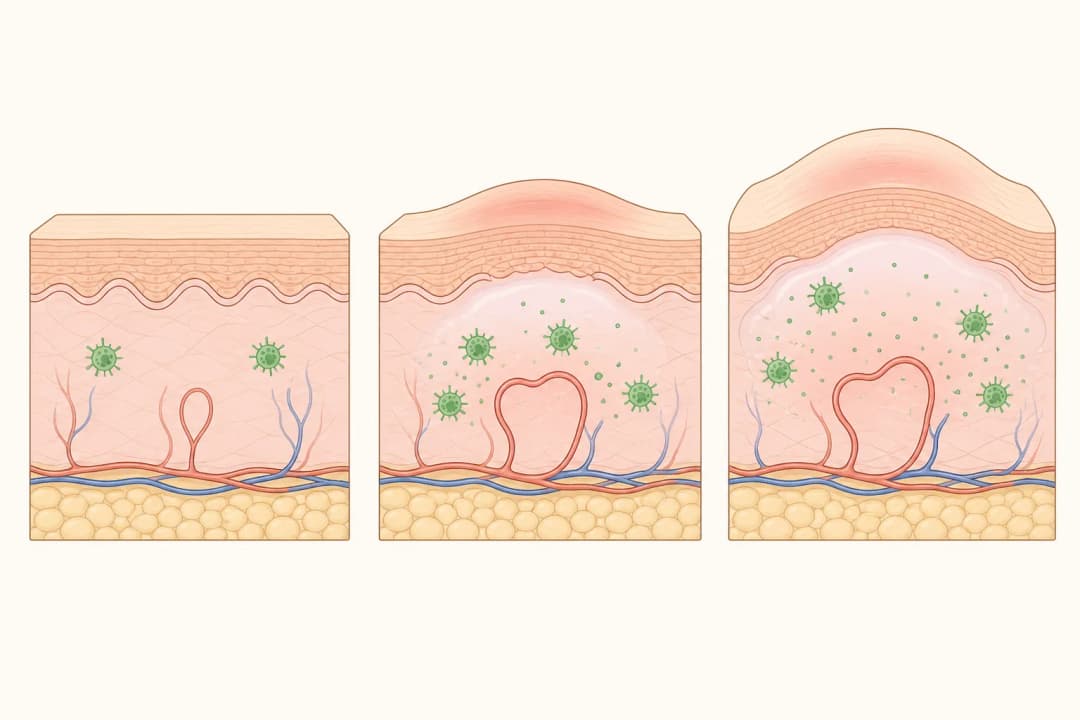
Hives, also called urticaria, are temporary raised areas caused by the release of inflammatory chemicals in the skin. They may itch, sting, or burn, and individual welts often change shape or location rather than staying fixed. Daily episodes can occur without an obvious trigger. Possible contributors include heat, pressure from clothing, infections, medicines, foods, emotional stress, or contact with an irritant. A clinician may call recurring hives chronic urticaria when symptoms continue over an extended period; this does not by itself identify one specific cause.
Swelling deeper in the skin can occur alongside hives and may affect the lips, eyelids, hands, feet, or throat. This type of swelling is called angioedema. Hives that leave bruising, remain in exactly the same place, or are accompanied by fever or joint pain deserve clinical assessment because they may need a different evaluation.
What to do when hives appear daily
Arrange a medical appointment if hives keep returning, disturb sleep, or interfere with work and daily activities. Keep a simple record of when each episode starts, where it appears, recent foods or medicines, heat or exercise, pressure on the skin, and any swelling or breathing symptoms. Photos can help when the skin looks clear by the time you are seen.
While waiting for advice, use cool compresses, avoid hot showers, and choose loose clothing. Try not to scratch, since friction can intensify the reaction. A clinician may recommend an oral antihistamine and explain the appropriate product and schedule. Do not start or stop prescription treatment, including corticosteroids, without medical guidance.
When to seek urgent care
Seek emergency help immediately if hives occur with trouble breathing, wheezing, throat tightness, difficulty swallowing, faintness, confusion, or sudden swelling of the tongue or mouth. These symptoms can signal a serious allergic reaction and should not be watched at home.
Get prompt medical advice for swelling around the eyes or lips, repeated vomiting, severe abdominal pain, or rapidly worsening symptoms. Even when breathing is normal, persistent daily hives should be assessed so a clinician can review medicines, exposures, associated illness, and the safest treatment plan.
Questions for your doctor
Ask which pattern best fits your symptoms, whether any medicine or exposure should be reviewed, how long to use the recommended antihistamine, and what to do if swelling or breathing symptoms develop. Show your symptom record and photographs, and mention pregnancy, breastfeeding, long-term conditions, and all medicines or supplements.
Find care
General Clinics & Polyclinics in Abu Dhabi
That answer is general. If you want it applied to your own case, these are licensed general clinics & polyclinics listed in Abu Dhabi.
27 Ar Ruwwad St - Shakhbout City - MSH4 - Abu Dhabi - United Arab Emirates
Accepts: Daman, Thiqa, Cigna, MetLife +20 more
Al Ruwais, Al Dhafrah
Accepts: Daman, Thiqa, AXA, Cigna +16 more
Al Bahyah - Al Bahyah Old - Abu Dhabi - United Arab Emirates
Accepts: Daman, Thiqa, Cigna, Allianz Care +18 more
Abu Dhabi
Accepts: Daman, Thiqa, AXA, Cigna +27 more
Ordered by verification status and how complete each clinic's public record is, then alphabetically. This is a directory listing, not a ranking — Zavis does not rate or recommend providers.
A factual listing drawn from the DHA, DOH and MOHAP licence registers. It is not a referral, an endorsement, or advice that any of these providers is right for you.
Questions people ask
Can daily hives occur without a clear trigger?
Yes. Recurring hives may continue even when no single food, medicine, infection, or contact exposure can be identified. A symptom record can still reveal patterns and helps guide assessment.
Are daily hives the same as angioedema?
Hives are raised surface welts, while angioedema is swelling deeper in the skin. They can happen together, especially around the lips, eyelids, hands, feet, or throat.
When are daily hives an emergency?
Treat hives as an emergency when they occur with breathing difficulty, throat or tongue swelling, faintness, confusion, or trouble swallowing.
Related
Related reading
Keep reading
Medical disclaimer. This page is general health information, not medical advice, and it cannot diagnose you. Always consult a licensed healthcare provider about your own symptoms and treatment. In an emergency in the UAE, call 998 for an ambulance.