
Cutaneous amoebiasis: what to know
Short answer
Cutaneous amoebiasis is an uncommon amoebic infection of the skin that can cause painful ulcers or spreading wound changes and needs medical assessment.
This answers one question. It is not a diagnosis and does not replace an assessment by a licensed doctor.
At a glance
- Main feature
- A painful or non-healing skin ulcer
- Assessment
- Skin examination and sometimes a lesion sample
- Avoid
- Squeezing or scraping the wound
What it can look like
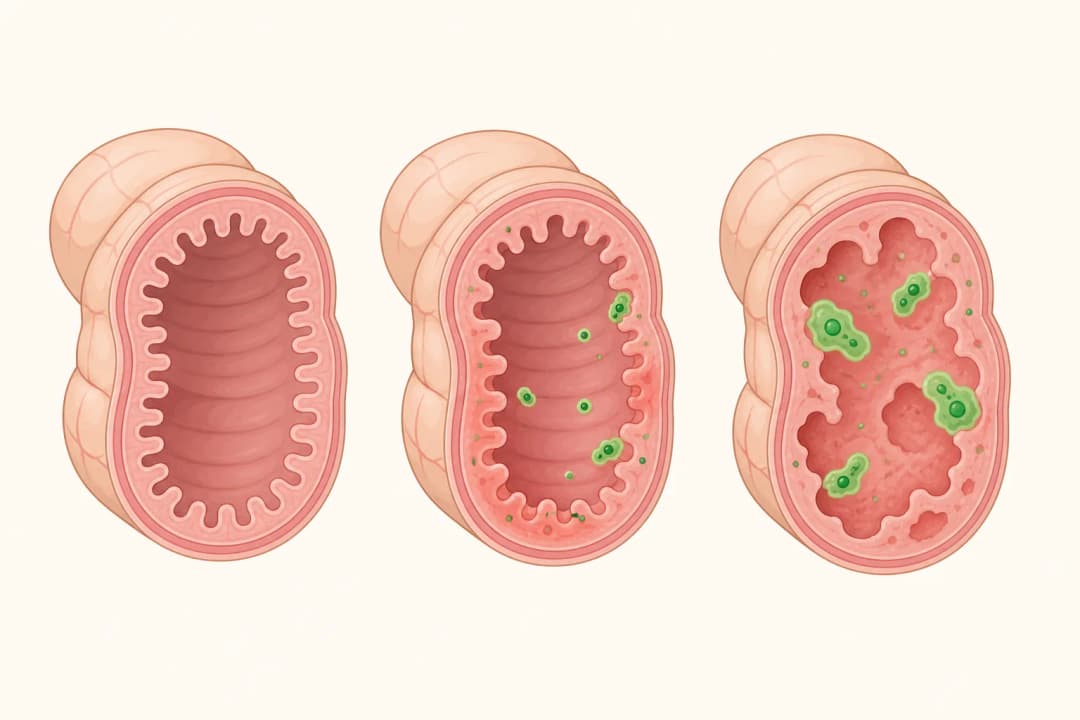
The condition may appear as a sore, ulcer, irritated patch or wound that does not heal normally. The edges can enlarge, the surrounding skin can become inflamed, and pain or discharge may occur. The skin infection may follow contamination of broken skin, but a clinician must distinguish it from bacterial infection, fungal disease, inflammatory conditions and other causes of ulcers. Amoebiasis can also affect the bowel, where diarrhoea may occur, but a skin lesion does not establish the cause by itself.
What to do next
Arrange a prompt GP consultation or dermatology assessment for a worsening, painful or non-healing lesion. Keep the area clean and covered with a fresh dressing, wash hands before and after touching it, and do not squeeze, scrape or apply leftover creams. Tell the clinician about travel, untreated water exposure, contact with soil or contaminated material, bowel symptoms, immune problems and recent medicines. Diagnosis may require examination and a sample from the lesion. Treatment is prescribed according to the identified organism and site; antibiotic treatment may be considered when a bacterial infection is present or suspected.
When to seek urgent care
Seek urgent care if redness is rapidly spreading, pain is severe, the wound becomes black or foul-smelling, fever or chills develop, or you feel faint or seriously unwell. Get same-day advice for a lesion near the eye, extensive skin breakdown, or symptoms in a person with reduced immunity. Do not wait for a wound to improve on its own when it is enlarging or producing discharge.
Questions for your doctor
Ask what other causes have been considered, whether a skin sample is needed, how to dress the area, whether bowel symptoms change the assessment, and which treatment side effects should prompt a call.
Find care
General Clinics & Polyclinics in Abu Dhabi
That answer is general. If you want it applied to your own case, these are licensed general clinics & polyclinics listed in Abu Dhabi.
27 Ar Ruwwad St - Shakhbout City - MSH4 - Abu Dhabi - United Arab Emirates
Accepts: Daman, Thiqa, Cigna, MetLife +20 more
Al Ruwais, Al Dhafrah
Accepts: Daman, Thiqa, AXA, Cigna +16 more
Al Bahyah - Al Bahyah Old - Abu Dhabi - United Arab Emirates
Accepts: Daman, Thiqa, Cigna, Allianz Care +18 more
Abu Dhabi
Accepts: Daman, Thiqa, AXA, Cigna +27 more
Ordered by verification status and how complete each clinic's public record is, then alphabetically. This is a directory listing, not a ranking — Zavis does not rate or recommend providers.
A factual listing drawn from the DHA, DOH and MOHAP licence registers. It is not a referral, an endorsement, or advice that any of these providers is right for you.
Questions people ask
Is cutaneous amoebiasis the same as diarrhoea?
No. Diarrhoea can occur with bowel amoebiasis, while cutaneous amoebiasis refers to infection involving the skin.
Should I use an antibiotic cream myself?
Do not self-treat with leftover medicine; a clinician should assess the lesion and select treatment for its cause.
Related
Related reading
Keep reading
Medical disclaimer. This page is general health information, not medical advice, and it cannot diagnose you. Always consult a licensed healthcare provider about your own symptoms and treatment. In an emergency in the UAE, call 998 for an ambulance.