
What should you know about cradle cap what age?
Short answer
Cradle cap most often appears during infancy, but its timing and duration vary between children.
This answers one question. It is not a diagnosis and does not replace an assessment by a licensed doctor.
At a glance
- Typical timing
- Early infancy
- Common sites
- Scalp, hairline, eyebrows, and behind the ears
- Key principle
- Age helps with context but does not replace an examination
Age and appearance
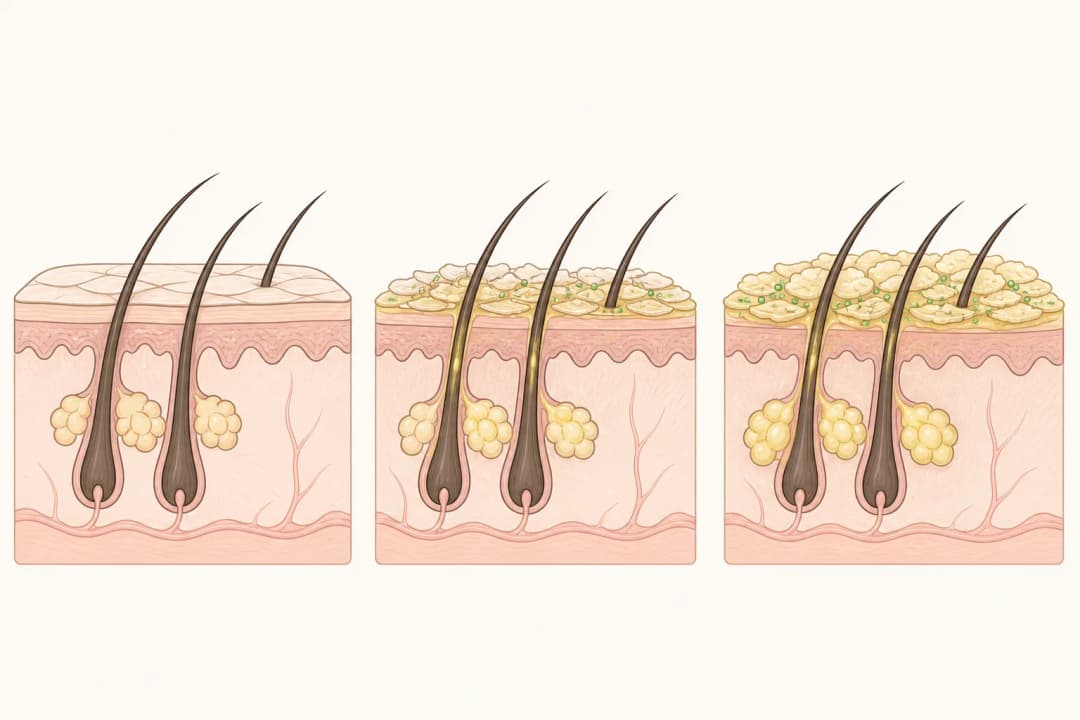
Cradle cap, also called infantile seborrheic dermatitis, commonly starts in the early months of life. It may look like yellow, white, or brownish scale on the scalp, with mild redness underneath. Some babies have only a small patch, while others have scale around the hairline, behind the ears, or on the eyebrows. Age alone cannot confirm the diagnosis: persistent, very inflamed, painful, or widespread changes may have another cause.
Care as your baby grows
Use gentle shampoo and loosen only scale that releases easily during washing. Never scrape the scalp or use strong adult products. If the scale is firmly attached, a clinician may recommend [Emollient Therapy](/treatments/medical-dermatology/emollient-therapy/) before washing. When redness or scale does not settle, ask about [Topical Antifungal Treatment](/treatments/medical-dermatology/topical-antifungal-therapy/) and the correct product for your baby's age. Keep the routine simple and stop any product that causes burning or a new rash.
When to seek care
Arrange a medical review if the rash begins outside the scalp, becomes raw, oozes, bleeds, swells, or seems painful. Fever, poor feeding, unusual drowsiness, or rapidly spreading redness needs prompt attention. If the condition first appears later in childhood, keeps returning intensely, or fails to improve with gentle care, a clinician can check for eczema, psoriasis, fungal infection, or contact irritation.
Questions for your doctor
Ask whether the appearance fits cradle cap, which products match your baby's age, how often to wash, and what change should prompt a review.
Find care
General Clinics & Polyclinics in Abu Dhabi
That answer is general. If you want it applied to your own case, these are licensed general clinics & polyclinics listed in Abu Dhabi.
27 Ar Ruwwad St - Shakhbout City - MSH4 - Abu Dhabi - United Arab Emirates
Accepts: Daman, Thiqa, Cigna, MetLife +20 more
Al Ruwais, Al Dhafrah
Accepts: Daman, Thiqa, AXA, Cigna +16 more
Al Bahyah - Al Bahyah Old - Abu Dhabi - United Arab Emirates
Accepts: Daman, Thiqa, Cigna, Allianz Care +18 more
Abu Dhabi
Accepts: Daman, Thiqa, AXA, Cigna +27 more
Ordered by verification status and how complete each clinic's public record is, then alphabetically. This is a directory listing, not a ranking — Zavis does not rate or recommend providers.
A factual listing drawn from the DHA, DOH and MOHAP licence registers. It is not a referral, an endorsement, or advice that any of these providers is right for you.
Questions people ask
Can an older baby still have cradle cap?
Yes. It can remain for a while or return, but persistent or strongly inflamed scale should be checked rather than attributed to age alone.
Can newborns have cradle cap?
Scalp scale in a newborn can have several explanations. Use gentle washing and seek advice if it is extensive, raw, or associated with illness.
Related
Related reading
Keep reading
Medical disclaimer. This page is general health information, not medical advice, and it cannot diagnose you. Always consult a licensed healthcare provider about your own symptoms and treatment. In an emergency in the UAE, call 998 for an ambulance.