
Cradle cap on the face: what parents should know
Short answer
Cradle cap on a baby's face can cause mild redness and flaky or greasy patches, which usually need gentle cleansing and simple moisturising.
This answers one question. It is not a diagnosis and does not replace an assessment by a licensed doctor.
At a glance
- May affect
- Forehead, cheeks, eyebrows, nose, or ears
- Skin care
- Fragrance-free cleansing and plain moisturiser
- Avoid
- Scrubs, essential oils, and adult dandruff products
Understanding facial cradle cap
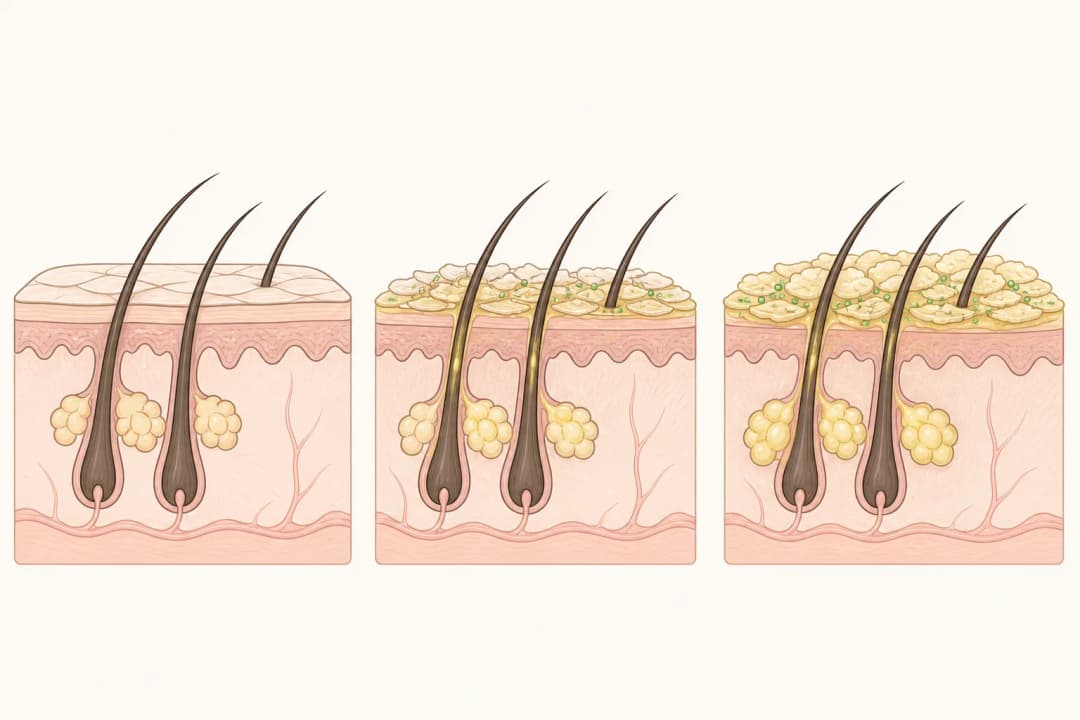
Cradle cap is infantile seborrheic dermatitis. Although it often starts on the scalp, it may involve the forehead, cheeks, eyebrows, nose, or areas near the ears. Facial patches can be dry-looking, yellowish, or slightly oily, with mild redness underneath. The rash may come and go and does not reflect poor hygiene. Heat, saliva, milk, and fragranced skin products can make an already sensitive area look more irritated. Eczema, contact irritation, and infection can resemble it, so the exact appearance and how the baby feels matter.
Practical facial care
Rinse the face with lukewarm water and use a mild, fragrance-free cleanser only when needed. Pat rather than rub, then apply a thin layer of plain moisturiser to dry patches; see Emollient Therapy for moisturising principles. Wipe away saliva or milk gently and change damp bibs. Avoid picking, exfoliating, fragranced wipes, essential oils, and adult dandruff shampoo. Keep all products away from the eyes and mouth. If simple care does not settle the rash, a clinician may consider whether Topical Antifungal Treatment is appropriate.
Signs that need assessment
Contact a clinician if facial skin becomes very red, swollen, painful, cracked, blistered, or covered with pus or spreading crust. Seek prompt advice if the baby has fever, seems unusually sleepy, feeds poorly, or the rash reaches the eyes. A rash that repeatedly flares despite gentle care also deserves review so treatment matches the diagnosis.
Questions for your doctor
Which facial areas look like cradle cap, and which might be eczema or irritation? What cleanser and moisturiser should I use? Are there products I should avoid around the eyes, nose, or mouth?
Find care
General Clinics & Polyclinics in Abu Dhabi
That answer is general. If you want it applied to your own case, these are licensed general clinics & polyclinics listed in Abu Dhabi.
27 Ar Ruwwad St - Shakhbout City - MSH4 - Abu Dhabi - United Arab Emirates
Accepts: Daman, Thiqa, Cigna, MetLife +20 more
Al Ruwais, Al Dhafrah
Accepts: Daman, Thiqa, AXA, Cigna +16 more
Al Bahyah - Al Bahyah Old - Abu Dhabi - United Arab Emirates
Accepts: Daman, Thiqa, Cigna, Allianz Care +18 more
Abu Dhabi
Accepts: Daman, Thiqa, AXA, Cigna +27 more
Ordered by verification status and how complete each clinic's public record is, then alphabetically. This is a directory listing, not a ranking — Zavis does not rate or recommend providers.
A factual listing drawn from the DHA, DOH and MOHAP licence registers. It is not a referral, an endorsement, or advice that any of these providers is right for you.
Questions people ask
Does facial cradle cap mean the skin is dirty?
No. It is an inflammatory skin condition and is not caused by poor hygiene. Over-washing can increase irritation.
When should facial cradle cap be checked?
Arrange review for pain, swelling, weeping, pus, spreading crust, eye involvement, fever, or a rash that does not settle with gentle care.
Related
Related reading
Keep reading
Medical disclaimer. This page is general health information, not medical advice, and it cannot diagnose you. Always consult a licensed healthcare provider about your own symptoms and treatment. In an emergency in the UAE, call 998 for an ambulance.